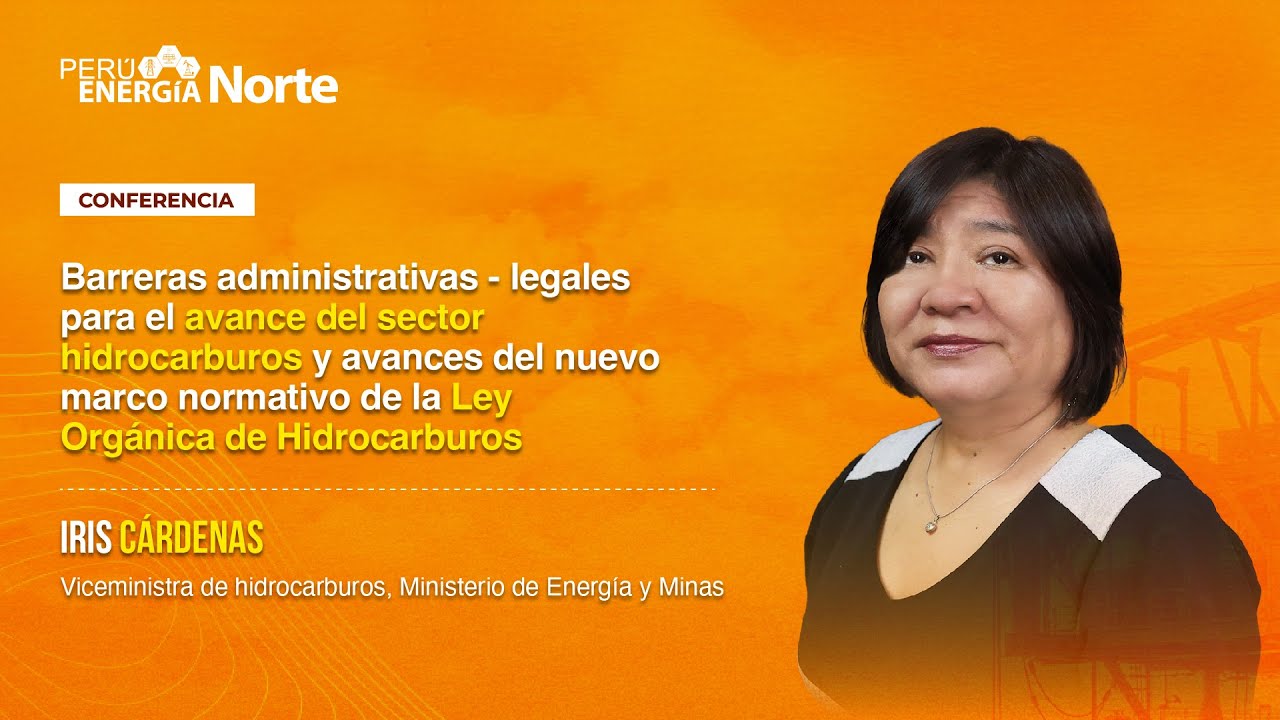
Barreras administrativas-legales para el avance del sector hidrocarburos - Iris Cárdenas
Keywords
Summary
209 words
Critical Evaluation
Value of the Information & Strength of the Argument
The presentation provides valuable insights into the current state and future plans of Peru’s hydrocarbon sector from an insider perspective. The speaker offers specific data on reserves, investments, and the impact of Camisea, which adds credibility. The argumentation is structured around identifying barriers and presenting government initiatives to overcome them, but it lacks critical evaluation of the effectiveness of these measures. The speaker’s stance is promotional, focusing on achievements and future plans without addressing potential challenges or criticisms in depth. The argumentation is coherent but one-sided, typical of an institutional presentation.
Scientific Rigor, Source Quality, Title Accuracy
The speaker does not cite external sources, but she references internal data and government plans. The information appears consistent with publicly available data on Peru’s energy sector, though no specific sources are provided. The title accurately reflects the content, which is centered on administrative and legal barriers and the ministry’s responses. The presentation is scientifically rigorous in its use of statistics, but the lack of citations limits verifiability. The speaker’s role as a government official lends authority, but the content is not peer-reviewed.
189 words
Title / Content Match
The title accurately reflects the content, which focuses on administrative and legal barriers in the hydrocarbon sector and the ministry's initiatives to address them.
Quality & Reliability
7/10
The speaker is a high-level official from the Ministry of Energy and Mines, providing an authoritative overview of the sector. However, the talk is largely a policy presentation with limited critical analysis or independent verification of data. The information is reliable but presented from an institutional perspective.
Key Moments
Markers derived by PSI from the transcript: the creator did not define chapters.
- Introduction and greetings, acknowledgment of the event.
- Overview of hydrocarbons' importance in Peru's energy matrix (75% of energy).
- Discussion of natural gas reserves, including Madre de Dios basin potential.
- Impact of Camisea project: investments, royalties, and production.
- Energy policy objectives and the role of natural gas in diversification.
- Identification of administrative and legal barriers (permitting, environmental studies).
- Reforms: IGASPE for exploration, strengthening PeruPetro, and pipeline plans.
- Expansion of natural gas distribution, including potential Cálidda agreement.
- Petrochemical promotion and ensuring competitive gas prices.
- Conclusion: just energy transition and commitment to sustainable development.
Contribution & Novelties
The presentation offers an insider view of Peru’s hydrocarbon policy, highlighting specific administrative barriers and proposed reforms. It provides up-to-date statistics on reserves and production, and outlines new initiatives like IGASPE and pipeline plans. The talk contributes to understanding the government’s perspective on energy transition and the role of natural gas.
Pour aller plus loin :
- Peru’s Energy Policy — Official ministry site for policy documents.
- Camisea Project — Overview of the project and its impact.
- PeruPetro — State agency for hydrocarbon contracts.
- Energy Transition in Latin America — Regional energy organization resources.
93 words
Radar Profile
The radar profile shows high scores in information quantity and reliability, reflecting the speaker's authoritative position and data-rich presentation. The technical level is moderate, indicating accessibility to a general audience. The overall balance suggests a well-informed but institutionally framed talk.