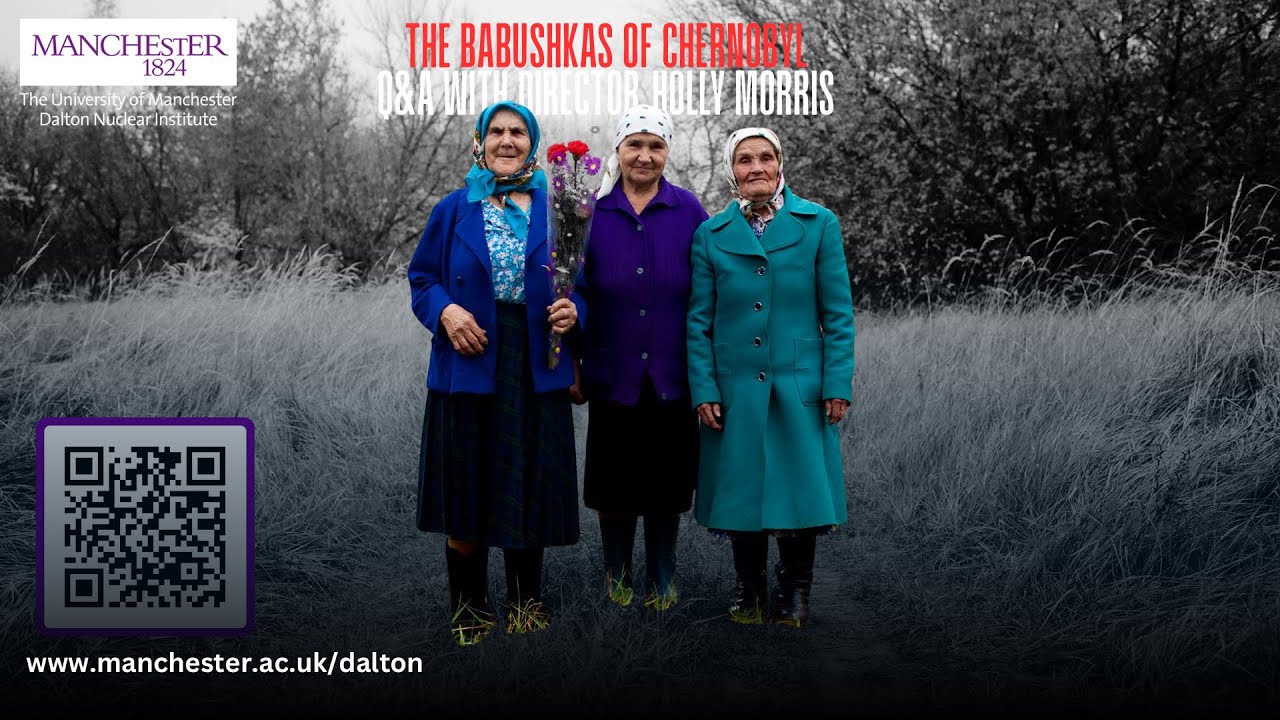
The Babushkas of Chernobyl | Q&A with Director Holly Morris
Keywords
Summary
168 words
Critical Evaluation
Value of the Information & Strength of the Argument
The value of the information lies in the first-hand account of the director, providing unique insights into the lives of the Babushkas and the production of the documentary. Morris’s arguments are well-supported by her direct experiences and observations, and she effectively conveys the complexity of the situation, challenging simplistic narratives about the victims of the Chernobyl disaster. The discussion is engaging and informative, offering a human perspective on a often-technical subject.
Scientific Rigor, Source Quality, Title Accuracy
The Q&A is scientifically rigorous in the sense that it is based on direct observation and personal experience, but it is not a formal scientific study. The director references her own work and the film itself as sources, and mentions a Slate magazine article she wrote about stalkers. The title accurately reflects the content, and the discussion is well-moderated by Professor Richard Taylor, who brings his expertise in nuclear engineering. The session provides a balanced view, acknowledging both the risks of radiation and the psychological impacts of displacement.
174 words
Title / Content Match
The title accurately reflects the content: a Q&A session with the director of the documentary 'The Babushkas of Chernobyl'.
Quality & Reliability
8/10
The Q&A features the director of the documentary, providing first-hand insights into the making of the film and the lives of the Babushkas. The discussion is grounded in direct experience and observation, with references to the film's production and the broader context of the Chernobyl exclusion zone. While not a scientific study, the information is credible and well-articulated, with the director's expertise in documentary filmmaking and her direct engagement with the subjects.
Key Moments
Markers derived by PSI from the transcript: the creator did not define chapters.
- Introduction and welcome by the Dalton Nuclear Institute, setting the context for the Q&A.
- Holly Morris discusses the inspiration for the film, originating from a print article and her initial visit to the exclusion zone.
- Challenges of filming in the exclusion zone, including limited days and safety precautions.
- Discussion on the Babushkas' attitudes towards health and radiation, and the concept of displacement as a health risk.
- The role of translator Marina Oricova and the importance of local knowledge in the production.
- Building intimacy with the Babushkas and the directorial approach of letting them speak for themselves.
- Translation challenges and the emotional process of translating the film in Brooklyn.
- Perspectives of children and grandchildren of the Babushkas, and the multi-generational trauma.
- The stalkers phenomenon and how footage of them was obtained.
- Discussion on who are the victims of the tragedy, and the resilience of the Babushkas.
Cited Sources
- The Babushkas of Chernobyl (documentary film) — The film directed by Holly Morris, which is the subject of the Q&A.
- Slate article about stalkers — Holly Morris mentions writing an in-depth story about the stalkers for Slate magazine.
Concurring Sources
- The Babushkas of Chernobyl (official website) — Official site for the documentary, providing additional information about the film and its subjects.
Contribution & Novelties
The Q&A provides a unique perspective on the Chernobyl disaster, focusing on the human stories of the elderly women who returned to the exclusion zone. It challenges common perceptions of victims and highlights the complex interplay between health, home, and identity. The director’s insights into the filmmaking process and the challenges of working in the zone offer valuable context for understanding the documentary.
Pour aller plus loin :
- Chernobyl Exclusion Zone — Provides background on the zone and its history.
- Chernobyl disaster — Overview of the 1986 nuclear accident.
- Health effects of the Chernobyl accident — WHO fact sheet on the health impacts.
103 words
Radar Profile
The radar profile shows high scores in quality of information and reliability, reflecting the director's first-hand experience and credible storytelling. The lower score in technical level indicates that the content is accessible to a general audience, while the moderate quantity of information suggests a focused discussion rather than a comprehensive overview.