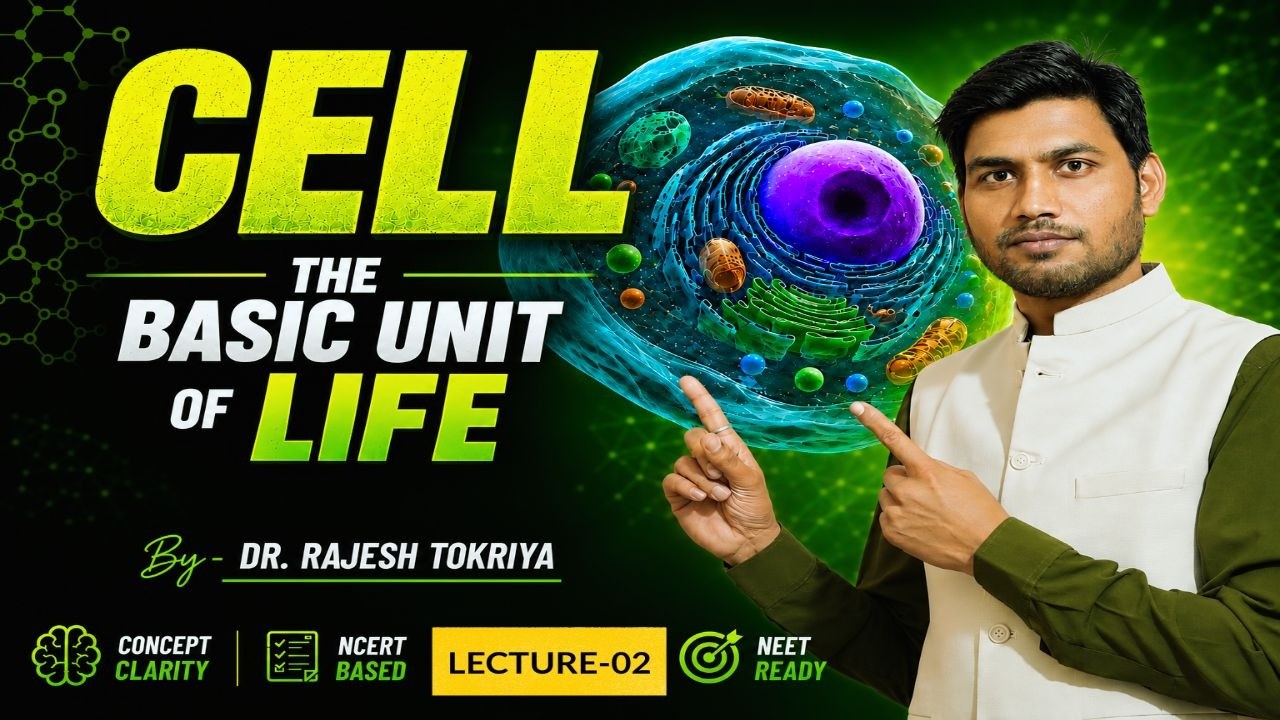
L-2: Cell: Discovery and Cell Theory
Keywords
Summary
193 words
Critical Evaluation
Value of the Information & Strength of the Argument
The video provides a comprehensive overview of cell discovery and cell theory, which is valuable for students. The argumentation is based on established scientific facts and historical contributions, presented in a clear and logical sequence. The instructor effectively explains the progression from initial observations to the formalization of cell theory, and highlights the importance of each scientist’s work. However, the argumentation lacks critical analysis and does not address any controversies or nuances in the history of cell theory. The value lies in its educational purpose, but it does not offer new insights or original research.
Scientific Rigor, Source Quality, Title Accuracy
The scientific rigor is moderate. The content is accurate and aligns with standard biology textbooks, but the video does not cite any external sources or provide references for the information presented. The quality of sources is therefore limited to the instructor’s own knowledge and the NCERT curriculum. The title accurately reflects the content, which is focused on cell discovery and cell theory. There is no mention of any public comments or feedback, so no analysis of audience trends is possible.
190 words
Title / Content Match
The title accurately reflects the content, which covers the discovery of the cell and the development of cell theory.
Quality & Reliability
7/10
The video provides a clear and accurate explanation of cell discovery and cell theory, based on standard NCERT biology content. The information is correct and well-structured, but it lacks depth and critical analysis, and no external sources are cited.
Key Moments
Markers derived by PSI from the transcript: the creator did not define chapters.
- Introduction and recap of previous lecture on cell basics.
- Discussion on the discovery of the cell by Robert Hooke and Antonie van Leeuwenhoek.
- Explanation of the contributions of Schleiden and Schwann to cell theory.
- Introduction of the modern cell theory and Rudolf Virchow's modification.
- Detailed explanation of the postulates of cell theory.
- Discussion on the criteria for a cell: plasma membrane, cytoplasm, and genetic material.
- Conclusion and summary of key points for exam preparation.
Contribution & Novelties
The video provides a clear and structured explanation of cell theory, which is beneficial for students. It emphasizes the historical progression and the contributions of key scientists. However, it does not offer any new scientific insights or original perspectives. The content is based on standard textbook material.
Pour aller plus loin :
- Cell theory - Wikipedia — Provides a comprehensive overview of the history and principles of cell theory.
- History of Cell Biology - Britannica — Offers detailed information on the discovery of cells and the development of cell biology.
- Rudolf Virchow - Wikipedia — Biographical information on the scientist who contributed to modern cell theory.
106 words
Radar Profile
The radar profile shows a balanced performance across all dimensions, with slightly higher scores in information quantity and quality, and lower in technical level. This indicates a video that is informative and reliable but not highly technical, suitable for introductory biology students.