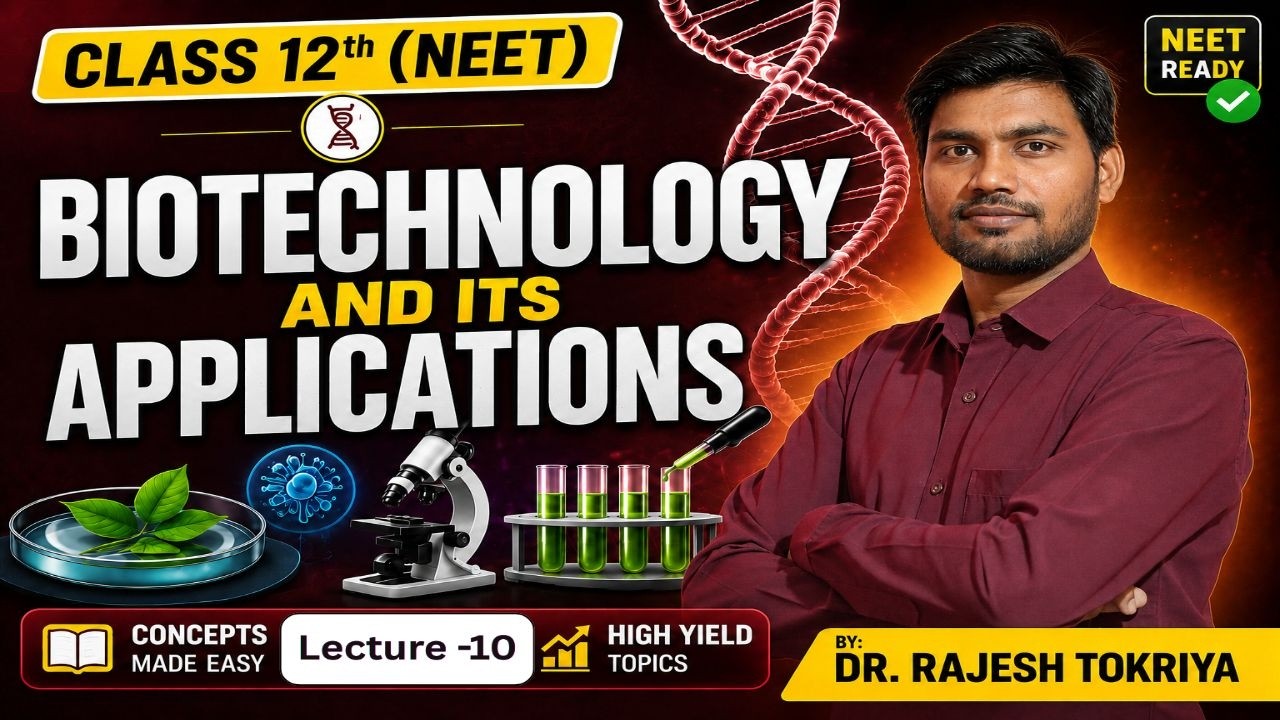
Lec -10: Ethical Issues, Bioethics, Biopatent, Biopiracy| Class 12 Biology | By Dr. Rajesh Tokriya
Keywords
Summary
169 words
Critical Evaluation
Value of the Information & Strength of the Argument
The lecture provides a basic introduction to ethical issues in biotechnology, suitable for students preparing for exams. It uses relatable examples, such as copying in exams, to explain abstract concepts. However, the argumentation is largely superficial, with limited critical analysis. The instructor presents ethical questions but does not delve into nuanced perspectives or real-world controversies. The value is mainly educational for beginners, but it lacks the depth expected from a scientific discussion.
Scientific Rigor, Source Quality, Title Accuracy
The lecture does not cite any scientific sources or studies, relying instead on general knowledge and textbook content. The title accurately reflects the content, which covers ethical issues, bioethics, biopatent, and biopiracy. The presentation is consistent with the NCERT curriculum, but the lack of references reduces its scientific rigor. The instructor’s explanations are clear but not backed by external evidence, which is a limitation for a scientific audience.
155 words
Title / Content Match
The title accurately reflects the content, which focuses on ethical issues, bioethics, biopatent, and biopiracy in biotechnology.
Quality & Reliability
6/10
The lecture provides a clear, exam-oriented overview of ethical issues in biotechnology, but lacks depth and critical analysis. It relies on anecdotal examples and does not cite specific scientific sources or studies.
Key Moments
Markers derived by PSI from the transcript: the creator did not define chapters.
- Introduction and welcome, recap of biotechnology applications.
- Definition of ethical issues and bioethics.
- Discussion on ethical concerns: altering DNA, animal experiments, cloning, genetic privacy.
- Introduction to regulation of biotechnology in India, GEAC.
- Explanation of biopatent and its duration.
- Conclusion and summary of key points.
Cited Sources
- Instagram profile — Mentioned in the description for following the instructor.
Contribution & Novelties
The lecture offers a simplified, exam-oriented introduction to ethical issues in biotechnology, which is useful for students. It highlights the role of GEAC in India and explains biopatent and biopiracy in basic terms. However, it does not provide novel insights or advanced analysis.
Pour aller plus loin :
69 words
Radar Profile
The radar profile shows moderate scores across all dimensions, indicating a balanced but not exceptional lecture. The highest score is in quantity of information, while technical level and reliability are lower, reflecting the introductory nature and lack of citations.