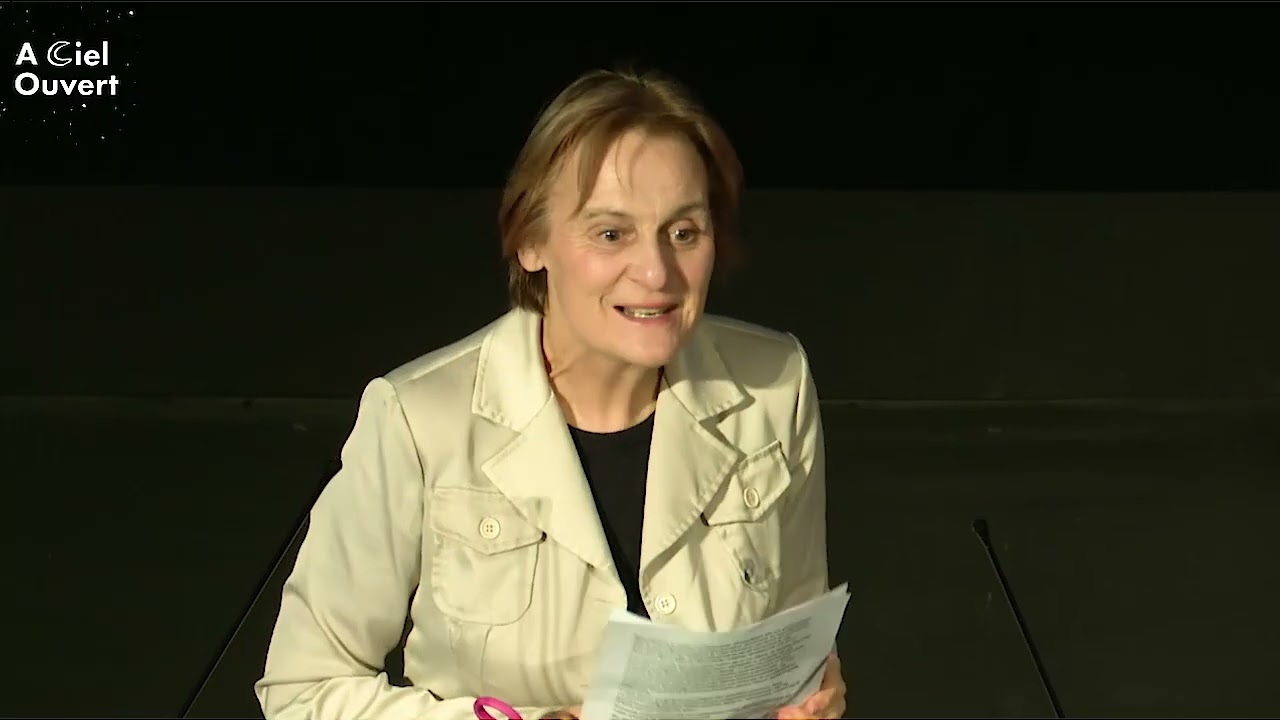
CyberConscience et Intelligence Artificielle : mythes et réalité - Conférence de Solange Ghernaouti
Keywords
Summary
149 words
Critical Evaluation
Value of the Information & Strength of the Argument
The lecture provides valuable insights from an expert perspective, demystifying AI by explaining its computational foundations and the reductionism inherent in coding the world. The argumentation is coherent and well-structured, moving from technical explanations to broader societal and ethical concerns. Ghernaouti effectively uses examples, such as the hallucination of a nonexistent standard, to illustrate the limitations of generative AI. She challenges technosolutionism and the uncritical acceptance of AI, encouraging a more nuanced and critical view. The value lies in her ability to bridge technical knowledge with humanistic questions, making complex issues accessible without oversimplifying.
Scientific Rigor, Source Quality, Title Accuracy
The talk demonstrates scientific rigor in its logical reasoning and reliance on the speaker’s extensive professional experience. However, it lacks explicit citations to external sources, though the description provides a link to the program’s website. The title accurately reflects the content, which is a critical examination of AI and consciousness. The lecture is an opinion piece rather than a systematic review, but it is grounded in established knowledge in cybersecurity and technology. The adequacy between title and content is strong, as the speaker directly addresses the myths and realities of AI.
200 words
Title / Content Match
The title accurately reflects the content, focusing on the myths and realities of AI and consciousness from a cybersecurity and societal perspective.
Quality & Reliability
8/10
The speaker is a recognized expert in cybersecurity and cybercrime, with a long academic career. The talk is well-structured, grounded in her professional experience, and avoids overclaiming. However, it is an opinion-based lecture rather than a peer-reviewed study, and some claims lack explicit citations.
Key Moments
Markers derived by PSI from the transcript: the creator did not define chapters.
- Introduction and welcome by the host, introducing Solange Ghernaouti.
- Ghernaouti presents her three guiding questions about consciousness and AI.
- Explanation of AI as computation and binary coding, emphasizing reductionism.
- Discussion on generative AI and the example of hallucinating a nonexistent standard.
- Exploration of NBIC convergence and human-machine integration.
- Critique of technosolutionism and the illusion of AI consciousness.
- Conclusion emphasizing human responsibility and the need for critical thinking.
Cited Sources
- À Ciel Ouvert - Science et Spiritualité — Programme under which the conference was held.
Concurring Sources
- À Ciel Ouvert - Science et Spiritualité — Programme under which the conference was held.
Contribution & Novelties
The lecture offers a unique perspective by combining cybersecurity expertise with philosophical questions about AI and consciousness. It challenges the hype around AI by grounding it in technical reality and highlighting the ethical and societal implications. The speaker’s emphasis on the reductionism of coding and the dangers of a monoculture provides a fresh angle.
Pour aller plus loin :
- Technosolutionism — Relevant to the critique of relying on technology to solve all problems.
- NBIC convergence — Discusses the convergence of nanotechnology, biotechnology, information technology, and cognitive science.
- AI hallucination — Explains the phenomenon of AI generating false information.
98 words
Radar Profile
The radar profile shows high scores in information quantity, quality, and reliability, with a moderate technical level. This indicates a well-informed and credible lecture that is accessible to a general audience, though it does not delve into highly technical details.
💬 No comments were provided for analysis.