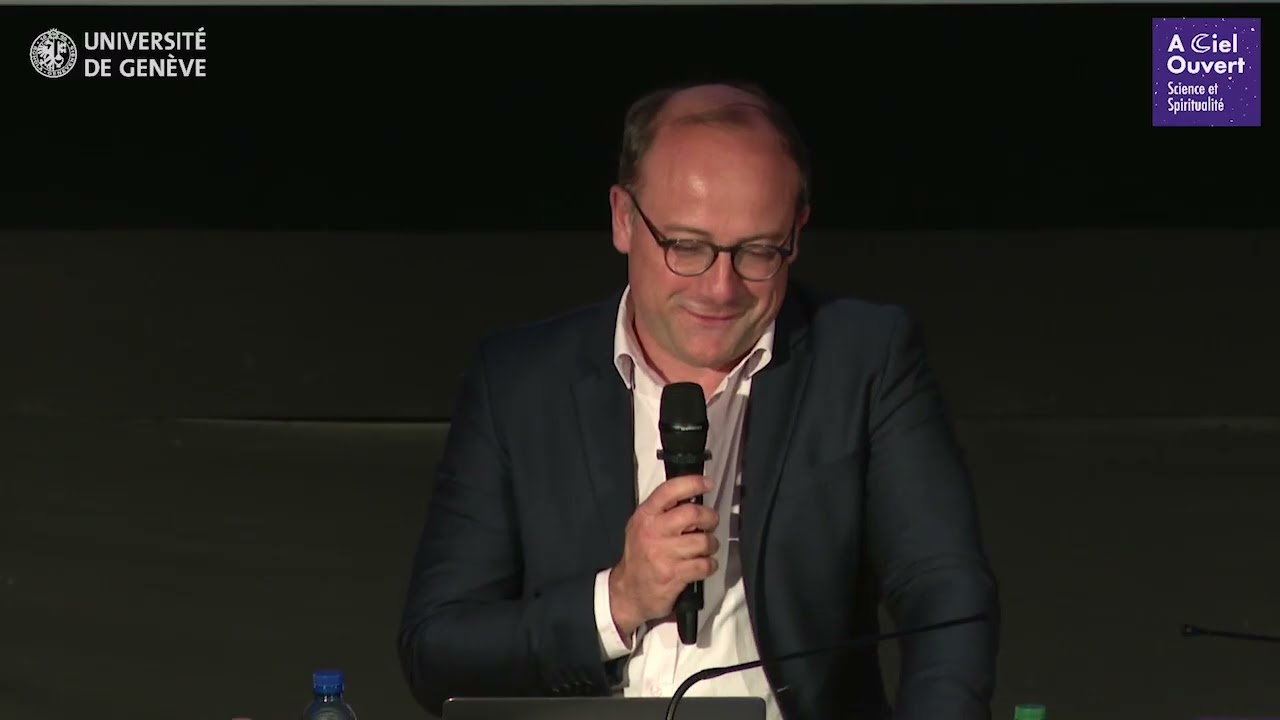
Lire et vivre le temps. L’histoire comme science humaine - Conférence de Johann Chapoutot
Keywords
Summary
143 words
Critical Evaluation
Value of the Information & Strength of the Argument
The lecture provides valuable insights into the philosophy of history, drawing on key thinkers like Croce, Bloch, Marrou, and Ingrao. Chapoutot’s argumentation is coherent and persuasive, blending personal reflection with scholarly references. He effectively challenges the positivist view of history and advocates for a more humanistic, empathetic approach. The discussion of providentialism and its decline is particularly insightful, offering a nuanced understanding of how meaning has been constructed and lost in Western thought.
Scientific Rigor, Source Quality, Title Accuracy
The speaker demonstrates high scholarly rigor, referencing established historians and philosophers. The sources are appropriate and well-integrated. The title accurately reflects the content, which is a thoughtful exploration of history as a human science. The lecture is well-structured and the arguments are supported by relevant examples. The conference is part of a university program, adding to its credibility.
146 words
Title / Content Match
The title accurately reflects the content: a conference on history as a human science, focusing on time, meaning, and the historian's role.
Quality & Reliability
8/10
The speaker is a recognized historian (professor at Sorbonne), the content is well-structured and based on established historiographical concepts, but it is an opinion/expert lecture rather than a peer-reviewed study.
Key Moments
Markers derived by PSI from the transcript: the creator did not define chapters.
- Introduction by the faculty and presentation of the speaker.
- Chapoutot defines history as the study of humans as temporal beings, aware of their finitude.
- Discussion of history as a metaphysical discipline, making the past present.
- Comparison of culturalist and externalist approaches; emphasis on empathy and understanding mental universes.
- Exploration of providentialism from Augustine to Leibniz and its decline.
- Reflection on the crisis of meaning after the World Wars and the Holocaust.
- Conclusion: the historian's role in offering lessons and meaning in contemporary times.
Cited Sources
- Programme À Ciel Ouvert - Science et Spiritualité — Official page of the conference series where this talk was given.
Concurring Sources
- The Historian's Craft by Marc Bloch — Bloch's work aligns with Chapoutot's view of history as a human science.
Contribution & Novelties
The lecture offers a compelling synthesis of historiographical thought, emphasizing the empathetic and metaphysical dimensions of history. It provides a fresh perspective on the role of narrative and meaning in human history, particularly in the context of the decline of providentialism.
Pour aller plus loin :
- Philosophy of History — Overview of the field.
- Historiography — Study of historical writing.
- Theodicy — Leibniz’s concept discussed in the lecture.
- Marc Bloch — Historian who defined history as ‘science of men in time’.
81 words
Radar Profile
The radar profile shows high scores in information quality and reliability, with slightly lower but still strong scores in quantity and technical level. This indicates a well-researched and intellectually stimulating lecture, though it may require some background knowledge to fully appreciate.
💬 Sur les 0 commentaires analysés, aucune tendance n'est disponible.