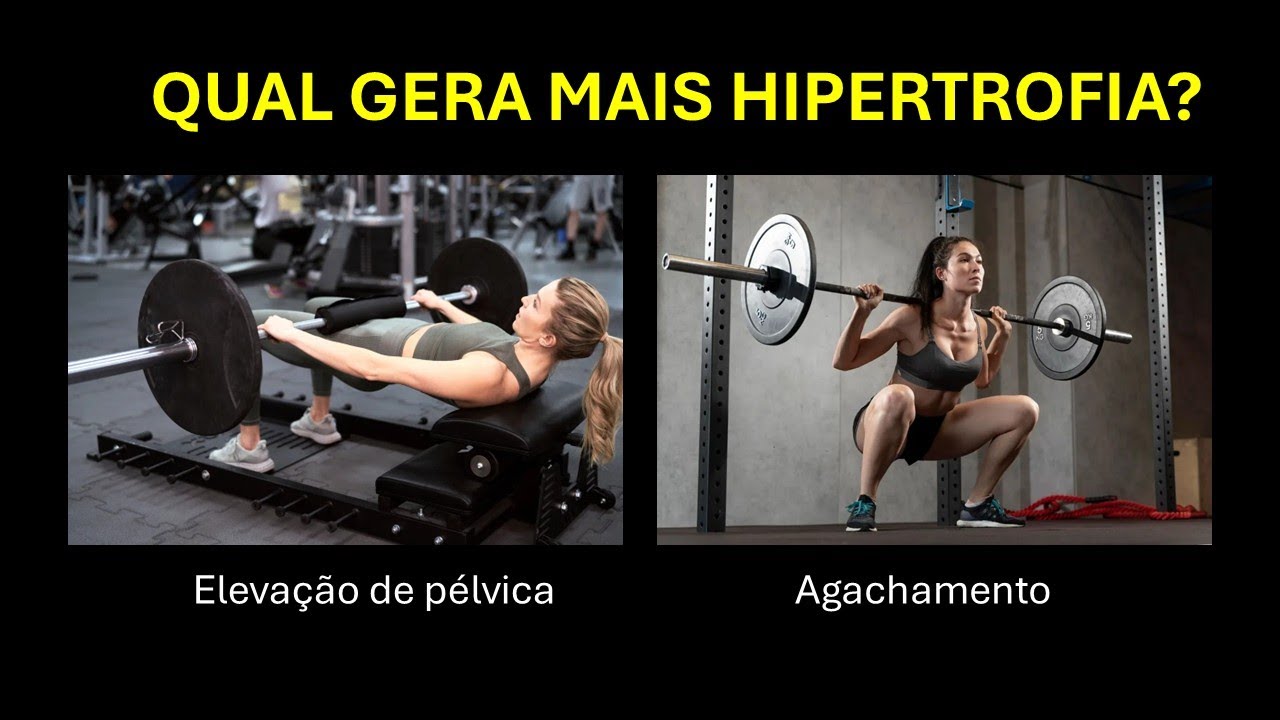
Agachamento ou elevação pélvica: o que hipertrofia mais?
Keywords
Summary
137 words
Critical Evaluation
Value of the Information & Strength of the Argument
The video provides valuable information by presenting a recent, well-designed study with robust methodologies (MRI, EMG). The argumentation is solid, as the creator explains the physiological basis of muscle activation and hypertrophy, and appropriately interprets the results, noting limitations such as the lack of statistical significance in some comparisons. The creator also debunks common myths about the squat being a ‘complete’ exercise, using evidence from the study.
Scientific Rigor, Source Quality, Title Accuracy
The video is scientifically rigorous, referencing a specific peer-reviewed study with clear methodology. The source is credible (Frontiers in Physiology). The title accurately reflects the content. The creator does not overstate findings and acknowledges limitations. The video is part of a series promoting a course, but the scientific content is presented objectively.
134 words
Title / Content Match
The title accurately reflects the content, comparing the two exercises for gluteal hypertrophy.
Quality & Reliability
8/10
The video presents a peer-reviewed study published in Frontiers in Physiology, using MRI and EMG, with a clear experimental design. The creator explains limitations and avoids overgeneralization, though some claims are simplified for a general audience.
Key Moments
Markers derived by PSI from the transcript: the creator did not define chapters.
- Introduction to the study comparing hip thrust and squat for gluteal hypertrophy.
- Study design: untrained participants, 15-17 sessions, MRI and EMG used.
- EMG activation results: hip thrust shows higher activation in some gluteal regions, but activation does not equal hypertrophy.
- MRI results: similar hypertrophy in upper gluteus maximus for both exercises; no significant difference in lower gluteus maximus.
- Neither exercise produced hypertrophy in gluteus medius or hamstrings, debunking the 'squat is complete' myth.
- Squat led to greater quadriceps hypertrophy; hip thrust showed slight advantage in adductors.
- Both exercises improved deadlift strength, challenging the 'squat is most functional' claim.
- Conclusion: no single exercise is complete; exercise selection should be based on goals.
Cited Sources
- Study on gluteal hypertrophy comparing squat and hip thrust — The video references a study published in Frontiers in Physiology, but no direct URL is provided in the description.
Concurring Sources
- Frontiers in Physiology — The study was published in this journal, which is peer-reviewed and reputable.
Contribution & Novelties
The video provides a clear, evidence-based comparison of two popular gluteal exercises, using MRI data to show that neither is superior for overall gluteal hypertrophy, and that both have specific roles. It challenges common fitness myths and emphasizes the importance of exercise variety.
Pour aller plus loin :
- Gluteus maximus muscle - Wikipedia — Anatomical background.
- Frontiers in Physiology — Journal where the study was published.
- Resistance training and muscle hypertrophy - PubMed — Overview of hypertrophy mechanisms.
78 words
Radar Profile
The radar profile shows high scores in information quantity, quality, and reliability, with a slightly lower technical level, indicating a well-balanced, evidence-based video suitable for a general audience interested in fitness science.