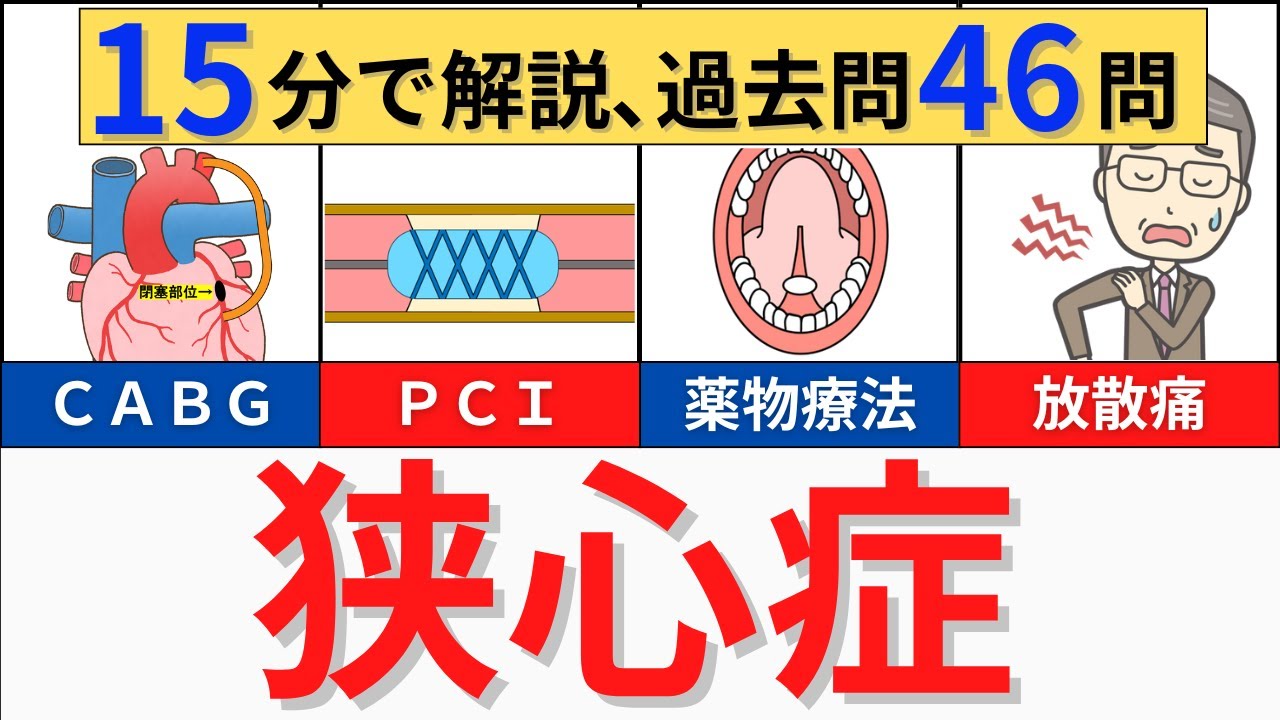
【15分で解説】狭心症の病態や検査・治療などについて解説 ※9:22 橈骨動脈穿刺後の安静時間は文献によって様々です
Keywords
Summary
135 words
Critical Evaluation
Value of the Information & Strength of the Argument
The video provides valuable information for nursing students, systematically covering the key aspects of angina pectoris. The argumentation is clear and logical, explaining the pathophysiology from cause to symptom. The use of analogies, such as comparing oxygen demand to a number of oxygen units, helps simplify complex concepts. The inclusion of practice questions reinforces learning and tests understanding. However, the video is not a substitute for medical textbooks, and some simplifications may omit nuances. The presenter’s approach is pedagogical, focusing on exam-relevant points, which is appropriate for the target audience.
Scientific Rigor, Source Quality, Title Accuracy
The scientific rigor is moderate; the content aligns with standard medical knowledge, but no specific sources are cited within the video. The description provides links to the channel’s other videos and playlists, but no direct references to medical literature. The title accurately reflects the content, and the note about the radial artery puncture rest time shows attention to detail. The video is well-structured with clear chapters, aiding comprehension. The adequacy between title and content is good, with no significant discrepancies.
185 words
Title / Content Match
The title accurately reflects the content, which is a 15-minute explanation of angina pectoris, including pathology, tests, and treatment. The note about the radial artery puncture rest time is a minor clarification.
Quality & Reliability
7/10
The video provides a structured and accurate overview of angina pectoris, covering pathophysiology, symptoms, diagnostics, and treatment, with a focus on nursing exam preparation. The content aligns with standard medical knowledge, but the creator is not a medical professional and the video is educational rather than clinical. Some simplifications and approximations are made for teaching purposes.
Chapters
Cited Sources
- Recommended study method video — Mentioned in the description as a recommended study method.
- Playlist: Important anatomy, diseases, and treatments — Linked in the description as a recommended playlist.
Concurring Sources
- Angina Pectoris - StatPearls — A peer-reviewed article that aligns with the video's content on angina pathophysiology and management.
Contribution & Novelties
The video offers a structured and exam-focused overview of angina pectoris, which is particularly useful for nursing students. It breaks down complex medical concepts into digestible segments, using analogies and practice questions. The inclusion of nursing care points, such as post-procedure monitoring and patient education, adds practical value. However, it does not present new scientific information but rather synthesizes existing knowledge for educational purposes.
Pour aller plus loin :
- Angina pectoris - Wikipedia — Provides a comprehensive overview of angina, including types, pathophysiology, and treatment.
- Coronary artery disease - Mayo Clinic — Detailed information on coronary artery disease, a major cause of angina.
- Percutaneous coronary intervention - Wikipedia — Explains the PCI procedure in detail, including indications and steps.
- Nitroglycerin (drug) - Wikipedia — Information on the pharmacology and clinical use of nitroglycerin.
133 words
Radar Profile
The radar profile shows high scores in information quantity and quality, with moderate technical level and reliability. This indicates a well-structured educational video that is comprehensive but not overly technical, suitable for its target audience of nursing students.