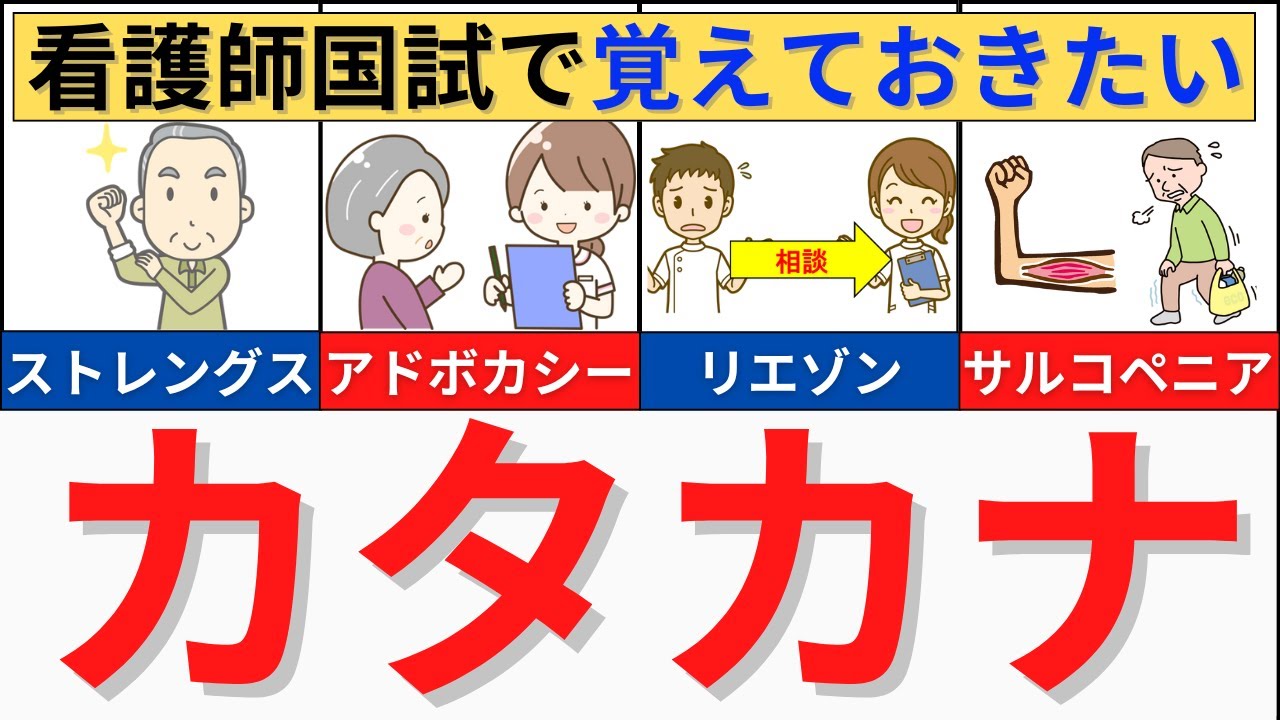
覚えておきたいカタカナ 総まとめ ※解剖生理系以外
Keywords
Summary
122 words
Critical Evaluation
Value of the Information & Strength of the Argument
The video provides a high volume of information, covering over 50 terms in a structured manner. The explanations are clear and often include practical examples, such as the distinction between compliance and adherence, or the difference between bonding and attachment. The presenter uses mnemonic devices and simple analogies to aid memory, which is effective for exam preparation. The argumentation is solid, as the definitions align with standard nursing textbooks and guidelines. However, the video does not delve into the evidence base or controversies surrounding some concepts, and it occasionally oversimplifies complex topics. The inclusion of review questions and answers is a strong point, as it actively engages the viewer and reinforces learning.
Scientific Rigor, Source Quality, Title Accuracy
The video demonstrates a good level of scientific rigor for its intended purpose. The presenter accurately defines terms and correctly attributes concepts to their origins, such as the Helsinki Declaration for informed consent and the Ottawa Charter for health promotion. However, no specific sources are cited within the video, and the only link in the description is to a playlist of other videos by the same creator. The title accurately reflects the content, and the video stays on topic throughout. The lack of external references limits its use for academic research, but for exam preparation, the content is reliable and well-presented.
228 words
Title / Content Match
The title accurately reflects the content: a comprehensive review of katakana terms in nursing, excluding anatomy and physiology.
Quality & Reliability
7/10
The video is a structured tutorial for nursing students, covering a wide range of medical and nursing terms. The content is accurate and aligns with standard nursing curricula, but it lacks in-depth explanations and references to primary sources. The presenter uses clear examples and includes review questions, enhancing its educational value. However, the video is not peer-reviewed and is based on the author's expertise, so it is reliable for exam preparation but not for advanced research.
Key Moments
Markers derived by PSI from the transcript: the creator did not define chapters.
- Opening and introduction to the video's purpose
- Explanation of informed consent
- Explanation of paternalism
- Explanation of advocacy
- Explanation of compliance
- Explanation of adherence
- Explanation of critical thinking
- Explanation of clinical pathway
- Explanation of appearance care
- Explanation of rapport
- Review of basic nursing terms
- Explanation of empty nest syndrome
- Explanation of burnout
- Explanation of job hopper
- Explanation of timeout
- Review of adult nursing terms
- Explanation of polypharmacy
- Explanation of relocation damage
- Explanation of self-neglect
- Explanation of ageism
- Explanation of aging
- Explanation of successful aging
- Explanation of frailty
- Explanation of sarcopenia
- Explanation of locomotive syndrome
- Explanation of advance care planning
- Explanation of advance directives
- Explanation of living will
- Explanation of grief care
- Explanation of respite care
- Review of geriatric nursing terms
- Explanation of preparation
- Explanation of distraction
- Explanation of transition
- Explanation of preconception
- Explanation of reproductive health
- Explanation of bonding
- Explanation of attachment
- Explanation of developmental care
- Explanation of heterosexuality
- Explanation of homosexuality
- Explanation of bisexuality
- Explanation of nonsexuality
- Explanation of transgender
- Review of pediatric and maternal nursing terms
- Explanation of concordance
- Explanation of coproduction
- Explanation of recovery
- Explanation of empowerment
- Explanation of strengths
- Explanation of resilience
- Explanation of peer support
- Explanation of self-help group
- Explanation of liaison
- Explanation of outreach
- Explanation of psychological first aid
- Explanation of catharsis
- Explanation of EE (expressed emotion)
- Explanation of double bind
- Explanation of gatekeeper
- Explanation of coping
- Explanation of nonverbal communication
- Explanation of assertion
- Explanation of trauma-informed care
- Review of psychiatric nursing terms
- Explanation of primary nursing
- Explanation of clinical ladder
- Explanation of health promotion
- Explanation of primary health care
- Explanation of normalization
- Explanation of universal design
- Explanation of social inclusion
- Explanation of diversity
- Review of social security terms
- National exam questions begin
Cited Sources
- Playlist: まずはこれから!超重要な解剖・疾患・治療 — Recommended playlist for further study on anatomy, diseases, and treatments.
Concurring Sources
- Nursing Theories and Models — General resource for nursing concepts, though not specifically cited in the video.
Contribution & Novelties
The video provides a comprehensive and systematic review of katakana terms in nursing, which is particularly useful for Japanese nursing students preparing for the national exam. It organizes terms by nursing specialty and includes review questions to reinforce learning. The presenter uses mnemonic devices and clear examples to aid memory. While the content is not novel, the compilation and structured presentation offer a valuable study resource.
Pour aller plus loin :
- Informed consent - Wikipedia — Provides background on the concept and its ethical and legal aspects.
- Health promotion - Wikipedia — Explains the Ottawa Charter and the principles of health promotion.
- Nursing process - Wikipedia — Relates to critical thinking and the systematic approach in nursing.
117 words
Radar Profile
The radar profile shows high scores in quantity of information and moderate scores in quality and technical level, indicating a comprehensive but not deeply analytical resource. The reliability is adequate for educational purposes, but the lack of citations and depth limits its use for advanced research.