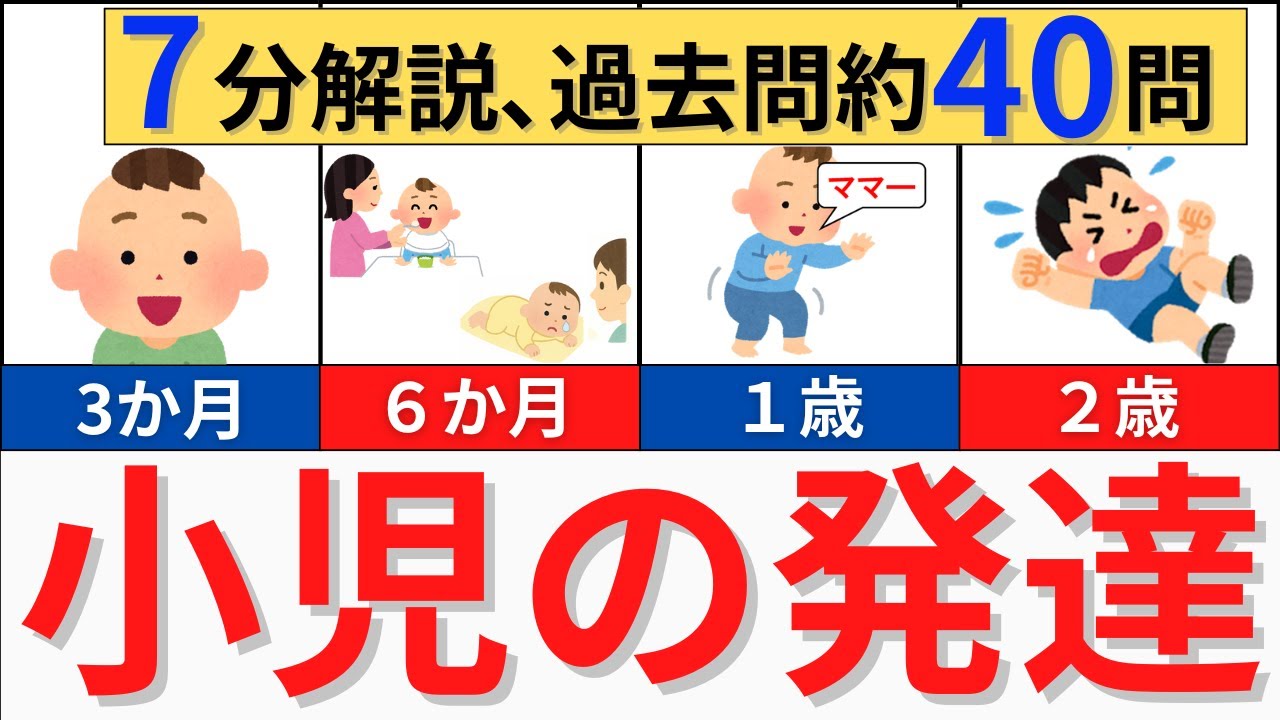
【7分で解説】小児の成長・発達について解説
Keywords
Summary
236 words
Critical Evaluation
Value of the Information & Strength of the Argument
The video offers high practical value for nursing students, providing a structured and memorable overview of developmental milestones, which are frequently tested in national exams. The argumentation is clear and logical, with each developmental domain broken down into age-specific milestones, followed by review questions to reinforce retention. The presenter uses repetition and mnemonic aids, such as associating specific ages with key skills, which enhances learning. However, the video does not delve into the underlying mechanisms or variations in development, and it relies on a single source (Review Book 2026) without cross-referencing other literature. The argumentation is consistent and well-organized, but it lacks critical discussion of potential controversies or nuances in developmental assessment.
Scientific Rigor, Source Quality, Title Accuracy
The scientific rigor is moderate: the content is based on a reputable nursing review book, but no primary research or peer-reviewed sources are cited. The video is well-structured with clear chapters and revision segments, which aids comprehension. The title accurately reflects the content, though the ‘7 minutes’ is misleading as the video is over 48 minutes long. The presenter does not provide references for the specific milestones, but the information aligns with standard pediatric knowledge. The video includes practice questions from national exams, which adds credibility. Overall, the source quality is acceptable for an educational tutorial, but it would benefit from citing additional authoritative sources.
232 words
Title / Content Match
The title accurately reflects the content, which is a concise explanation of pediatric growth and development, though the actual video is longer than the '7 minutes' mentioned.
Quality & Reliability
8/10
The video is a structured tutorial based on a recognized nursing review book (Review Book 2026), with clear chaptering and repeated revision sections. The content aligns with standard pediatric developmental milestones, and the presenter provides specific age ranges and examples. However, the video does not cite primary research or peer-reviewed sources, and the reliance on a single secondary source limits the depth of evidence.
Chapters
Cited Sources
- Medic Media article featuring the channel — The channel was featured on the official Medic Media website, indicating recognition by a medical publisher.
- Recommended playlist on anatomy, disease, and treatment — The presenter recommends this playlist for further study on essential topics.
Concurring Sources
- Medic Media article featuring the channel — The channel's recognition by a medical publisher supports the credibility of the content.
Contribution & Novelties
The video provides a concise, well-structured review of pediatric developmental milestones, specifically tailored for nursing students preparing for the Japanese national exam. Its originality lies in the integration of multiple developmental domains (motor, language, social, daily living) with frequent review questions and exam-style practice, making it a practical study tool. The presenter’s teaching style, using repetition and clear age-based milestones, enhances memorization.
Pour aller plus loin :
- Denver Developmental Screening Test — A widely used screening tool for developmental delays in children, relevant to the video’s discussion of developmental assessment.
- Attachment theory — Bowlby’s theory, mentioned in the video, explains the importance of early emotional bonds.
- Piaget’s theory of cognitive development — Provides a framework for understanding cognitive milestones in children, complementing the video’s focus on motor and social development.
130 words
Radar Profile
The radar profile shows high scores in information quantity, quality, and reliability, with a slightly lower technical level, indicating that the video is comprehensive and trustworthy but not highly technical. This is appropriate for a tutorial aimed at nursing students.