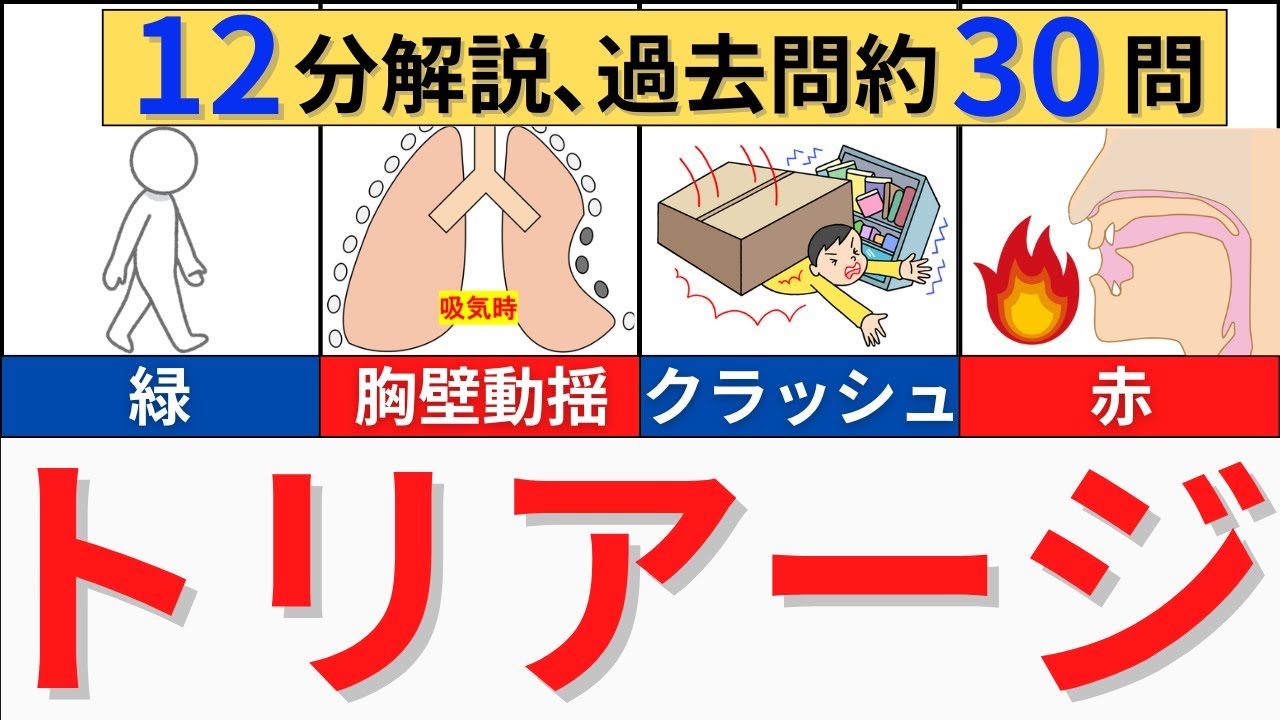
【12分で解説】トリアージについて解説
Keywords
Summary
171 words
Critical Evaluation
Value of the Information & Strength of the Argument
The video offers valuable information for nursing students, systematically explaining triage principles and their application. It provides clear definitions, logical categorization, and practical examples that enhance understanding. The argumentation is solid, as each condition is explained with its underlying pathophysiology, linking symptoms to triage decisions. The inclusion of exam-style questions reinforces learning and demonstrates the practical relevance of the content. The presenter’s explanations are concise and accurate, making complex concepts accessible without oversimplifying critical details.
Scientific Rigor, Source Quality, Title Accuracy
The scientific rigor is adequate for an educational video aimed at nursing students. The content aligns with established triage protocols, such as the START method, and the presenter references related videos on shock and spinal cord injuries for further detail. However, no primary sources or citations are provided, and the video relies on the presenter’s expertise. The title accurately reflects the content, as it promises a 12-minute explanation of triage, which is delivered. The video’s structure, with clear chapters and a review section, enhances its educational value.
177 words
Title / Content Match
The title accurately reflects the content, as the video explains triage in a concise 12-minute format, covering definitions, categories, and the START method.
Quality & Reliability
8/10
The video provides a structured and accurate overview of triage in disaster settings, covering key concepts, categories, and the START method. It includes practical examples and national exam questions, demonstrating a solid understanding of the subject. The information aligns with standard medical guidelines, though it is presented in a simplified manner for nursing students.
Chapters
Cited Sources
- Shock explanation video — Referenced for detailed explanation of shock, relevant to triage of red category patients.
- Spinal cord injury explanation video — Referenced for detailed explanation of spinal cord injuries, relevant to triage of red and yellow categories.
- Recommended playlist for anatomy, disease, and treatment — Recommended for further study on essential topics for nursing exams.
Concurring Sources
- START triage method — The video's explanation of the START method aligns with standard protocols described in this source.
- Triage categories — The color-coded categories (red, yellow, green, black) match the general triage classification system.
Contribution & Novelties
The video provides a clear and structured educational resource on triage, specifically tailored for nursing students preparing for the Japanese national exam. It breaks down complex concepts into digestible segments, using visual aids and practical examples. The inclusion of exam-style questions with explanations is particularly valuable for reinforcing knowledge. The video also highlights the importance of understanding the pathophysiology behind triage decisions, which is often underemphasized in basic training.
Pour aller plus loin :
- START triage method — Provides a detailed overview of the START method, including its history and variations.
- Crush syndrome — Explains the pathophysiology, clinical features, and management of crush syndrome, a key condition discussed in the video.
- Flail chest — Offers comprehensive information on flail chest, including its causes, symptoms, and treatment.
- Triage tag — Describes the use and design of triage tags in disaster response.
- Disaster nursing — Discusses the role of nurses in disaster situations, including triage and emergency care.
156 words
Radar Profile
The radar profile shows high scores in quantity and quality of information, with a moderate technical level, indicating a well-balanced educational video. The reliability is also high, reflecting the accuracy of the content. The video is particularly strong in providing comprehensive information and clear explanations, making it a valuable resource for its target audience.