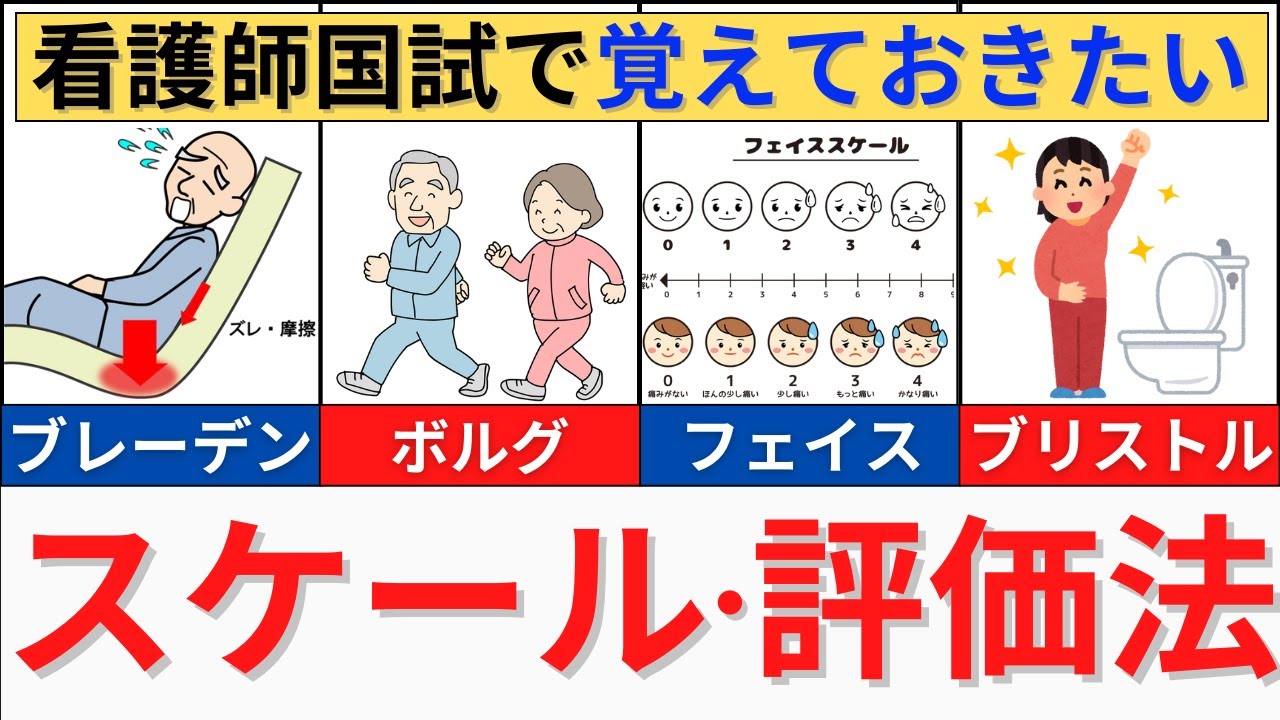
スケール・評価法 総まとめ フェイススケールは3歳から使用できるほうが主流です💦
Keywords
Summary
148 words
Critical Evaluation
Value of the Information & Strength of the Argument
The video offers substantial value for nursing students by consolidating a large amount of exam-relevant information into a single session. The presenter uses a structured approach, categorizing scales by evaluation type (stages, scores, etc.) and providing mnemonic devices. The argumentation is clear and pedagogical, with repeated reviews and practice questions to reinforce learning. However, the content is primarily descriptive and does not delve into underlying evidence or controversies, which limits its depth for advanced learners. The presenter’s explanations are generally accurate, but some simplifications (e.g., pain assessment in children) may not fully capture clinical nuances.
Scientific Rigor, Source Quality, Title Accuracy
The video demonstrates a good understanding of the subject matter, but it does not cite specific sources or references. The description provides a link to a playlist of related videos, but no direct citations to scientific literature. The title accurately reflects the content, which is a comprehensive summary of scales and assessment methods, with a specific emphasis on the face scale being usable from age 3. The video is well-structured with clear chapters, aiding navigation. However, the lack of citations reduces its scientific rigor, making it more suitable for exam preparation than for evidence-based clinical reference.
206 words
Title / Content Match
The title accurately reflects the content, which is a comprehensive summary of scales and assessment methods, with a specific emphasis on the face scale being usable from age 3.
Quality & Reliability
7/10
The video is a comprehensive tutorial on various clinical assessment scales, with accurate descriptions of standard tools (e.g., NRS, VAS, JCS, GCS). However, it lacks citations to primary sources and contains some oversimplifications (e.g., pain scales for children). The content is generally reliable for exam preparation but not a substitute for clinical guidelines.
Chapters
- オープニング
- 痛みのスケール(NRS・VAS・フェイススケール)
- ボルグスケール
- ブリストルスケール
- ドベーキー分類
- スタンフォード分類
- 復習 フェイススケールは3歳以上から使用できるという文献が多いです💦
- NPUAPの褥瘡分類
- 熱傷の分類
- 復習
- JCS
- ヒュージョーンズ分類
- 何段階かの評価法の覚え方のコツ
- 復習
- 認知症高齢者の日常生活自立度
- 障害高齢者の日常生活自立度
- ホーエンヤール分類
- 復習
- 徒手筋力テスト(MMT)
- NYHA分類
- フォレスター分類
- 復習
- 喘息の発作強度
- 小児の脱水の重症度
- 復習
- CDR
- GDS15
- HDSーRとMMSE
- 復習
- ブレーデンスケール
- バーセルインデックス
- 復習
- アプガースコア
- GCS
- 復習
- 大島分類
- デンバー式発達スクリーニング検査
- 復習
- 総復習
- 国家試験問題
Cited Sources
- Playlist: まずはこれから!超重要な解剖・疾患・治療 — Recommended playlist for related educational content on anatomy, diseases, and treatments.
Concurring Sources
- Nursing textbooks and exam preparation materials — The content aligns with standard nursing education resources, though no specific sources are cited.
Dissenting Sources
- None — No conflicting sources were identified, but the video lacks citations to primary literature.
Contribution & Novelties
This video provides a consolidated review of numerous clinical assessment scales, which is valuable for nursing students preparing for exams. It offers mnemonic devices and a systematic categorization of scales, which can aid memorization. However, it does not present new scientific information or original research. For deeper understanding, viewers can explore the following:
Pour aller plus loin :
- Pain Assessment in Children — Overview of pain scales for pediatric populations, including the Face Scale.
- Glasgow Coma Scale — Detailed explanation of the GCS and its clinical use.
- Braden Scale for Predicting Pressure Sore Risk — Evidence-based tool for pressure ulcer risk assessment.
102 words
Radar Profile
The radar profile shows high scores in quantity of information and moderate scores in quality and technical level, indicating a comprehensive but not deeply rigorous resource. The fiabilite_globale score is moderate, reflecting the lack of citations and some simplifications.