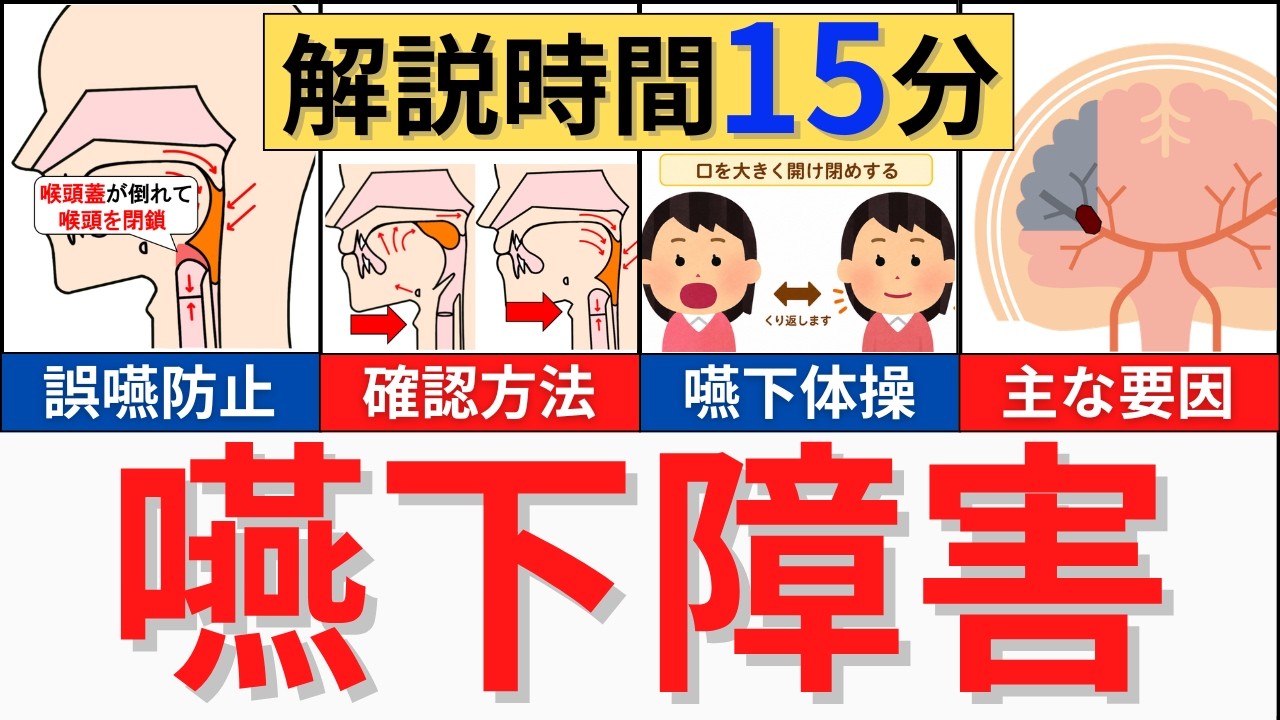
【実習にも役立つ】嚥下障害と看護 実習の看護計画にも役立ちます
Keywords
Summary
161 words
Critical Evaluation
Value of the Information & Strength of the Argument
The video provides valuable, practical information for nursing students, with clear explanations of physiological mechanisms and evidence-based nursing interventions. The argumentation is solid, as each recommendation is supported by physiological rationale (e.g., why chin-tuck posture reduces aspiration risk, why thickened liquids are safer). The inclusion of national exam questions helps consolidate knowledge. However, the video lacks explicit citations to research or guidelines, relying on general nursing knowledge, which is acceptable for an educational tutorial but limits its scientific rigor.
Scientific Rigor, Source Quality, Title Accuracy
The scientific rigor is moderate: the content aligns with standard nursing textbooks and guidelines, but no specific sources are cited within the video. The description includes links to two articles from Medic Media (a nursing education site) and a playlist, which are relevant but not directly referenced in the video. The title accurately reflects the content, covering both dysphagia and nursing care, and the video meets its stated purpose. No comments were provided for analysis.
169 words
Title / Content Match
The title accurately reflects the content, which covers both the pathophysiology of dysphagia and practical nursing care, including care plan considerations.
Quality & Reliability
7/10
The video provides a structured and accurate overview of swallowing physiology, dysphagia, and nursing interventions, with clear explanations of mechanisms and evidence-based practices. It includes national exam questions to reinforce learning. However, it lacks citations to primary sources and relies on general nursing knowledge, which is appropriate for its educational purpose but limits its scientific depth.
Chapters
Cited Sources
- Medic Media article (2025/03) — Linked in description, likely related to nursing care or dysphagia.
- Medic Media article (2025/10) — Linked in description, likely related to nursing care or dysphagia.
- Recommended playlist on anatomy and diseases — Mentioned as a recommended playlist for further study.
Concurring Sources
- Medic Media article (2025/03) — Likely provides similar nursing information, supporting the video's content.
- Medic Media article (2025/10) — Likely provides similar nursing information, supporting the video's content.
Contribution & Novelties
The video offers a structured, exam-oriented review of dysphagia nursing, integrating pathophysiology with practical interventions. Its novelty lies in the clear breakdown of nursing care into specific points (e.g., swallowing exercises, posture, food texture) and the inclusion of national exam questions with rationales. For further exploration:
- Dysphagia - Wikipedia — Overview of dysphagia, its causes, and management.
- Aspiration pneumonia - Wikipedia — Details on aspiration pneumonia, a key complication of dysphagia.
- Swallowing exercises - Physiopedia — Evidence-based swallowing exercises, including those mentioned in the video.
- Oral care in nursing - PubMed — Research on oral care and its impact on aspiration pneumonia.
102 words
Radar Profile
The radar profile shows high scores in information quantity and quality, with moderate technical level and reliability. This indicates a well-structured educational video that is accessible to its target audience, though it could benefit from more explicit citations to primary sources.