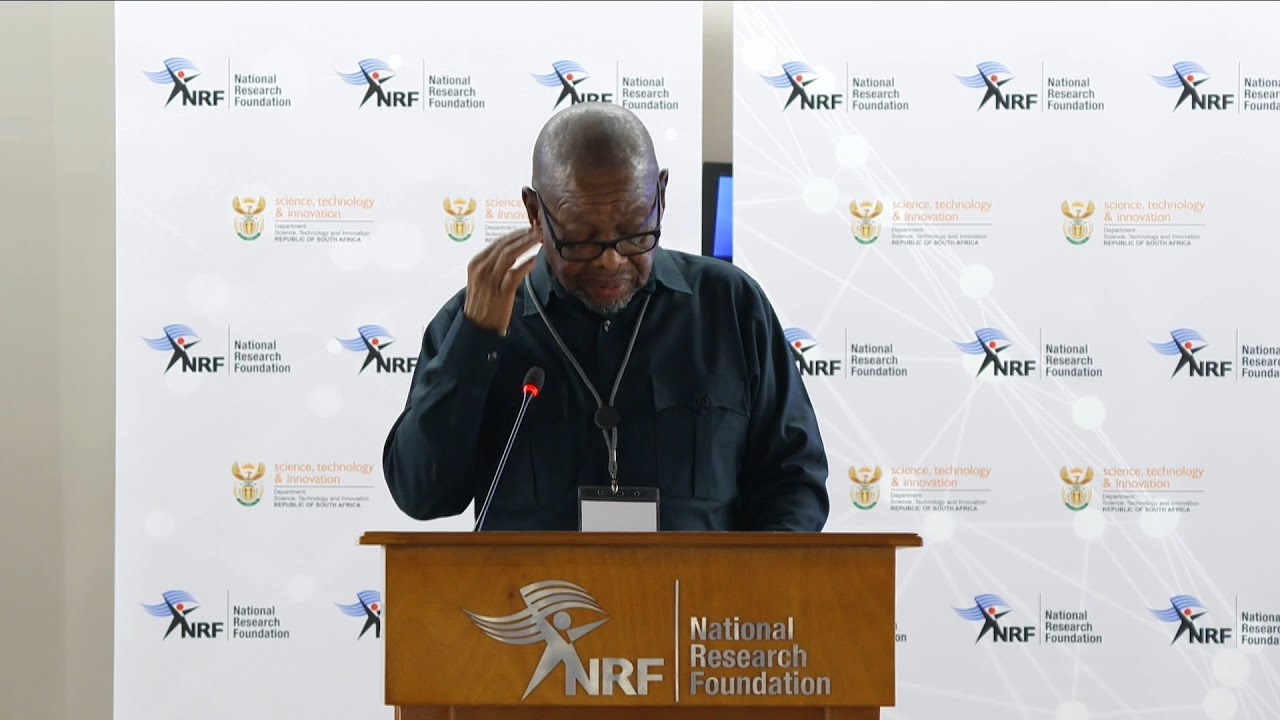
Official Launch: 41 New SARChI Research Chairs | Minister of Science, Technology and Innovation
Keywords
Summary
149 words
Critical Evaluation
Value of the Information & Strength of the Argument
The video provides valuable insights into South Africa’s science policy priorities, including concrete data on R&D expenditure and PhD production. The Minister’s argumentation is coherent and persuasive, linking the allocation of research chairs to broader national goals. However, it lacks detailed evidence or case studies to support some claims, and the speech is primarily policy-oriented rather than scientific.
Scientific Rigor, Source Quality, Title Accuracy
The video is a primary source from an official government channel, lending authority to the statements. The Minister references the NACI 2025 STI indicators report and the Decadal Plan, but no specific URLs are provided in the description. The title accurately reflects the content. No comments were provided for analysis.
123 words
Title / Content Match
The title accurately reflects the content: the official launch of 41 new SARChI research chairs with a keynote address by the Minister.
Quality & Reliability
7/10
The video is an official government keynote address by the Minister of Science and Technology, providing authoritative policy statements and data from official reports (NACI, STI indicators). However, it is a political speech with limited technical depth and no independent verification of claims.
Key Moments
Markers derived by PSI from the transcript: the creator did not define chapters.
- Introduction and historic significance of the event
- Announcement of 41 new research chairs, with emphasis on historically disadvantaged institutions
- Discussion of geopolitical context and misuse of science
- Reference to NACI 2025 STI indicators report and decline in GERD
- Condemnation of academic fraud, specifically PhD ghostwriting
- Addressing the innovation paradox and need for commercialization
- Advocacy for communities of practice and cluster chair model
- Call for sovereign African research agenda and conclusion
Cited Sources
- Department of Science, Technology and Innovation website — Referenced in the video description as the official source for more information on the Decadal Plan and SARChI.
Concurring Sources
- NRF SARChI website — The NRF is the implementing agency for SARChI, and its website provides official information on the chairs.
Contribution & Novelties
The video provides an official policy perspective on the strategic allocation of research chairs to address historical inequalities and national challenges. It introduces the concept of ‘communities of practice’ and ‘cluster chair model’ as innovative funding and mentoring approaches. The emphasis on a sovereign African research agenda is a notable contribution to the discourse on decolonizing science.
Pour aller plus loin :
- South African Research Chairs Initiative (SARChI) — Official NRF page for SARChI, providing details on the initiative.
- Decadal Plan for Science, Technology and Innovation 2022-2032 — Official DSTI page for the Decadal Plan.
- Innovation Paradox — Wikipedia article explaining the concept of the innovation paradox.
- Ghostwriting in Academia — Wikipedia article on ghostwriting, relevant to the Minister’s condemnation of PhD ghostwriting.
- Communities of Practice — Wikipedia article on communities of practice, a key concept in the speech.
139 words
Radar Profile
The radar profile shows moderate to high scores in information quantity and quality, reflecting the substantive policy content. The technical level is low, as expected for a ministerial address. Overall reliability is high due to the official nature of the source.