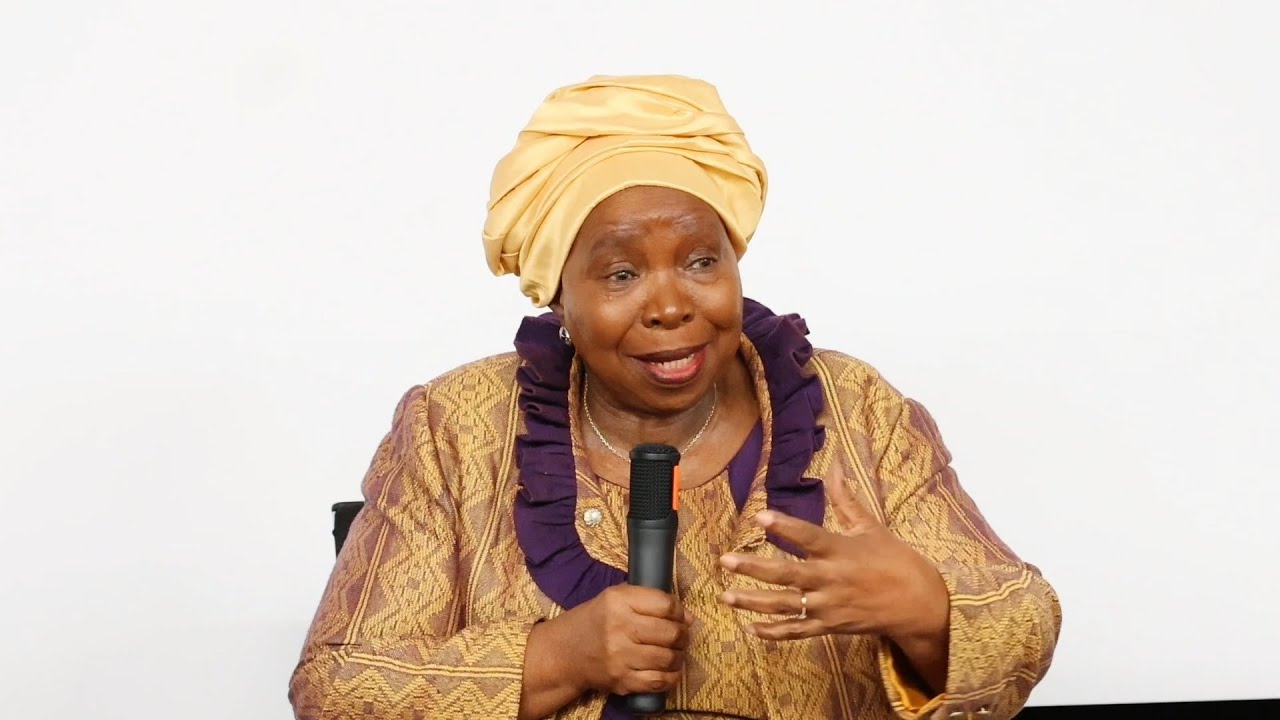
30 Years of Medical Solidarity: The Legacy of Cuban Doctors in South Africa
Keywords
Summary
142 words
Critical Evaluation
Value of the Information & Strength of the Argument
The video provides valuable first-hand testimony from a key political figure, offering unique insights into the decision-making processes and challenges of establishing the Cuban medical cooperation. The argumentation is persuasive, relying on personal anecdotes and specific examples (e.g., the white mother’s letter, the medical school rescue) to illustrate the program’s positive impact. However, the narrative is one-sided, lacking critical examination of potential drawbacks or alternative perspectives. The speaker’s authority and emotional engagement strengthen the argument, but the lack of external evidence or data limits its scientific rigor.
Scientific Rigor, Source Quality, Title Accuracy
The video is a documentary-style interview with no explicit citations or references to external sources. The only source is the speaker’s personal testimony, which, while credible, is not independently verifiable. The title accurately reflects the content, focusing on the 30-year legacy. The description mentions the production of over 3,000 doctors, which aligns with the narrative. No comments were provided for analysis.
163 words
Title / Content Match
The title accurately reflects the content, which focuses on the 30-year legacy of Cuban doctors in South Africa.
Quality & Reliability
7/10
The video is a first-person account by a former Minister of Health, providing a unique insider perspective on the Cuban-South African medical cooperation. While the narrative is anecdotal and lacks independent verification, it is consistent with known historical events and includes specific details (e.g., 3,000 doctors trained, 30th anniversary in 2026). The institutional source (Department of Science, Technology and Innovation) adds credibility, but the lack of citations and the promotional tone limit the score.
Key Moments
Markers derived by PSI from the transcript: the creator did not define chapters.
- Introduction: Minister's motivation to transform healthcare and seek Cuban help.
- Overcoming Medical Council resistance by taking professors to Cuba.
- Arrival of first 300 Cuban doctors in South Africa.
- Expansion to training South African students in Cuba; Fidel Castro's intervention.
- Impact on primary healthcare and home visits; anecdote of white mother.
- Rescue of Mthatha medical school with Cuban professors.
- Conclusion: Philosophical differences and enduring legacy.
Contribution & Novelties
The video offers a unique insider perspective on a significant international medical cooperation program, providing personal anecdotes and political context not commonly found in academic literature. It highlights the role of individual leadership in shaping health policy and the importance of South-South cooperation.
Pour aller plus loin :
- Cuba’s medical internationalism — Provides an overview of Cuba’s global medical missions.
- Primary health care — Background on the PHC model that influenced South Africa.
- South Africa’s health system — Context on the challenges and reforms in South African healthcare.
88 words
Radar Profile
The radar profile shows high scores in information quantity and quality, reflecting the rich personal narrative, but lower technical level due to the non-technical nature. The reliability score is moderate, consistent with the anecdotal evidence. Overall, the video is informative but relies on personal testimony.