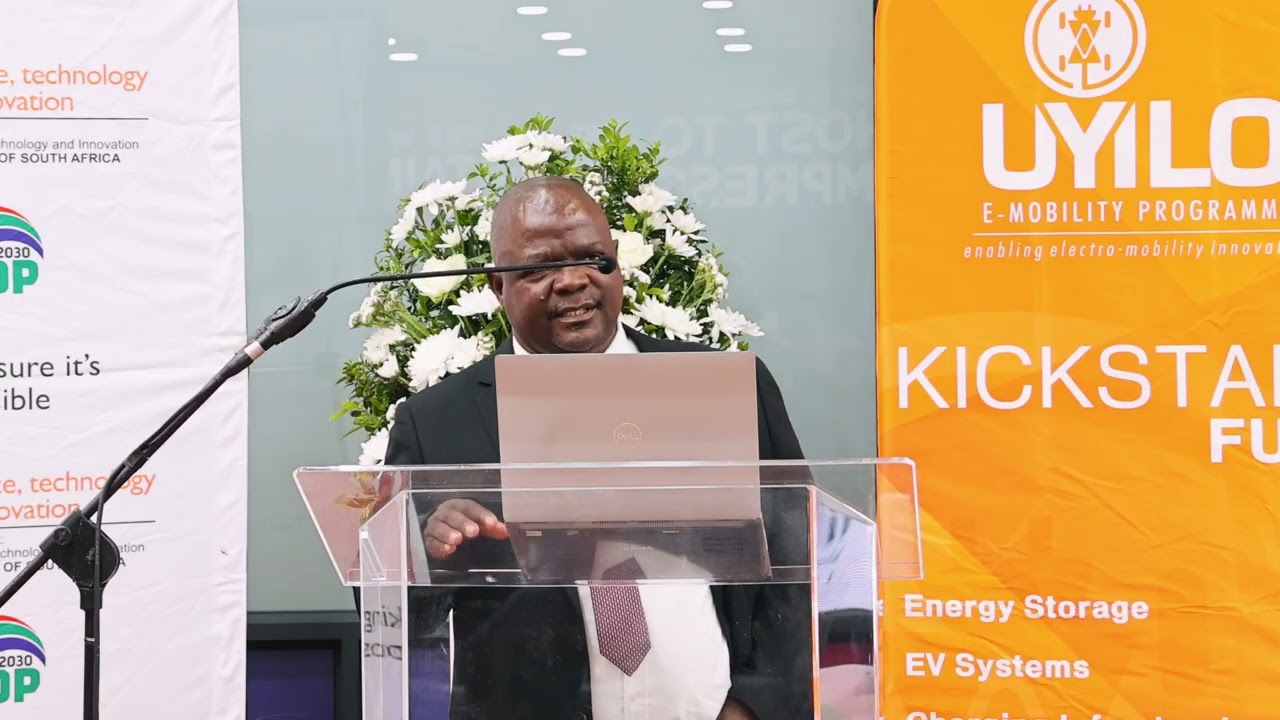
UYILO E-Mobility Programme | Can South Africa Build Its Own Battery Industry?
Keywords
Summary
146 words
Critical Evaluation
Value of the Information & Strength of the Argument
The video provides valuable insights into South Africa’s strategic efforts to build a local battery industry, including specific initiatives like LMO production, recycling facilities, and skills development programs. The argumentation is based on the speaker’s position as a government official, offering a credible perspective on policy direction and ongoing projects. However, the presentation lacks detailed data and evidence to support claims such as job creation numbers and the feasibility of local battery manufacturing. The argumentation is more persuasive than analytical, relying on the authority of the speaker rather than rigorous scientific evidence.
Scientific Rigor, Source Quality, Title Accuracy
The video does not cite specific sources or provide references to scientific literature. The information is presented as expert opinion from a government official, which adds some credibility but lacks the rigor of peer-reviewed research. The title accurately reflects the content, focusing on the question of whether South Africa can build its own battery industry. The presentation is informal and lacks detailed citations, making it difficult to verify the accuracy of the claims. The video appears to be a recording of a conference presentation, which may limit its scientific rigor.
197 words
Title / Content Match
The title accurately reflects the content, which focuses on South Africa's potential to build a local battery industry.
Quality & Reliability
6/10
The video presents an expert opinion from a government official, with some specific data points and references to ongoing projects, but lacks detailed citations and independent verification. The information is plausible and aligns with known initiatives, but the presentation is informal and lacks rigorous scientific backing.
Key Moments
Markers derived by PSI from the transcript: the creator did not define chapters.
- Introduction and thanks to hosts
- Mention of previous year's report and transport month
- Discussion on transport as a basic need and decarbonization
- Mention of Paris Agreement and EV market trends
- Motor industry contribution to GDP and job creation potential
- Phasing out of IC engines and need for new energy vehicles
- DSTI's R&D programs and focus on batteries and hydrogen
- Challenges with hydrogen production and refuelling stations
- Battery program since 2011 and cathode material challenge
- Recycling facility at UWC and collaboration with NMU
- Skills development program for TVET students
- Call for collaboration and future expansion to other provinces
Contribution & Novelties
The video provides an insider perspective on South Africa’s efforts to build a local battery industry, highlighting specific projects and policy directions. It contributes to the discourse on energy transition and industrial development in emerging economies.
Pour aller plus loin :
- South Africa’s Energy Transition — Official government resource on energy policy.
- Lithium-ion battery recycling — Overview of recycling processes.
- Hydrogen fuel cells — Basic principles and applications.
68 words
Radar Profile
The radar profile shows moderate scores across all dimensions, indicating a balanced but not exceptional video. The information is relevant and somewhat technical, but lacks depth and rigorous sourcing, resulting in a moderate overall rating.