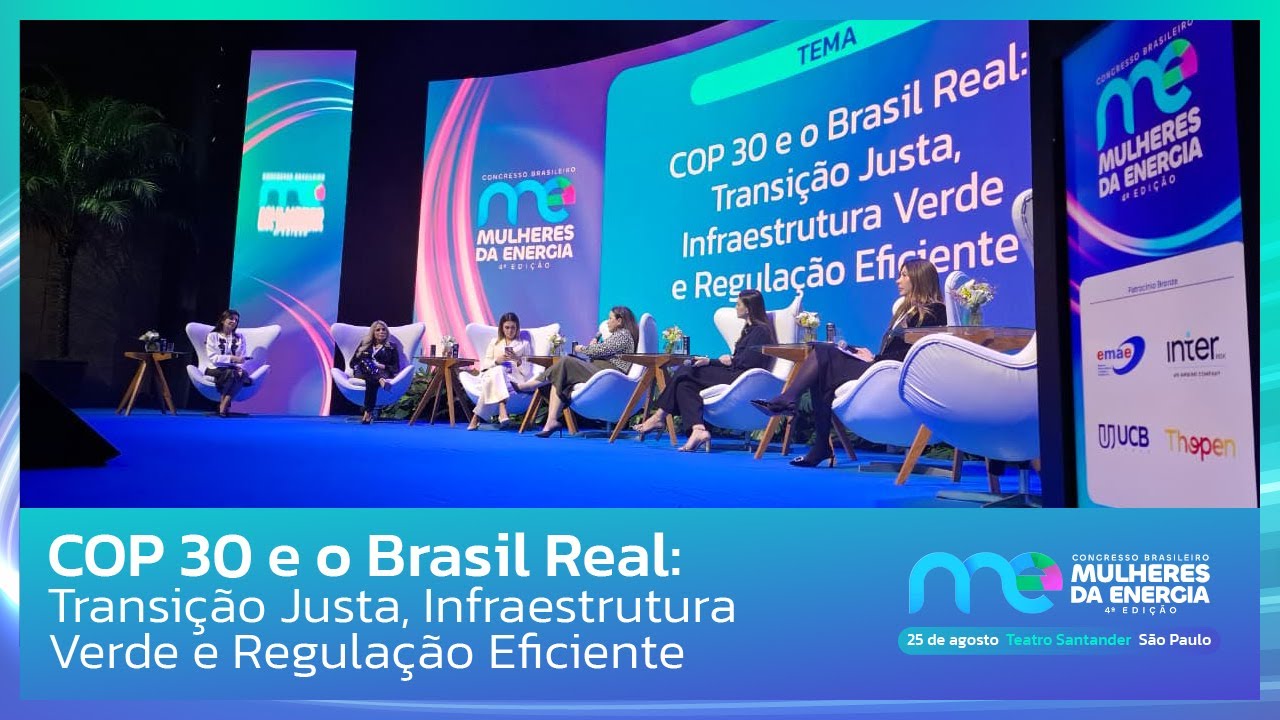
Debate, COP 30 e o Brasil Real - Transição Justa, Infraestrutura Verde e Regulação Eficiente
Keywords
Summary
136 words
Critical Evaluation
Value of the Information & Strength of the Argument
The value of the information is high for those interested in Brazilian energy policy and infrastructure, as it provides insights from key stakeholders. The argumentation is solid, with panelists grounding their points in practical experience and specific data, such as the 25% flexibility of the generation park and the potential for biomethane production in São Paulo. However, the debate format limits depth, and some claims lack detailed evidence. The discussion is coherent and addresses critical issues, but it is more of an exchange of perspectives than a rigorous scientific analysis.
Scientific Rigor, Source Quality, Title Accuracy
The scientific rigor is moderate; the panelists are credible experts, but no formal sources are cited. The quality of sources is based on their institutional roles rather than documented references. The title accurately represents the content, which is a debate on COP 30 and related topics. The discussion is well-structured and relevant, but the lack of citations and the informal setting reduce its scientific weight. The video has very few views and no comments, so public reception cannot be assessed.
185 words
Title / Content Match
The title accurately reflects the content, which is a debate on COP 30, just transition, green infrastructure, and regulation in Brazil.
Quality & Reliability
7/10
The debate features high-level experts from the Brazilian energy sector (ONS, state government, industry) providing informed perspectives on regulatory and infrastructure challenges. However, it is a panel discussion with no formal citations or data verification, and the low viewership limits external validation.
Key Moments
Markers derived by PSI from the transcript: the creator did not define chapters.
- Introduction of panelists and topic.
- Elisa Bastos (ONS) discusses operational flexibility and challenges of variable renewables.
- Marisa Barros (São Paulo) presents state climate plan and transport decarbonization strategies.
- Priscila Carazzatto (EGS) highlights transmission bottlenecks and need for regulatory clarity.
- Alessandra Torres (ABRAPCH) questions ONS on firm power and hydro vs. thermal.
- Elisa Bastos responds on hydro flexibility and transmission planning mismatch.
- Marina Meyer (OAB/INEL) discusses regulatory reforms and need for legal certainty.
Contribution & Novelties
The video provides a unique multi-stakeholder perspective on Brazil’s energy transition challenges, particularly the operational and regulatory aspects. It underscores the need for flexible operation, transmission expansion, and legal certainty. The discussion is valuable for policymakers and industry professionals.
Pour aller plus loin :
- COP30 — Official Brazilian government page on COP30, providing context and updates.
- ONS - Operador Nacional do Sistema Elétrico — Official site of the Brazilian system operator, relevant for understanding grid operations.
- Biomethane in Brazil — EPE’s Ten-Year Energy Expansion Plan, which includes biomethane potential and energy planning.
92 words
Radar Profile
The radar profile shows a balanced performance across all dimensions, with slightly higher scores in information quantity and quality, reflecting the expert panel and substantive discussion. The technical level is moderate, suitable for a professional audience, while reliability is supported by the institutional credibility of the speakers.