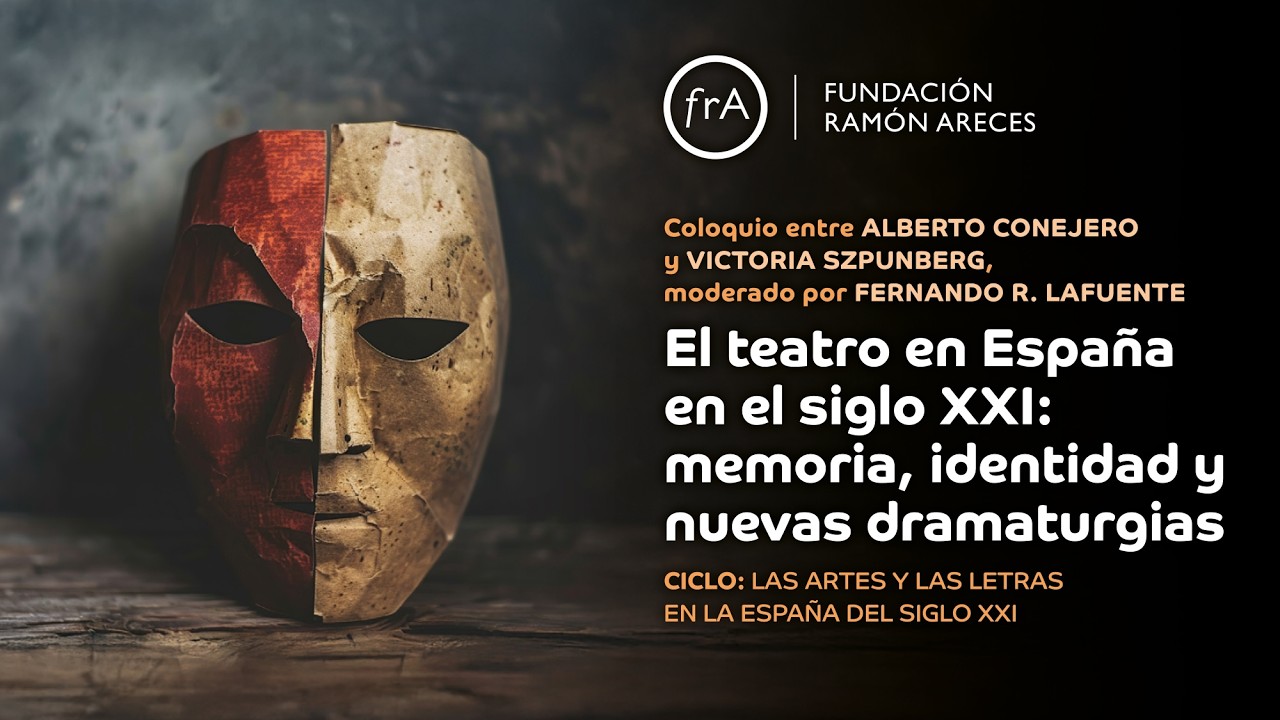
Coloquio- El teatro en España en el siglo XXI
Keywords
Summary
156 words
Critical Evaluation
The colloquium provides a rich and insightful discussion on contemporary Spanish theatre, featuring two prominent playwrights with complementary perspectives. Victoria Szpunberg offers a balanced view, acknowledging both the positive developments (increased female participation, the rise of postdramatic forms) and the challenges (ideological pressure, the risk of simplifying theatre’s mystery). Her reference to Lehmann’s ‘Postdramatic Theatre’ situates the discussion within a broader theoretical framework, though she does not delve deeply into the concept’s nuances. Alberto Conejero’s contribution is particularly valuable for his defense of dramatic literature and his distinction between the German postdramatic school and the French neodrama, citing Sarrazac. This theoretical grounding adds rigor to the conversation. Conejero’s personal experience with dyslexia and his emphasis on the power of language provide a compelling argument for the continued relevance of text-based theatre. The moderation by Fernando R. Lafuente is effective, guiding the dialogue while allowing the speakers to develop their ideas. The discussion touches on key themes such as the role of memory, identity, and the spectator’s experience, aligning with the description’s promise of theatre as a ‘place of thought.’ However, the conversation remains largely at an introductory level, suitable for a general audience, and does not offer deep technical analysis of specific works or trends. The lack of empirical data or statistical evidence is a minor weakness, but the expert opinions are credible and well-articulated. The title accurately reflects the content, and the colloquium successfully fulfills its aim of providing a snapshot of contemporary Spanish theatre. Overall, the content is of high quality, offering valuable insights for those interested in the field, though it may not satisfy specialists seeking in-depth analysis.
271 words
Title / Content Match
The title accurately reflects the content: a colloquium on Spanish theatre in the 21st century, with a focus on dramaturgy and current trends.
Quality & Reliability
8/10
The discussion features two award-winning playwrights (Victoria Szpunberg and Alberto Conejero) moderated by Fernando R. Lafuente, providing expert perspectives on contemporary Spanish theatre. The content is well-structured, with references to key theoretical works (Lehmann's 'Postdramatic Theatre', Sarrazac's 'neodrama') and observations on current trends. The institutional setting (Fundación Ramón Areces) adds credibility. Minor limitations include the conversational format and lack of empirical data.
Key Moments
Markers derived by PSI from the transcript: the creator did not define chapters.
- Introduction by Fernando R. Lafuente, thanking the audience and the foundation, and introducing the cycle.
- Lafuente presents the speakers: Victoria Szpunberg and Alberto Conejero, both national theatre award winners.
- Szpunberg begins her overview, highlighting the participation of women and the rise of postdramatic theatre.
- Szpunberg discusses the current trend towards autofiction and the need for consolation in a violent world.
- Conejero defends dramatic literature and introduces the concept of neodrama, contrasting it with postdramatic theatre.
- Conejero emphasizes the importance of careful language and storytelling in an age of fragmentation.
- The conversation turns to the role of theatre as a space for reflection and human connection.
- Discussion on the challenges of ideological pressure and the simplification of theatre's mystery.
- Speakers share personal experiences and pedagogical insights on teaching dramaturgy.
- Q&A session begins, with audience questions on the future of Spanish theatre.
Cited Sources
- Postdramatic Theatre — Referenced by Victoria Szpunberg as a key theoretical work on postdramatic theatre.
- Neodrama (Jean-Pierre Sarrazac) — Mentioned by Alberto Conejero as a French alternative to postdramatic theatre.
- Anne Bogart (director) — Quoted by Alberto Conejero on the difficulty of finishing sentences in contemporary times.
Concurring Sources
- Fundación Ramón Areces — Institutional host of the colloquium, providing a platform for cultural debate.
Contribution & Novelties
The colloquium offers a valuable dialogue between two leading Spanish playwrights, providing insights into the current state of Spanish theatre. It highlights the tension between postdramatic and neodramatic approaches, and the growing importance of autofiction and female voices. The discussion underscores the role of theatre as a space for reflection and human connection in a fragmented world.
Pour aller plus loin :
- Postdramatic Theatre (Hans-Thies Lehmann) — Overview of the concept and its impact.
- Jean-Pierre Sarrazac — French playwright and theorist associated with neodrama.
- Autofiction — Literary genre blending autobiography and fiction, relevant to current trends in theatre.
98 words
Radar Profile
The radar profile shows high scores in quantity and quality of information, reflecting a dense and substantive discussion. The technical level is moderately high, indicating a balance between accessibility and depth. Overall reliability is strong, supported by the expertise of the speakers and the institutional context.