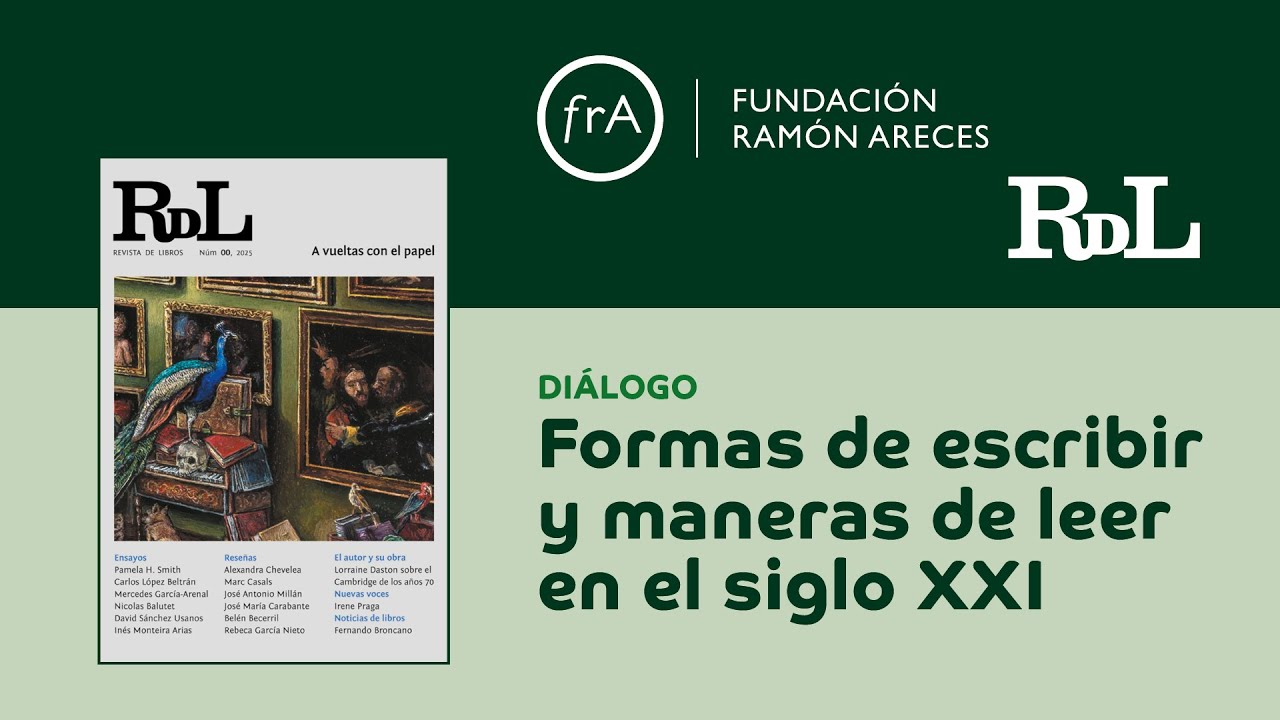
Diálogo- Formas de escribir y maneras de leer en el siglo XXI
Keywords
Summary
158 words
Critical Evaluation
The dialogue offers a rich and nuanced exploration of the relationship between form and content in literature, drawing on the participants’ extensive experience as writers, critics, and academics. The discussion is intellectually stimulating, with each participant bringing a distinct perspective: Moscoso as a historian and philosopher, Navarro as a novelist, and García Calero as a cultural journalist. The argumentation is generally solid, grounded in historical references (e.g., the Enlightenment, Habermas) and personal observations. However, the conversation remains at a relatively high level of abstraction, with limited concrete data or empirical evidence to support some claims. The quality of sources is high, given the participants’ credentials, but the discussion is more opinion-based than evidence-based. The title accurately reflects the content, and the format of a dialogue is well-suited to the topic. The presence of a brief sponsorship segment (the announcement of the upcoming conference cycle) does not detract from the overall quality. The discussion could have benefited from more specific examples or case studies to illustrate the points made, but it remains a valuable contribution to the cultural debate on the future of reading and writing. The public’s comments, if any, would likely reflect appreciation for the intellectual depth and the relevance of the topic.
204 words
Title / Content Match
The title accurately reflects the central theme of the dialogue, which explores how writing and reading practices are transforming in the 21st century.
Quality & Reliability
8/10
The discussion features established intellectuals and writers, providing a high level of expertise. The content is a dialogue rather than a formal study, but the arguments are well-founded and reference historical and philosophical contexts. The institutional backing of the Fundación Ramón Areces adds credibility.
Key Moments
Markers derived by PSI from the transcript: the creator did not define chapters.
- Introduction by Raimundo Pérez Hernández, welcoming attendees and introducing the event.
- Javier Moscoso explains the historical significance of Revista de Libros and its connection to the Enlightenment project.
- Discussion begins on how digital formats affect writing and reading habits.
- Elvira Navarro shares her experience as a writer in the digital age, discussing the influence of constant connectivity.
- Jesús García Calero talks about the attention economy and its impact on literary criticism.
- The panel debates the future of literary genres and the coexistence of fiction and reality.
- Discussion on the role of literary awards and the formation of reading communities.
- Reflections on the persistence of paper and the value of physical books in a digital world.
- Closing remarks and thanks to the audience and participants.
Cited Sources
- Event page for 'Formas de escribir y maneras de leer en el siglo XXI' — Official event page providing details about the dialogue and the participants.
Concurring Sources
- Event page for 'Formas de escribir y maneras de leer en el siglo XXI' — Official event page that aligns with the content of the dialogue.
Contribution & Novelties
The dialogue provides a contemporary reflection on the transformation of literary practices, emphasizing the interplay between digital and print formats. It contributes to the ongoing debate about the future of reading and writing, offering insights from both creative and academic perspectives.
Pour aller plus loin :
- Jürgen Habermas - The Structural Transformation of the Public Sphere — Relevant for understanding the concept of the public sphere discussed by Moscoso.
- Attention economy — Directly related to the discussion on the economy of attention and its effects on reading habits.
- History of the book — Provides context on the evolution of book formats and reading practices.
104 words
Radar Profile
The radar profile shows high scores in quality of information and reliability, reflecting the expertise of the participants. The quantity of information is moderate, as the discussion is more qualitative than exhaustive. The technical level is moderate, accessible to a general audience interested in literary culture.