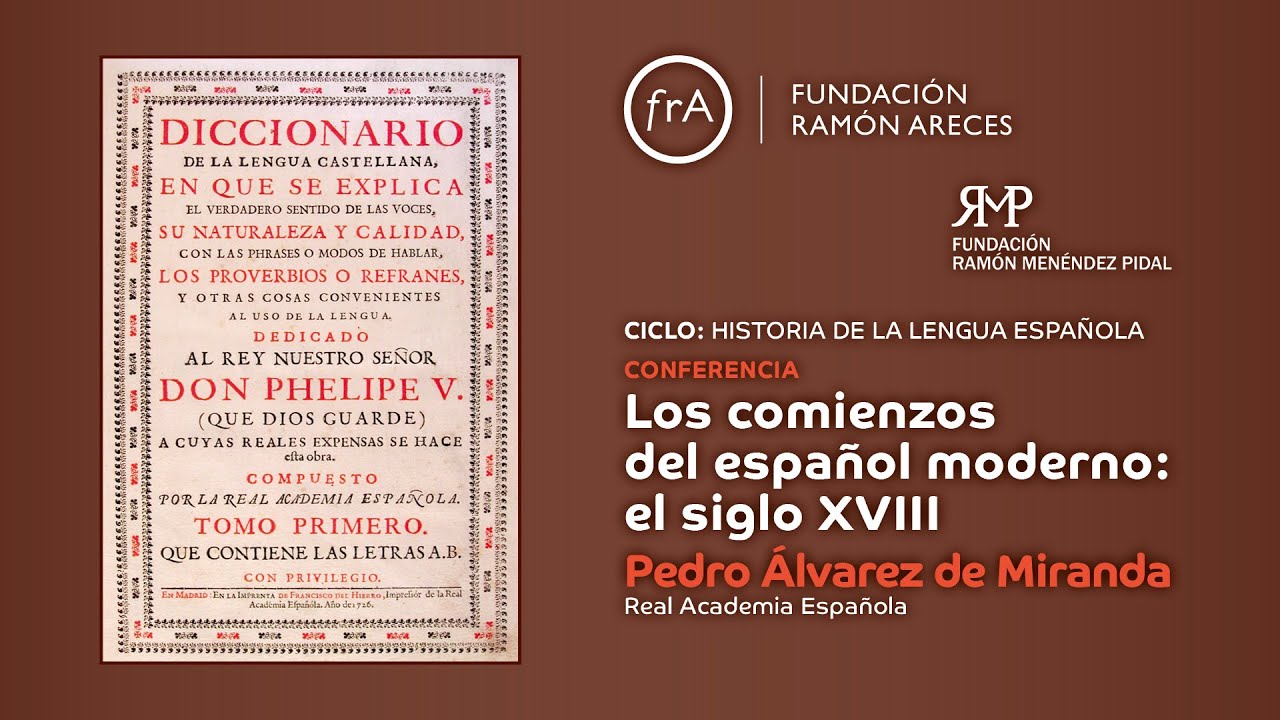
Pedro Álvarez de Miranda- Los comienzos del español moderno: el siglo XVIII
Keywords
Summary
188 words
Critical Evaluation
The lecture by Pedro Álvarez de Miranda is a masterful exposition of the linguistic developments of 18th-century Spanish, delivered with the authority of a leading expert. The content is deeply rooted in historical research, with references to primary sources such as the Diccionario de Autoridades and the works of Menéndez Pidal, Américo Castro, and Rafael Lapesa. The argumentation is solid, systematically dismantling outdated views on the period, such as the notion that the Bourbon dynasty imposed a repressive linguistic policy. Instead, Álvarez de Miranda presents a more nuanced picture, emphasizing the role of the Real Academia Española in standardizing the language and the gradual evolution from the late 17th century. The lecture is well-structured, moving from a personal reflection on Menéndez Pidal’s unfinished work to a broader analysis of the period’s significance. The speaker’s expertise is evident in his detailed discussion of lexicography and the evolution of specific words. The sources cited are credible and appropriate, including the speaker’s own scholarly contributions and the works of other respected linguists. The title accurately reflects the content, and the lecture offers valuable insights for both specialists and informed laypeople. The only minor limitation is that the lecture assumes a certain level of familiarity with Spanish linguistic history, but this does not detract from its overall quality. The public comments, if any, were not provided, so no analysis of audience reception is included.
230 words
Title / Content Match
The title accurately reflects the content, which focuses on the beginnings of modern Spanish in the 18th century, as presented by the expert.
Quality & Reliability
9/10
The lecture is delivered by a renowned expert in Spanish historical linguistics, a member of the Royal Spanish Academy, and is based on extensive archival and textual research. The content is well-structured, with references to primary sources and scholarly works, and is presented with academic rigor.
Key Moments
Markers derived by PSI from the transcript: the creator did not define chapters.
- Introduction by Inés Fernández Ordóñez, presenting the speaker and the lecture topic.
- Álvarez de Miranda begins his lecture, thanking the foundation and discussing Menéndez Pidal's unfinished history.
- Discussion of the plan for Menéndez Pidal's history, including chapters on later centuries, and the role of Américo Castro and Lapesa.
- Analysis of the transition from the 17th to the 18th century, the influence of French culture, and the concept of 'novatores'.
- Examination of the founding of the Real Academia Española and its impact on orthography and lexicography.
- Discussion of the linguistic policies of the Bourbon dynasty, correcting misconceptions about the Catalan language.
- Comparison of the language of Calderón and Moratín, highlighting the qualitative leap in the 18th century.
- Conclusion and final remarks on the importance of the 18th century for modern Spanish.
Cited Sources
- Fundación Ramón Areces - Actividad: Los comienzos del español moderno: el siglo XVIII — Official page of the event, providing context and registration information.
Concurring Sources
- Fundación Ramón Areces - Actividad: Los comienzos del español moderno: el siglo XVIII — Official event page, consistent with the lecture's content.
Contribution & Novelties
The lecture provides a fresh perspective on the 18th century as a pivotal period for the formation of modern Spanish, emphasizing the role of the Real Academia Española and correcting historical misconceptions. It offers a nuanced periodization, suggesting the transition began around 1680, and highlights the contributions of key figures like Menéndez Pidal, Castro, and Lapesa.
Pour aller plus loin :
- Real Academia Española — Official website of the institution central to the lecture’s theme.
- Diccionario de Autoridades — Primary source discussed in the lecture.
- Historia de la lengua española — Wikipedia article providing broader context on the evolution of Spanish.
101 words
Radar Profile
The radar profile shows high scores across all dimensions, indicating a well-balanced and reliable lecture. The quantity and quality of information are excellent, with a high technical level suitable for an academic audience. The overall reliability is strong, reflecting the speaker's expertise and the use of credible sources.