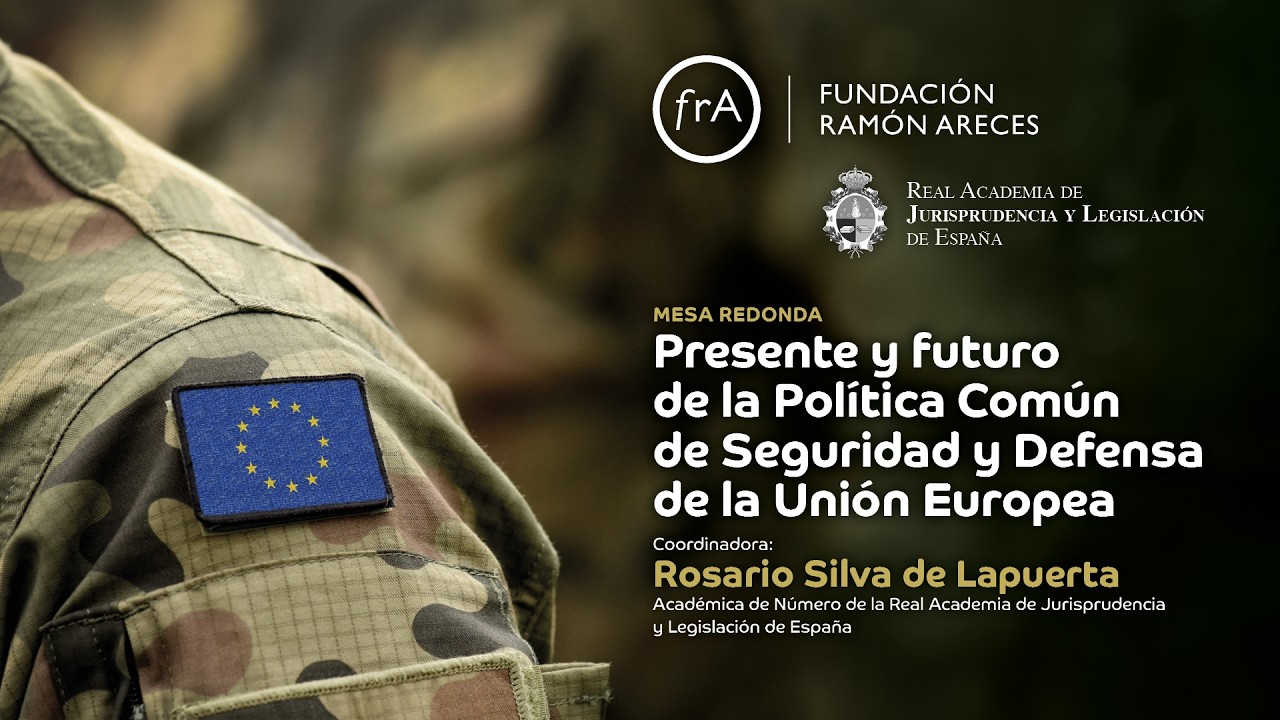
Mesa redonda- Presente y futuro de la Política Común de Seguridad y Defensa de la Unión Europea
Keywords
Summary
244 words
Critical Evaluation
The roundtable provides a comprehensive and insightful overview of the EU’s Common Security and Defence Policy, drawing on the extensive experience of its participants. The speakers are highly credible, with backgrounds in diplomacy, EU institutions, and the defense industry, lending authority to their analyses. The discussion is well-structured, moving from historical context to current operations and future challenges, and it touches on critical issues such as strategic autonomy, the role of NATO, and the need for a stronger European defense industrial base. However, the format is a panel discussion rather than a formal academic lecture, so the arguments are presented as expert opinions rather than rigorously supported with citations or data. The lack of specific references to documents or studies is a limitation, though the speakers’ insider perspectives compensate for this. The content is highly relevant given the current geopolitical context, particularly the war in Ukraine and the ongoing debates about European defense. The discussion is balanced, acknowledging both achievements and persistent obstacles, such as the unanimity requirement in decision-making and the varying levels of commitment among member states. The industry perspective provided by Alejandro Rubio adds a valuable dimension, highlighting the economic and technological aspects of defense cooperation. Overall, the video is a valuable resource for understanding the complexities of EU defense policy, though it would benefit from more concrete examples and data to support some of the claims. The title accurately reflects the content, and the discussion is accessible to a general audience with an interest in European affairs.
251 words
Title / Content Match
The title accurately reflects the content, which is a roundtable discussion on the present and future of the EU's Common Security and Defence Policy.
Quality & Reliability
8/10
High-level experts with extensive experience in EU security and defense policy, including former ambassadors and EU officials. The discussion is structured and grounded in institutional knowledge, but lacks formal citations and is primarily opinion-based.
Key Moments
Markers derived by PSI from the transcript: the creator did not define chapters.
- Introduction by the director of the Fundación Ramón Areces, welcoming participants and setting the context.
- Rosario Silva introduces the topic and the three speakers.
- Ambassador Manuel Acerete begins his historical overview of the CSDP, from the Western European Union to the Lisbon Treaty.
- Discussion of the Saint-Malo Declaration and the establishment of the CSDP.
- Belén Martínez Carbonell speaks about the operational aspects of the CSDP, including the European Peace Facility.
- Alejandro Rubio González provides an industry perspective on the European Defence Fund and the defense industrial base.
- Discussion on future challenges, including strategic autonomy and the relationship with NATO.
- Q&A session with the audience, addressing specific questions about EU defense initiatives.
- Concluding remarks by the moderator, summarizing key points and thanking participants.
Cited Sources
- Treaty of Lisbon — Mentioned as the legal basis for the CSDP, introduced in 2009.
- European Defence Fund — Discussed as a key instrument for financing defense cooperation.
- European Peace Facility — Mentioned as a mechanism for funding military support to partner countries.
Concurring Sources
- European External Action Service (EEAS) — The EEAS is the EU's diplomatic service, which plays a central role in implementing the CSDP.
- NATO — The relationship between the EU and NATO is a recurring theme in the discussion, with both organizations cooperating on European security.
Dissenting Sources
- No discordant sources identified — The discussion is consistent with mainstream analyses of EU defense policy, and no contradictory sources were mentioned in the video.
Contribution & Novelties
The video offers a unique insider perspective on the evolution and future of the EU’s Common Security and Defence Policy, combining diplomatic, institutional, and industrial viewpoints. It provides a comprehensive overview of key mechanisms like PESCO, the European Defence Fund, and the European Peace Facility, and discusses the challenges of strategic autonomy and transatlantic relations.
Pour aller plus loin :
- Common Security and Defence Policy (CSDP) — Official EU page providing detailed information on CSDP missions and operations.
- Permanent Structured Cooperation (PESCO) — Official PESCO website with details on projects and participating member states.
- Strategic Compass — EU’s strategic document for security and defense, adopted in 2022, outlining future directions.
- European Defence Agency — Agency supporting EU member states in defense capability development and cooperation.
125 words
Radar Profile
The radar profile shows high scores in quantity and quality of information, reflecting the depth and expertise of the speakers. The technical level is also high, indicating a sophisticated audience. The overall reliability is strong, though the lack of formal citations slightly reduces the score.