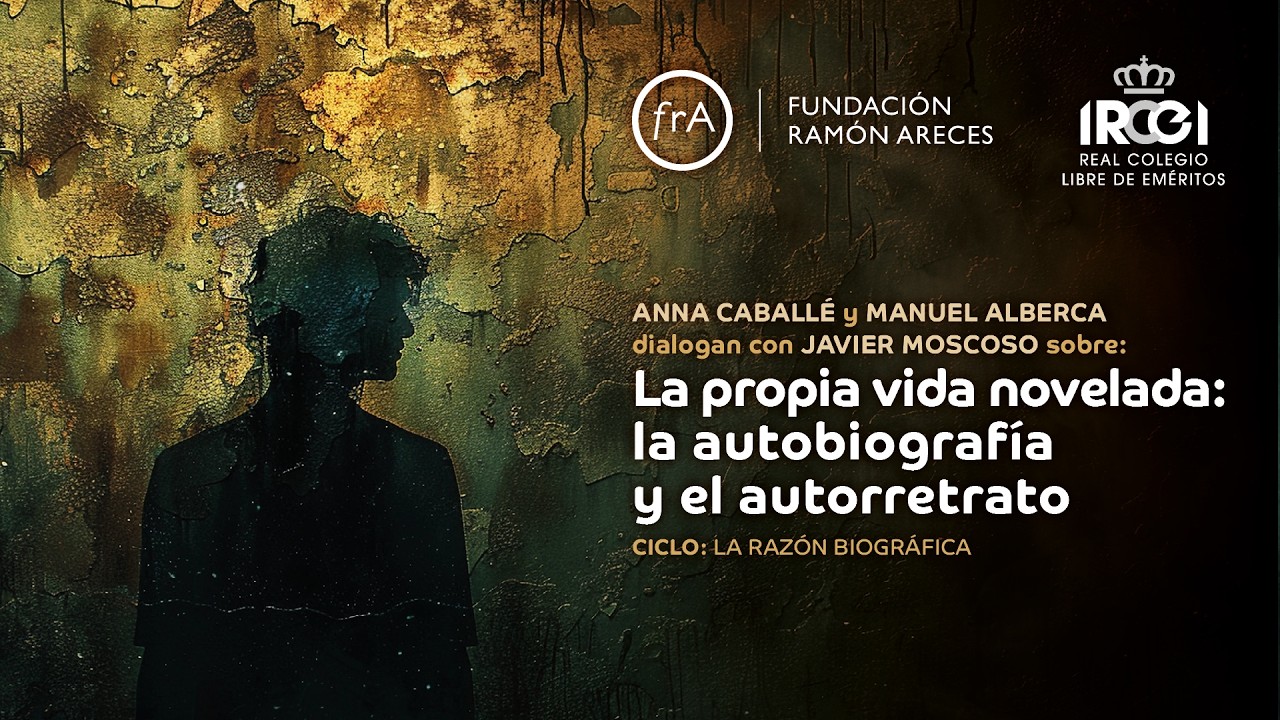
Diálogo- La propia vida novelada: la autobiografía y el autorretrato
Keywords
Summary
183 words
Critical Evaluation
The dialogue provides a substantive and intellectually engaging exploration of autobiography and self-portraiture, drawing on the expertise of three distinguished scholars. The discussion is well-structured, with Manuel Alberca offering a detailed historical and technical account of the self-portrait’s origins, emphasizing the crucial roles of the mirror and oil painting. This perspective is valuable as it grounds the genre in material and technological conditions, moving beyond purely aesthetic or psychological interpretations. Anna Caballé’s contributions, though less extensive in the provided excerpt, are informed by her extensive experience as a biographer, adding a practical dimension to the theoretical discussion. The conversation successfully bridges literary and visual arts, highlighting the shared concerns of self-representation and identity construction. The argumentation is generally solid, with claims supported by historical examples and references to specific artists and works, such as Jan van Eyck and Rembrandt. However, the format of a live dialogue means that some points are not fully developed, and the discussion occasionally shifts topics without deep exploration. The sources cited are not formally referenced, but the participants’ authority and the mention of key works lend credibility. The title accurately reflects the content, and the dialogue offers a coherent and insightful overview of the subject. Overall, the content is of high quality, suitable for an audience interested in the humanities, and provides a thoughtful examination of how individuals narrate and depict their own lives.
229 words
Title / Content Match
The title accurately reflects the content, which is a dialogue on autobiography and self-portrait, as discussed by the three participants.
Quality & Reliability
8/10
The dialogue features three recognized experts in literature and philosophy, providing a well-informed discussion on autobiography and self-portraiture. The content is grounded in academic knowledge, with references to historical figures and works. However, it is a conversational format without formal citations or peer-reviewed sources, so a slight deduction is applied.
Key Moments
Markers derived by PSI from the transcript: the creator did not define chapters.
- Introduction by Javier Moscoso, presenting the topic and the guests.
- Manuel Alberca begins his explanation of the self-portrait, discussing its definition and origins.
- Alberca elaborates on the technical prerequisites for the self-portrait, focusing on the mirror and oil painting.
- Discussion on the centrality of the face in self-portraiture, with references to Rembrandt.
- Anna Caballé contributes her perspective on biography and autobiography, drawing from her work.
- The conversation shifts to the evolution of self-representation, including modern selfies.
- Further discussion on the philosophical implications of narrating one's own life.
Cited Sources
- El pacto ambiguo — Mentioned by Javier Moscoso as a fundamental book by Manuel Alberca on biography.
- Mírame — Manuel Alberca's latest book on the history of self-portraiture, mentioned in the introduction.
- El saber biográfico — Anna Caballé's book on biographical knowledge, referenced by Javier Moscoso.
- Breve historia de la misoginia — Anna Caballé's book, recommended by Javier Moscoso.
Concurring Sources
- The Autobiographical Pact — Philippe Lejeune's concept, which is foundational to the study of autobiography and likely aligns with the discussion.
Contribution & Novelties
The dialogue offers a unique interdisciplinary perspective on autobiography and self-portraiture, combining literary and art historical approaches. It highlights the often-overlooked technical and material conditions that enabled the emergence of the self-portrait, such as the development of the mirror and oil painting. This provides a fresh angle on the genre, moving beyond purely aesthetic or psychological interpretations. The discussion also connects historical practices to contemporary phenomena like selfies, offering a continuum of self-representation.
Pour aller plus loin :
- Autobiography — Provides a comprehensive overview of the genre’s history and theory.
- Self-portrait — Explores the artistic genre, including its technical and cultural aspects.
- Rembrandt’s self-portraits — Offers insight into one of the most famous practitioners of the genre.
- Mirror — Discusses the history and technology of mirrors, relevant to the technical prerequisites mentioned.
- Oil painting — Details the technique that enabled the development of the self-portrait.
145 words
Radar Profile
The radar profile shows high scores in information quantity, quality, and reliability, with a moderate technical level. This indicates a content-rich discussion that is accessible yet grounded in expert knowledge, making it valuable for a general audience interested in the humanities.