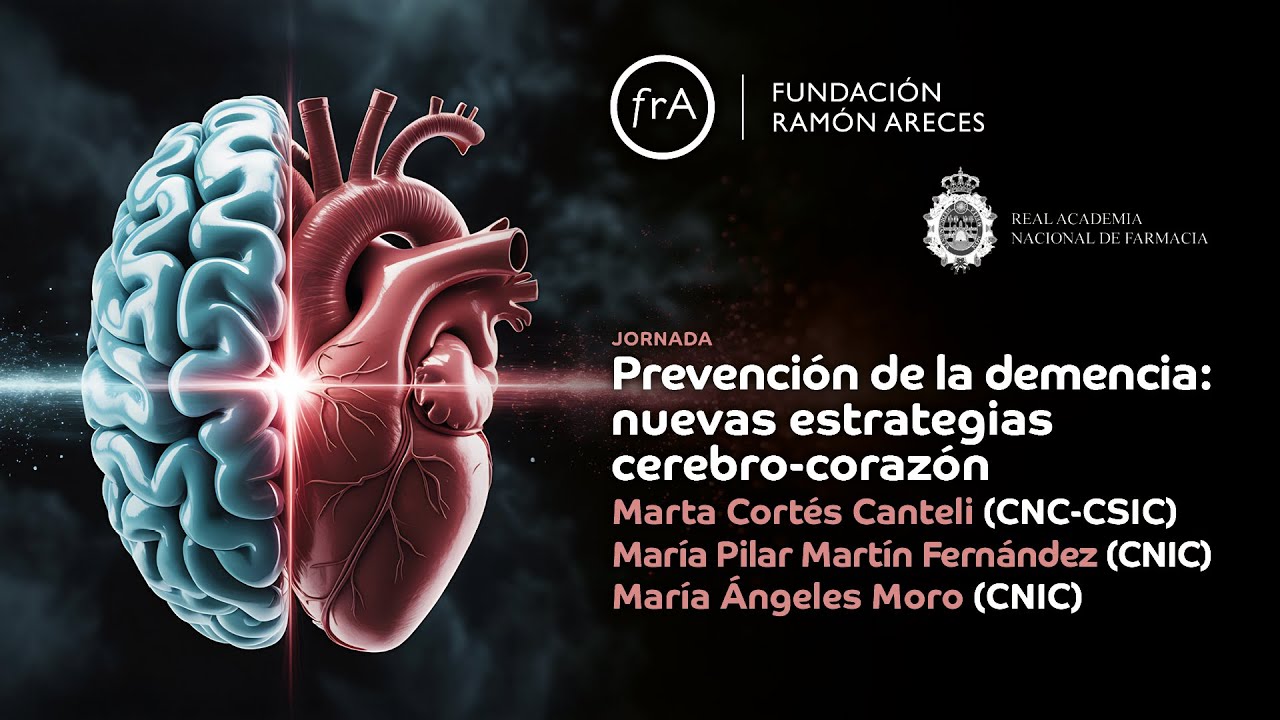
Jornada: 'Prevención de la demencia: nuevas estrategias cerebro-corazón'
Keywords
Summary
132 words
Critical Evaluation
The conference provides a comprehensive overview of the current understanding of the link between cardiovascular health and dementia, with a focus on prevention. The speakers are established researchers, and their presentations are based on solid scientific evidence, including data from large cohort studies like PESA and experimental models. The content is highly relevant and timely, given the growing burden of dementia and the lack of effective treatments. The argumentation is strong, with each speaker building a case for the importance of vascular factors in dementia pathogenesis. The presentations are well-structured, and the Q&A session adds depth by addressing practical questions about risk factor control and biomarkers. However, the format is a series of talks rather than a critical review, so some claims are presented without extensive discussion of limitations or alternative viewpoints. The sources cited are primarily the speakers’ own research and the Lancet Commission, which is a reputable source. The adéquation between title and content is excellent. Overall, this is a high-quality educational resource for healthcare professionals and researchers interested in dementia prevention.
174 words
Title / Content Match
The title accurately reflects the content: a conference on dementia prevention focusing on the heart-brain axis.
Quality & Reliability
8/10
The video features three established researchers presenting data from peer-reviewed studies (PESA-Brain, CNIC) and discussing mechanisms. The content is scientifically sound, but it is a conference presentation rather than a formal review, and some claims are based on ongoing research.
Key Moments
Markers derived by PSI from the transcript: the creator did not define chapters.
- Introduction and welcome by organizers.
- Marta Cortés Canteli presents the PESA-Brain study on cardiovascular and brain health.
- Pilar Martín discusses the role of T cells and microRNA-721 in cognitive decline.
- María Ángeles Moro presents on immunothrombosis and its role in stroke and dementia.
- Q&A session with the speakers.
Cited Sources
- Lancet Commission on dementia prevention, intervention, and care — Cited as the source for the 14 modifiable risk factors for dementia.
- PESA study (Progression of Early Subclinical Atherosclerosis) — The cohort study used by Marta Cortés Canteli to investigate the link between atherosclerosis and brain health.
Concurring Sources
- Lancet Commission on dementia prevention — Supports the claim that modifiable risk factors can prevent a substantial proportion of dementia cases.
Contribution & Novelties
The conference provides an update on the latest research linking cardiovascular health to dementia, with a focus on prevention. It highlights the importance of midlife risk factor control and presents novel mechanisms such as immunothrombosis and T cell involvement.
Pour aller plus loin :
- Lancet Commission on dementia prevention — Key reference for modifiable risk factors.
- PESA study — Cohort study on subclinical atherosclerosis.
- Neutrophil extracellular traps (NETs) — Mechanism discussed by María Ángeles Moro.
- Inflammaging — Concept related to chronic inflammation and aging.
- MicroRNA — Role in gene regulation, relevant to Pilar Martín’s talk.
95 words
Radar Profile
The radar profile shows high scores in information quantity, quality, and reliability, with a slightly lower technical level, indicating that the content is accessible to a broad audience while maintaining scientific rigor.