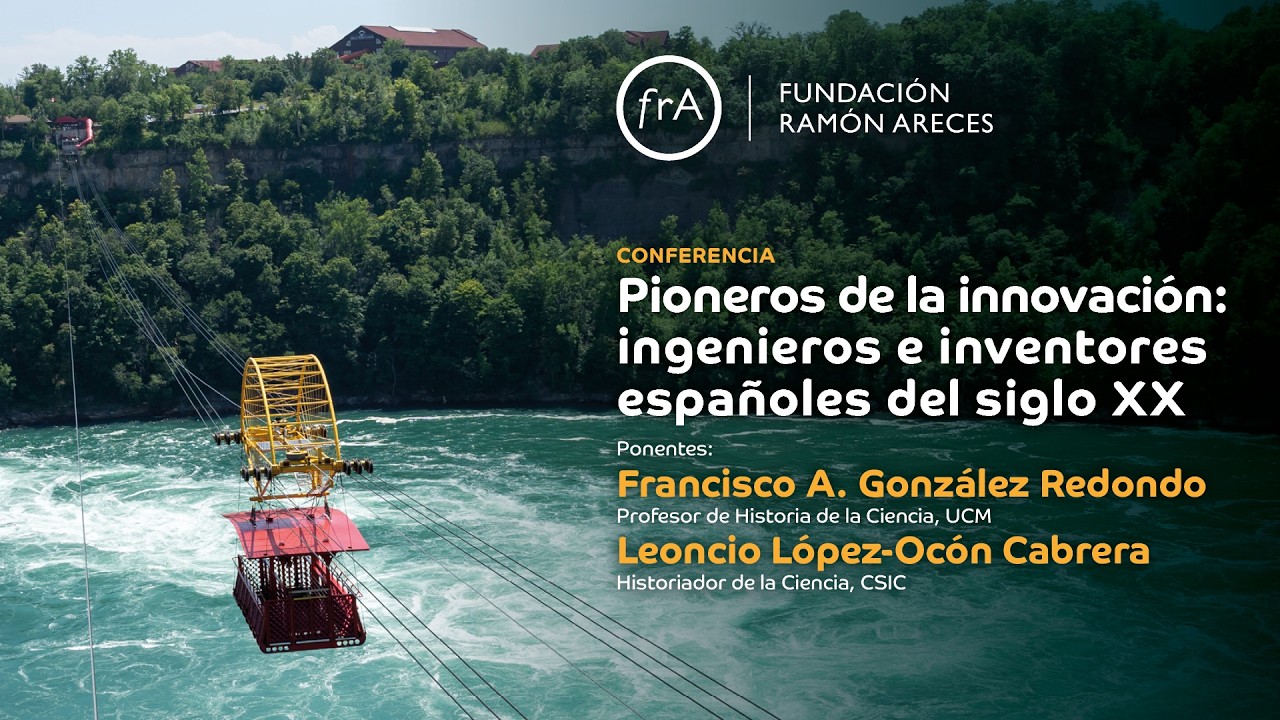
Pioneros de la innovación: ingenieros e inventores españoles del siglo XX
Keywords
Summary
132 words
Critical Evaluation
The video provides a valuable historical overview of Spanish engineering innovation, with a strong emphasis on Leonardo Torres Quevedo’s contributions to automata and cybernetics. The presentation by Francisco González Redondo is particularly insightful, drawing connections between Torres Quevedo’s early 20th-century work and later developments in artificial intelligence by Turing and Wiener. The argumentation is solid, grounded in archival research and published sources, though the talk is more narrative than analytical, with limited critical engagement with the sources. The second part, focusing on the journal ‘Ingeniería y Construcción’, offers a collective biography of Spanish engineers, but it is less detailed and somewhat rushed, possibly due to time constraints. The sources cited are primarily historical documents and publications, but the video does not provide direct references or URLs, which limits verifiability. The title accurately reflects the content, and the video successfully highlights the often-overlooked contributions of Spanish engineers. However, the lack of visual aids or demonstrations of the machines discussed may reduce the impact for viewers unfamiliar with the technical details. Overall, the video is informative and well-structured, but it could benefit from more explicit citations and a deeper analysis of the societal impact of these innovations.
195 words
Title / Content Match
The title accurately reflects the content, which focuses on Spanish engineers and inventors of the 20th century, particularly Leonardo Torres Quevedo and Juan de la Cierva.
Quality & Reliability
8/10
The video features two historians of science from recognized institutions (UCM and CSIC), providing a well-documented historical account. The content is based on archival research and published works, though it lacks direct citations to primary sources during the talk.
Key Moments
Markers derived by PSI from the transcript: the creator did not define chapters.
- Introduction to the cycle and the distinction between science and technology.
- Francisco González Redondo begins his talk on Leonardo Torres Quevedo.
- Discussion of Torres Quevedo's 1914 essay 'Ensayos sobre Automática' and its anticipation of AI concepts.
- Comparison between Torres Quevedo's automata and Turing's imitation game.
- The 1951 Congress on Cybernetics in Paris, where Torres Quevedo's chess machine defeated Norbert Wiener.
- Leoncio López-Ocón begins his talk on the journal 'Ingeniería y Construcción' and the role of engineers in Spain.
- Analysis of Juan de la Cierva's contributions to aeronautics and the autogyro.
- Conclusion and reflections on the legacy of Spanish engineers.
Cited Sources
- Ensayos sobre Automática (1914) — Torres Quevedo's foundational essay on automata, discussed in the first talk.
- Computing Machinery and Intelligence (1950) — Alan Turing's article referenced in comparison with Torres Quevedo's work.
- Cybernetics: Or Control and Communication in the Animal and the Machine (1948) — Norbert Wiener's book, mentioned as a parallel development.
- Revista Ingeniería y Construcción — Journal analyzed in the second talk to trace the evolution of engineering in Spain.
Concurring Sources
- Leonardo Torres Quevedo: Pioneer of Automatics — An article that corroborates Torres Quevedo's pioneering role in automatics.
- Juan de la Cierva and the Autogyro — A source confirming de la Cierva's contributions to aviation.
Dissenting Sources
- Some critiques of the 'Spanish genius' narrative — Some historians argue that the emphasis on individual inventors may overshadow collective efforts and international collaborations.
Contribution & Novelties
The video provides a fresh perspective on the history of computing and cybernetics by highlighting the contributions of Spanish engineers, particularly Leonardo Torres Quevedo, who is often overlooked in mainstream narratives. It connects his early 20th-century work on automata to later developments in AI, offering a more inclusive history of the field. The second part, focusing on the journal ‘Ingeniería y Construcción’, sheds light on the collective efforts of Spanish engineers during a critical period of industrialization.
Pour aller plus loin :
- Leonardo Torres Quevedo - Wikipedia — Overview of his life and inventions.
- Autogyro - Wikipedia — Juan de la Cierva’s key invention.
- History of artificial intelligence - Wikipedia — Context for the early automata and AI concepts.
119 words
Radar Profile
The radar profile shows high scores in quantity and quality of information, reflecting the depth of historical detail. The technical level is moderate, suitable for a general audience, while reliability is strong due to the expertise of the speakers.