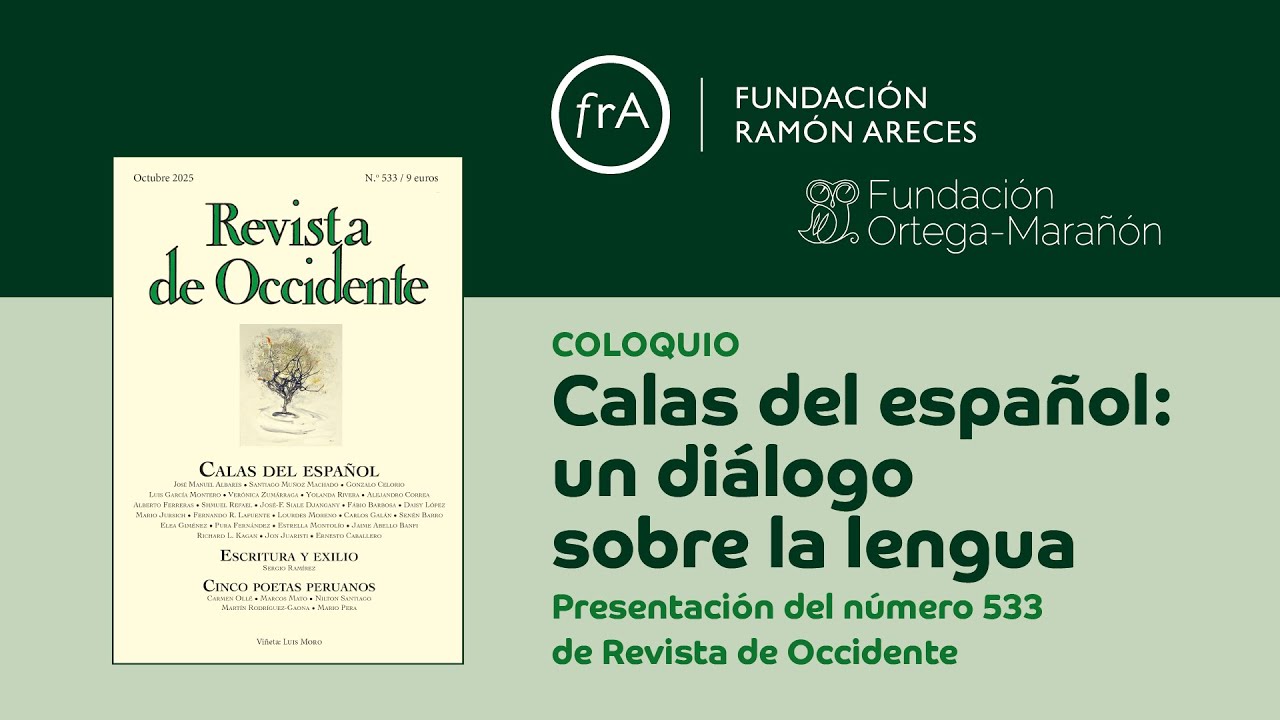
Coloquio- Calas de español: un diálogo sobre la lengua
Keywords
Summary
200 words
Critical Evaluation
The colloquium provides a rich and nuanced discussion on the state of the Spanish language, drawing on a diverse range of expert perspectives. The speakers effectively address the dual challenges of maintaining linguistic unity while celebrating diversity, and they highlight the urgent need to integrate Spanish into the digital and scientific realms, particularly in the context of artificial intelligence. The arguments are well-founded, referencing institutional efforts such as those by the Real Academia Española and the Instituto Cervantes, as well as specific projects like TeresIA and ES CIENCIA. The discussion is balanced, acknowledging both the strengths of Spanish as a global language and the risks posed by English dominance in technology. However, the colloquium is more of a presentation and debate than a rigorous scientific analysis; some claims, such as the number of Spanish speakers or the potential impact of AI, are presented without detailed evidence or citations. The quality of the sources is high, given the involvement of reputable institutions and experts, but the format limits the depth of the analysis. The title accurately reflects the content, and the event successfully promotes the monographic issue. Overall, the colloquium is informative and thought-provoking, but it would benefit from more concrete data and references to support its assertions.
207 words
Title / Content Match
The title accurately reflects the content: a colloquium on the Spanish language, specifically the presentation of the Revista de Occidente issue 'Calas de español'.
Quality & Reliability
8/10
The video is a formal academic colloquium organized by a reputable foundation, featuring experts in linguistics, computer science, and media. The discussion is based on a monographic issue of Revista de Occidente with contributions from 25 specialists. The content is well-structured, with clear arguments and references to institutional efforts. However, it is primarily a debate and presentation, not a peer-reviewed study, and some claims are presented without detailed evidence.
Key Moments
Markers derived by PSI from the transcript: the creator did not define chapters.
- Introduction and welcome by Raimundo Pérez-Hernández, Director General of the Ramón Areces Foundation.
- Fernando Vallespín presents the monographic issue 'Calas de español' and discusses the importance of the Spanish language.
- Discussion on the diversity and unity of Spanish, with references to articles in the issue.
- Elea Giménez Toledo speaks about the challenges of Spanish in science and artificial intelligence.
- Senén Barro discusses the role of AI in language and the need for Spanish presence in technology.
- Carlos Galán and Lourdes Moreno talk about the global rise of Spanish-language music and audio content.
- Discussion on diplomatic efforts to promote Spanish and the concept of 'the kingdom of Cervantes'.
- Q&A session and concluding remarks.
Cited Sources
- Calas de español: un diálogo sobre la lengua. Presentación del número 533 de Revista de Occidente — Official event page for the colloquium, providing details about the program and participants.
Concurring Sources
- Instituto Cervantes — Mentioned as a key institution for promoting Spanish, aligning with the discussion on diplomatic efforts.
- Real Academia Española — Referenced as a central authority on the Spanish language, supporting the theme of linguistic unity.
Dissenting Sources
- No discordant sources identified — The video presents a consensus view on the importance of Spanish and the need for action; no opposing perspectives were presented.
Contribution & Novelties
The video provides a unique platform for discussing the Spanish language’s current state and future, bringing together experts from different fields to address the impact of AI and global cultural trends. It highlights the importance of linguistic diversity within unity and the need for proactive measures to ensure Spanish’s presence in science and technology. The discussion offers insights into ongoing projects like TeresIA and the role of institutions like the Real Academia Española.
Pour aller plus loin :
- Instituto Cervantes — Official institution for promoting Spanish language and culture worldwide.
- Real Academia Española — Official institution regulating the Spanish language.
- TeresIA project — Project aimed at improving Spanish language resources for AI.
- Revista de Occidente — The journal that published the monographic issue.
123 words
Radar Profile
The radar profile shows high scores in quantity and quality of information, reflecting the rich content and expert contributions. The technical level is moderate, suitable for a general audience, while reliability is high due to the involvement of reputable institutions. The overall balance indicates a well-rounded and credible discussion.
💬 No comments were provided for analysis.