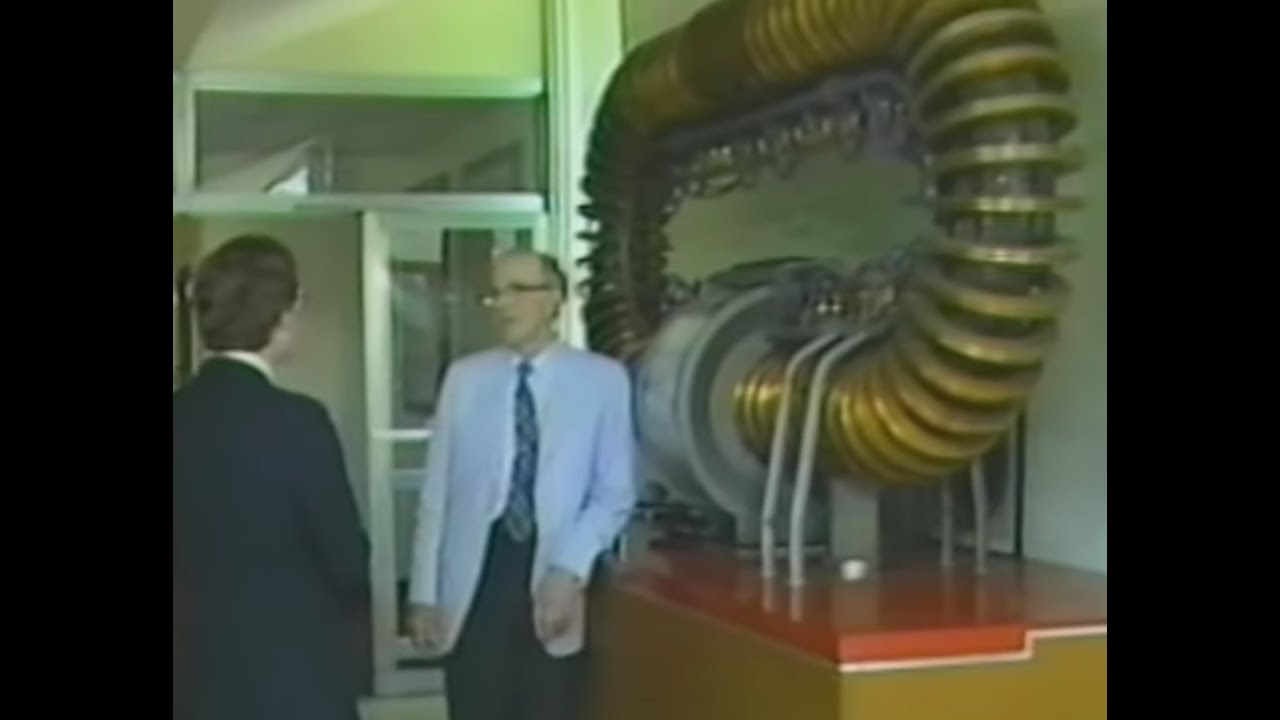
Sun of Man (1988)
Keywords
Summary
175 words
Critical Evaluation
Value of the Information & Strength of the Argument
The documentary provides valuable insights into the scientific and engineering challenges of fusion energy, as well as the historical context and international collaboration. It presents a balanced view, acknowledging both the potential and the difficulties. The argumentation is solid, based on interviews with leading scientists and footage from actual experiments. The film effectively communicates complex concepts to a general audience without oversimplifying.
Scientific Rigor, Source Quality, Title Accuracy
The documentary is scientifically rigorous, featuring interviews with experts such as Rob Goldston, Harold Furth, and Andrei Sakharov. It accurately depicts the state of fusion research in 1988, including the technical details of TFTR and Nova. The sources are credible, and the content is well-researched. The title ‘Sun of Man’ is somewhat poetic but accurately reflects the theme of harnessing the sun’s energy. The documentary does not include any commercial advertisements.
148 words
Title / Content Match
The title 'Sun of Man' is a poetic reference to fusion energy, which is the focus of the documentary. The content matches the title, exploring the quest to replicate the sun's energy on Earth.
Quality & Reliability
8/10
The documentary is a historical record from 1988, featuring interviews with leading fusion scientists and footage from major research facilities. It provides a comprehensive overview of the state of fusion research at the time, with accurate explanations of the physics and engineering challenges. The content is well-researched and presented by experts, though some information is dated.
Chapters
- Intro/credits
- Princeton Plasma Physics Lab
- Fusion explanation
- High temperatures
- PPPL TFTR
- LLNL supercomputer
- Nova laser ICF
- Funding and budgets
- Private fusion company
- Governments
- Early fusion claims
- Stellerator
- Sakharov
- Atoms for Peace 1958 footage
- Plutonium breeding and declassification
- Tokamak
- T-10 device, and T-15
- International competition
- ITER
- More TFTR
- Tritium concerns
- Materials challenges
- Lunar mining He-3
- Fusion power plant
- Isaac Asimov
- Commercial reality
- Muonic fusion
- Greenhouse gas
- More funding
- Credits
Cited Sources
- What is Nuclear? - Sun of Man (1988) — The documentary itself, digitized and uploaded by Nick Touran of whatisnuclear.com.
Concurring Sources
- What is Nuclear? - Sun of Man (1988) — The documentary itself, which provides the primary content.
Contribution & Novelties
This documentary offers a unique historical snapshot of fusion research in the late 1980s, capturing the optimism and challenges of the era. It provides valuable context for understanding the evolution of fusion science and the long-term efforts to achieve practical fusion energy. The film’s interviews with key figures and its coverage of both magnetic and inertial confinement approaches make it a useful resource for historians and enthusiasts.
Pour aller plus loin :
- ITER — The international fusion project that is the successor to the efforts described in the documentary.
- Tokamak — The magnetic confinement device that became the dominant approach in fusion research.
- Inertial confinement fusion — The approach using lasers, as demonstrated by the Nova laser in the documentary.
120 words
Radar Profile
The radar profile shows high scores in quantity of information and technical level, reflecting the documentary's comprehensive coverage and depth. The quality and reliability scores are also strong, indicating well-researched content. The overall balance suggests a highly informative and credible source.