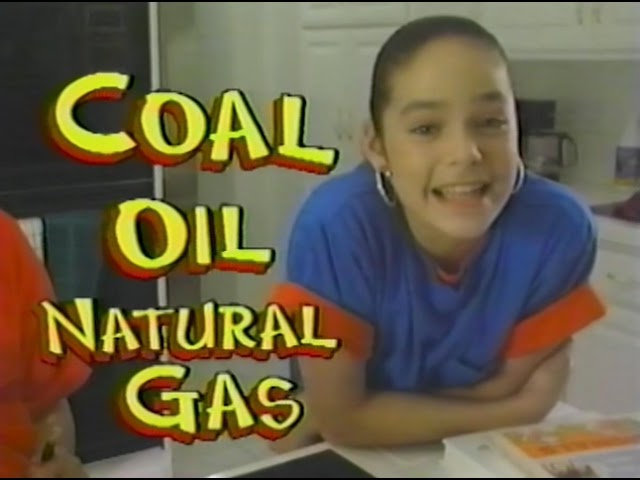
Splitting Atoms – An Electrifying Experience (1996)
Keywords
Summary
177 words
Critical Evaluation
Value of the Information & Strength of the Argument
The video provides a clear and accessible introduction to nuclear energy, using analogies (bike generator, falling water) to explain electricity generation. The argumentation is straightforward and logically structured, building from the need for electricity to the specifics of nuclear fission. It effectively demystifies common misconceptions, such as the possibility of a nuclear explosion. However, the content is simplified and lacks quantitative details or discussion of risks and waste management, which limits its depth.
Scientific Rigor, Source Quality, Title Accuracy
As a production of the US Department of Energy, the video is authoritative and scientifically accurate for its time. The information on fission, enrichment, and reactor safety is correct, though it does not address modern developments or controversies. The title accurately reflects the content. No external sources are cited, but the institutional origin lends credibility. The video is well-structured and the title-content alignment is strong.
153 words
Title / Content Match
The title accurately reflects the content, which explains nuclear fission and its role in electricity generation.
Quality & Reliability
7/10
Produced by the US Department of Energy, the video is an educational piece from 1996. It provides accurate basic information about nuclear fission, reactor operation, and safety, though it is simplified for a young audience. The scientific content is correct but lacks depth and recent context.
Key Moments
Markers derived by PSI from the transcript: the creator did not define chapters.
- Introduction: kids present a riddle about what you do all the time.
- Reveal that the answer is using nuclear energy.
- Explanation of electricity consumption and the share from nuclear power.
- Comparison of different power plants: hydroelectric and fossil fuels.
- Introduction to nuclear fission and chain reactions.
- Uranium mining, enrichment, and fuel fabrication.
- Explanation of reactor core, control rods, and heat generation.
- Safety features: steel tank and concrete containment.
- Cooling towers and water cycle.
- Conclusion: nuclear energy is used in everyday life.
Cited Sources
- US Department of Energy — Producer of the video.
- What is Nuclear? (Digitizer's website) — Digitized and uploaded by Nick Touran.
Concurring Sources
- Nuclear Energy Institute — Provides current statistics on nuclear energy.
- World Nuclear Association — Information on nuclear power worldwide.
Contribution & Novelties
The video is a dated educational resource that provides a basic understanding of nuclear fission and electricity generation. Its originality lies in its child-friendly presentation, using relatable examples and a simple narrative. However, it does not offer new scientific insights.
Pour aller plus loin :
- Nuclear fission - Wikipedia — Overview of the process.
- Nuclear power - Wikipedia — Broader context on nuclear energy.
- Uranium enrichment - Wikipedia — Details on the enrichment process.
74 words
Radar Profile
The radar profile shows moderate scores across all dimensions, with slightly higher scores in quality and reliability due to the authoritative source, but lower in technical level and quantity of information, reflecting its introductory nature.
💬 No comments were provided for analysis.