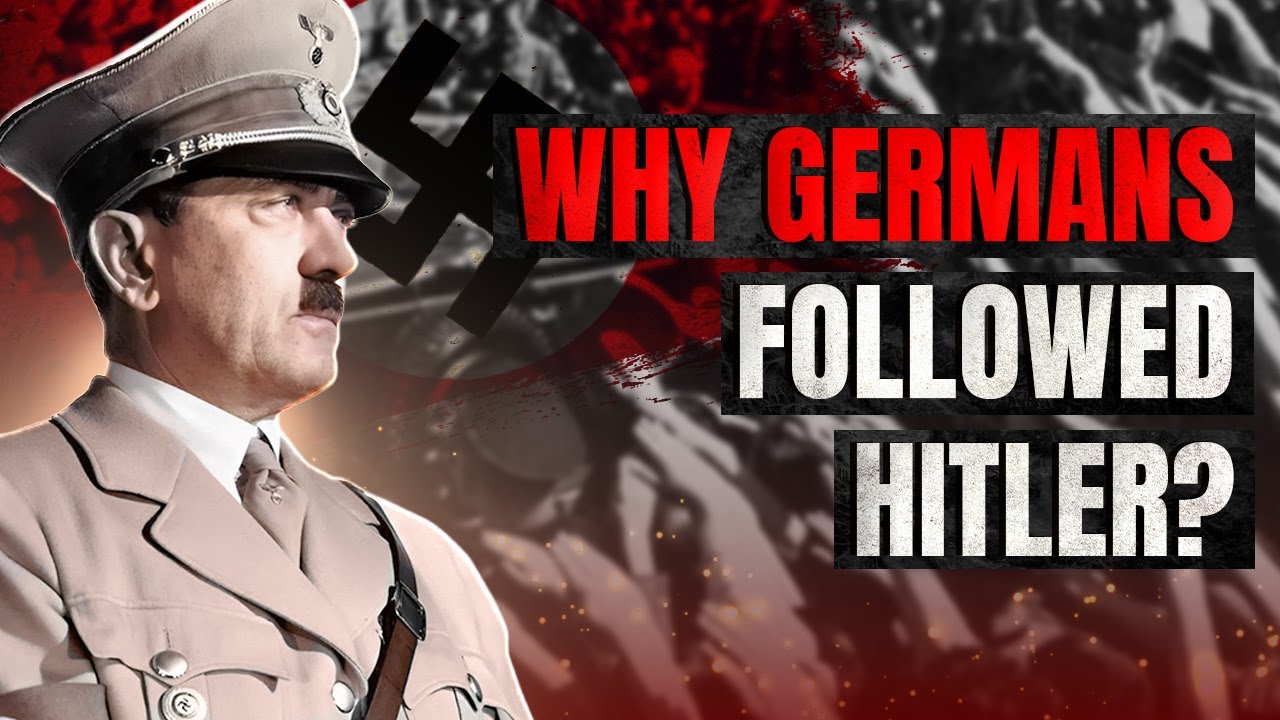
Adolf Hitler: How Fascism Seduced a Nation | Nazi Germany Explained | Hitler Germany Documentary
Keywords
Summary
148 words
Critical Evaluation
Value of the Information & Strength of the Argument
The documentary provides a comprehensive overview of Hitler’s rise, synthesizing expert opinions and historical narratives. It effectively conveys the complexity of factors—economic hardship, national humiliation, and political instability—that contributed to the Nazi Party’s appeal. The argumentation is coherent, presenting a cause-and-effect chain from Versailles to the Nazi seizure of power. However, it relies heavily on secondary sources and expert commentary without offering new insights or original research. The narrative is engaging but sometimes oversimplifies historical nuances, such as the diversity of German public opinion and the contingency of events. The use of dramatic reenactments and archival footage enhances accessibility but may sacrifice depth for dramatic effect.
Scientific Rigor, Source Quality, Title Accuracy
The documentary features commentary from historians, but it does not provide explicit citations or references to academic works. The sources are not clearly identified, making it difficult to verify the accuracy of specific claims. The title accurately reflects the content, focusing on Hitler’s seduction of a nation. The production appears well-researched, but the lack of transparent sourcing undermines its scholarly rigor. The documentary does not address potential counterarguments or historiographical debates, presenting a largely consensus narrative. Overall, while informative, it falls short of academic standards due to insufficient source documentation.
211 words
Title / Content Match
The title accurately reflects the content, which focuses on Hitler's rise to power and the appeal of fascism in Germany.
Quality & Reliability
6/10
The documentary relies on expert commentary from historians, but lacks direct citations to primary sources or academic publications. It presents a narrative synthesis of well-known historical events, with some interpretive claims that are not fully sourced. The production quality is decent, but the absence of explicit references and the presence of dramatized elements reduce its scholarly reliability.
Key Moments
Markers derived by PSI from the transcript: the creator did not define chapters.
- Introduction to Germany's transformation in the 1930s and Hitler's role.
- Overview of late 19th-century Germany's power and militarism.
- Hitler's early life and failed artistic career in Vienna.
- Hitler's experiences in World War I and the impact of defeat.
- The Treaty of Versailles and the 'stab-in-the-back' myth.
- Formation of the German Workers' Party and Hitler's rise within it.
- Introduction of key Nazi figures: Hess, Göring, Himmler, Bormann, Goebbels.
- Influence of Mussolini's March on Rome on Hitler's ambitions.
- Conclusion summarizing the factors behind Hitler's appeal.
Cited Sources
- No explicit sources cited in the video description. — The video description does not include any links or references to sources.
Concurring Sources
- The Rise and Fall of the Third Reich — A classic historical account by William L. Shirer that aligns with the documentary's narrative.
Dissenting Sources
- Hitler: A Biography — Some historians, like Ian Kershaw, offer more nuanced interpretations of Hitler's role and the structural factors of Nazi rise, which may differ from the documentary's emphasis on individual agency.
Contribution & Novelties
The documentary offers a synthesized narrative of Hitler’s rise, drawing on expert interviews and archival footage. It does not present new research or original interpretations, but it provides a comprehensive overview for a general audience. Its value lies in its accessibility and the integration of multiple perspectives.
Pour aller plus loin :
- Weimar Republic — Provides background on the political and economic context of the era.
- Treaty of Versailles — Details the treaty’s terms and its impact on Germany.
- Mein Kampf — Hitler’s autobiographical manifesto, central to understanding his ideology.
- Propaganda in Nazi Germany — Explores the role of propaganda in the Nazi regime.
- Stab-in-the-back myth — Examines the conspiracy theory that blamed internal enemies for Germany’s defeat.
118 words
Radar Profile
The radar profile shows moderate scores across all dimensions, indicating a balanced but not exceptional documentary. It provides a decent amount of information with acceptable quality, but lacks technical depth and high reliability due to limited sourcing.
💬 No comments were provided for analysis.