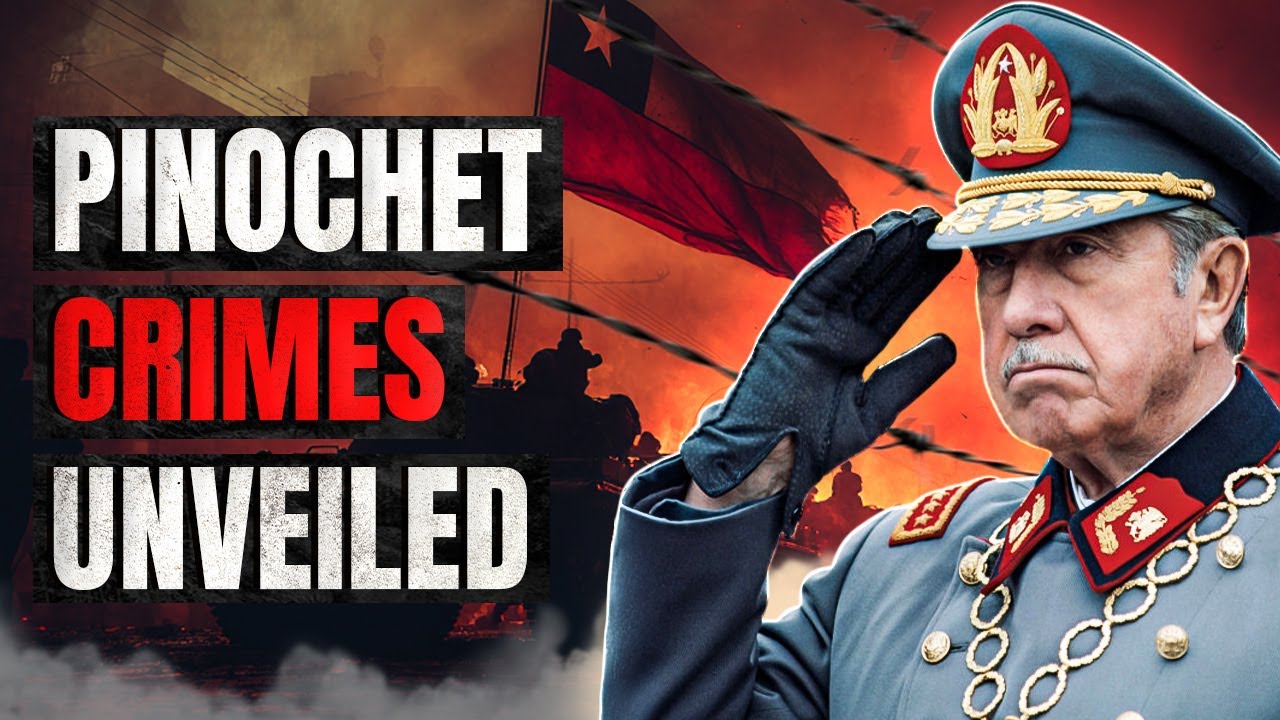
Augusto Pinochet: How the CIA Helped a Dictator Rise to Power – Chile 1973 Coup Explained
Keywords
Summary
108 words
Critical Evaluation
Value of the Information & Strength of the Argument
The documentary provides valuable firsthand accounts of human rights abuses, adding emotional weight and authenticity. Expert interviews offer historical context and analysis, particularly on the CIA’s covert operations and the economic motivations behind the coup. The argumentation is generally coherent, but some claims lack direct sourcing, and the narrative sometimes leans towards sensationalism. The inclusion of survivor testimonies strengthens the documentary’s value, but the lack of balanced perspectives on Allende’s policies and the complexity of the situation may oversimplify the historical context.
Scientific Rigor, Source Quality, Title Accuracy
The documentary uses declassified documents and expert opinions, but does not provide explicit citations within the video. The title accurately reflects the content, focusing on the CIA’s involvement and the coup. The sources appear credible, but the lack of clear references and the presence of dramatic language reduce the overall scientific rigor. The documentary would benefit from more explicit sourcing and a more nuanced presentation of historical events.
165 words
Title / Content Match
The title accurately reflects the content, focusing on the CIA's role in Pinochet's rise and the 1973 coup.
Quality & Reliability
7/10
The documentary relies on expert interviews, survivor testimonies, and declassified documents, but lacks explicit citations and contains some sensationalized language.
Key Moments
Markers derived by PSI from the transcript: the creator did not define chapters.
- Introduction to Pinochet's dictatorship and its impact.
- Background on Salvador Allende's presidency and the political climate.
- The CIA's covert operations to destabilize Allende's government.
- The coup d'état on September 11, 1973, and Allende's death.
- Survivor testimonies of torture and detention in secret houses.
- The economic policies of the Chicago Boys and privatization.
- International support for Pinochet, including the UK during the Falklands War.
- The 1988 plebiscite and the end of Pinochet's rule.
Cited Sources
- Declassified CIA documents — Referenced in the documentary as evidence of US involvement.
- Survivor testimonies — Firsthand accounts of human rights abuses during the dictatorship.
- Expert interviews — Historians and analysts provide context and analysis.
Concurring Sources
- National Security Archive - Chile — Declassified documents on US involvement in Chile.
- BBC - Chile coup: 40 years on — Historical overview of the coup.
Dissenting Sources
- Pinochet's economic legacy — Some economists argue that Pinochet's policies laid the foundation for Chile's later economic success, a perspective not fully explored in the documentary.
Contribution & Novelties
The documentary synthesizes survivor testimonies and expert analysis to present a compelling narrative of the coup and its aftermath. It highlights the role of the CIA and Western support, and the economic experiments of the Chicago Boys. The film contributes to the public understanding of Pinochet’s regime and its global implications.
Pour aller plus loin :
- Chile under Pinochet — Overview of the dictatorship.
- Chicago Boys — The economists behind the neoliberal reforms.
- Operation Condor — Regional campaign of political repression.
81 words
Radar Profile
The radar profile shows high scores in quantity and quality of information, moderate technical level, and good reliability. This indicates a documentary that is informative and credible, but not deeply technical.
💬 Sur les 0 commentaires analysés, aucune tendance n'a pu être dégagée.