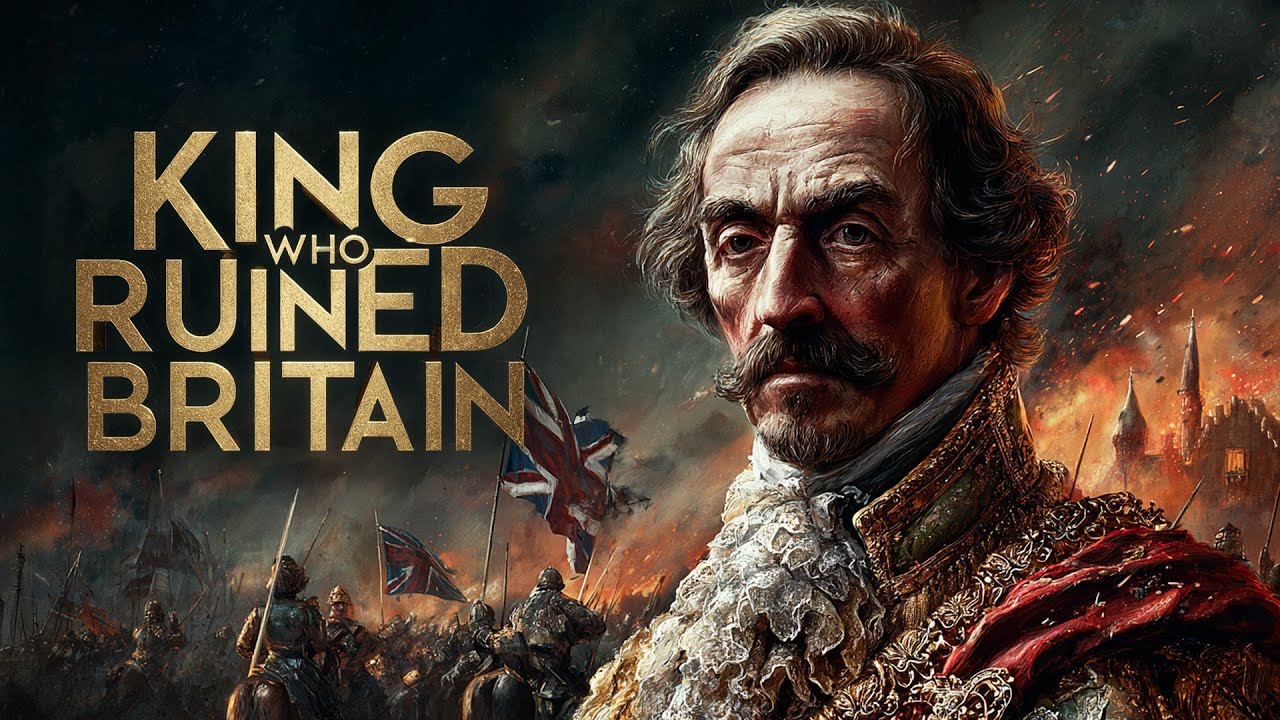
House of Stuart: How One Royal Family Sparked Britain’s Bloodiest Century | 17th Century England
Keywords
Summary
141 words
Critical Evaluation
Value of the Information & Strength of the Argument
The documentary offers a compelling narrative that connects major historical events with the personal experiences of a gentry family, providing a human perspective on the period. The argumentation is generally sound, supported by expert interviews and historical context. However, it tends to simplify complex political and religious motivations, and some claims lack nuance. The use of dramatization may blur the line between fact and interpretation, but overall, the value lies in its engaging storytelling and broad coverage of the Stuart dynasty.
Scientific Rigor, Source Quality, Title Accuracy
The documentary does not explicitly cite sources, but it features interviews with historians and uses period locations and artifacts. The quality of sources is moderate, as the experts provide credible insights, but the lack of direct references to primary documents or academic works limits its scholarly rigor. The title accurately reflects the content, focusing on the Stuart dynasty and the turbulent 17th century. The documentary’s approach is more narrative than analytical, which may appeal to a general audience but may not satisfy those seeking in-depth historical analysis.
183 words
Title / Content Match
The title accurately reflects the content, focusing on the Stuart dynasty and the turbulent 17th century in Britain.
Quality & Reliability
6/10
The documentary provides a broad overview of the Stuart dynasty, with some expert commentary and historical context. However, it lacks citations to primary sources or academic references, and some dramatizations may oversimplify complex events.
Key Moments
Markers derived by PSI from the transcript: the creator did not define chapters.
- Introduction to the Stuart dynasty and the religious conflicts of the era.
- James I's accession to the English throne and the Gunpowder Plot.
- The creation of baronets and the financial needs of the crown.
- The death of Prince Henry and the rise of Charles as heir.
- The influence of the Duke of Buckingham and the Spanish Match.
- The Thirty Years' War and its impact on England.
- Charles I's reign and the growing conflict with Parliament.
- The English Civil War and the execution of Charles I.
- The Restoration of Charles II and the rebuilding of London.
- James II's Catholic policies and the Glorious Revolution.
Cited Sources
- Gwydir Castle — The documentary features Gwydir Castle as the home of the Wyn family, who were loyal to the Stuarts.
- Gunpowder Plot — The documentary discusses the Gunpowder Plot of 1605, a key event in James I's reign.
- English Civil War — The documentary covers the English Civil War as a central conflict of the Stuart era.
Concurring Sources
- The Stuarts: A Bloody Reign — A BBC documentary series covering similar themes of the Stuart dynasty.
- The Gunpowder Plot: Terror and Faith in 1605 — Primary sources and analysis of the Gunpowder Plot from the National Archives.
Dissenting Sources
- The Stuarts: A Bloody Reign — Some historians argue that the documentary oversimplifies the causes of the English Civil War, focusing too much on religious conflict and not enough on economic and constitutional factors.
Contribution & Novelties
The documentary offers a fresh perspective by intertwining the history of a prominent gentry family, the Wyns, with the broader narrative of the Stuart dynasty. This approach humanizes the political and religious upheavals of the 17th century, making them more relatable to a modern audience. The use of expert commentary and location filming adds depth to the storytelling.
Pour aller plus loin :
- Divine Right of Kings — Explores the political theory that underpinned Stuart absolutism.
- Thirty Years’ War — Provides context for the religious conflicts that influenced English politics.
- Glorious Revolution — Details the events that led to the end of the Stuart dynasty.
105 words
Radar Profile
The radar profile shows moderate scores across all dimensions, indicating a balanced but not exceptional documentary. The highest score is in quantity of information, reflecting the broad coverage of events, while the lowest is in technical level, as the content is accessible to a general audience.
💬 Sur les 0 commentaires analysés, aucune tendance n'est disponible.