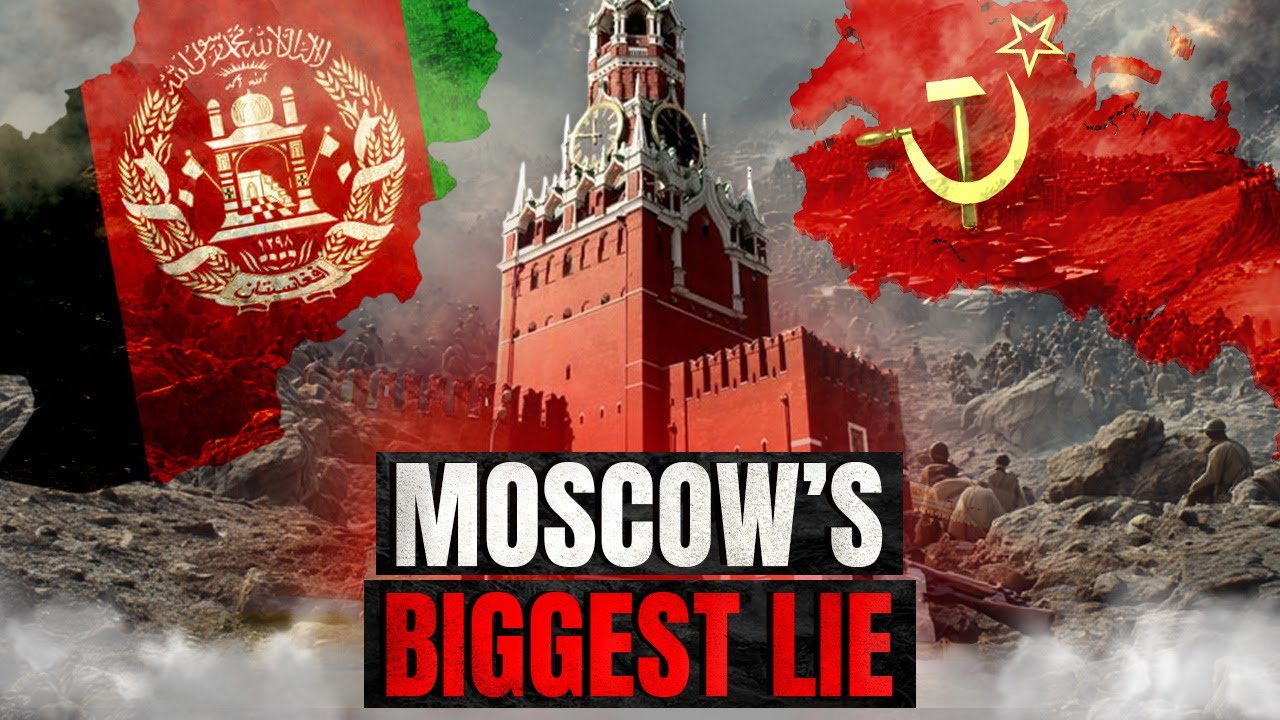
What the Kremlin Never Told You About Afghanistan | Afghanistan War History | Cold War Proxy Wars
Keywords
Summary
138 words
Critical Evaluation
Value of the Information & Strength of the Argument
The video provides a compelling but one-sided account of the Soviet-Afghan War, emphasizing the human cost and moral failures of the Soviet intervention. It effectively uses personal testimonies and quotes from Svetlana Alexievich’s ‘Zinky Boys’ to illustrate the brutality experienced by both soldiers and civilians. However, the argumentation is heavily biased, lacking nuance and alternative perspectives. The video does not engage with scholarly debates or provide a balanced view of the conflict’s complexities, such as the role of Afghan internal politics or the motivations of various Mujahideen factions. The emotional appeal is strong, but the lack of critical analysis and reliance on sensationalism undermine its value as an informative piece.
Scientific Rigor, Source Quality, Title Accuracy
The video demonstrates poor scientific rigor, with numerous factual inaccuracies and a lack of citations. For instance, it incorrectly states the invasion date as December 21, 1991, and the withdrawal as May 1992, whereas the actual dates are December 1979 and February 1989. It also claims 160,000 Ukrainians served, which is not supported by reliable sources. The video does not cite any academic or archival sources, relying instead on anecdotal evidence and propaganda-style rhetoric. The title is somewhat misleading, as it promises ‘what the Kremlin never told you,’ but the content is a familiar narrative without new revelations. The video’s credibility is further undermined by its overt political bias and lack of engagement with opposing viewpoints.
241 words
Title / Content Match
The title is somewhat sensationalist but accurately reflects the content's focus on the Soviet-Afghan War and its hidden aspects.
Quality & Reliability
5/10
The video presents a one-sided narrative with strong anti-Soviet bias, lacks citations to primary sources, and contains factual inaccuracies (e.g., dates, troop numbers). It relies on emotional anecdotes and propaganda-style language rather than rigorous historical analysis.
Key Moments
Markers derived by PSI from the transcript: the creator did not define chapters.
- Introduction: Soviet invasion of Afghanistan and its consequences
- Background: Soviet efforts to establish a protectorate since the 1920s
- 1978 coup and rise of communist government
- Amin's request for troops and Soviet decision to invade
- Assassination of Amin and installation of Karmal
- Mujahideen resistance and foreign support
- Brutality of war: quotes from Zinky Boys
- Soviet casualties and concealment of truth
- Withdrawal and consequences
- Parallels with Russia-Ukraine war and conclusion
Cited Sources
- Zinky Boys: Soviet Voices from the Afghanistan War — Referenced for personal accounts of Soviet soldiers
- Cargo 200 (film) — Recommended for context on Soviet society
Concurring Sources
- Soviet–Afghan War — Provides factual background on the war, though the video's narrative is more biased.
Dissenting Sources
- The Soviet-Afghan War: How a Superpower Fought and Lost — Scholarly analysis that offers a more balanced view of the conflict, contrasting with the video's one-sided narrative.
Contribution & Novelties
The video offers a personal and emotional perspective on the Soviet-Afghan War, drawing on literary sources and individual testimonies. However, it does not present new factual information or original research. Its main contribution is in highlighting the human cost and moral dimensions of the conflict, which may resonate with viewers.
Pour aller plus loin :
- Soviet–Afghan War — Comprehensive overview of the conflict.
- Svetlana Alexievich — Nobel laureate whose works provide oral histories of Soviet wars.
- Mujahideen — Background on the resistance fighters.
83 words
Radar Profile
The radar profile shows low scores across all dimensions, indicating a video with limited informational value, poor reliability, and minimal technical depth. The only relatively higher score is in quantity of information, but this is offset by the low quality and reliability.