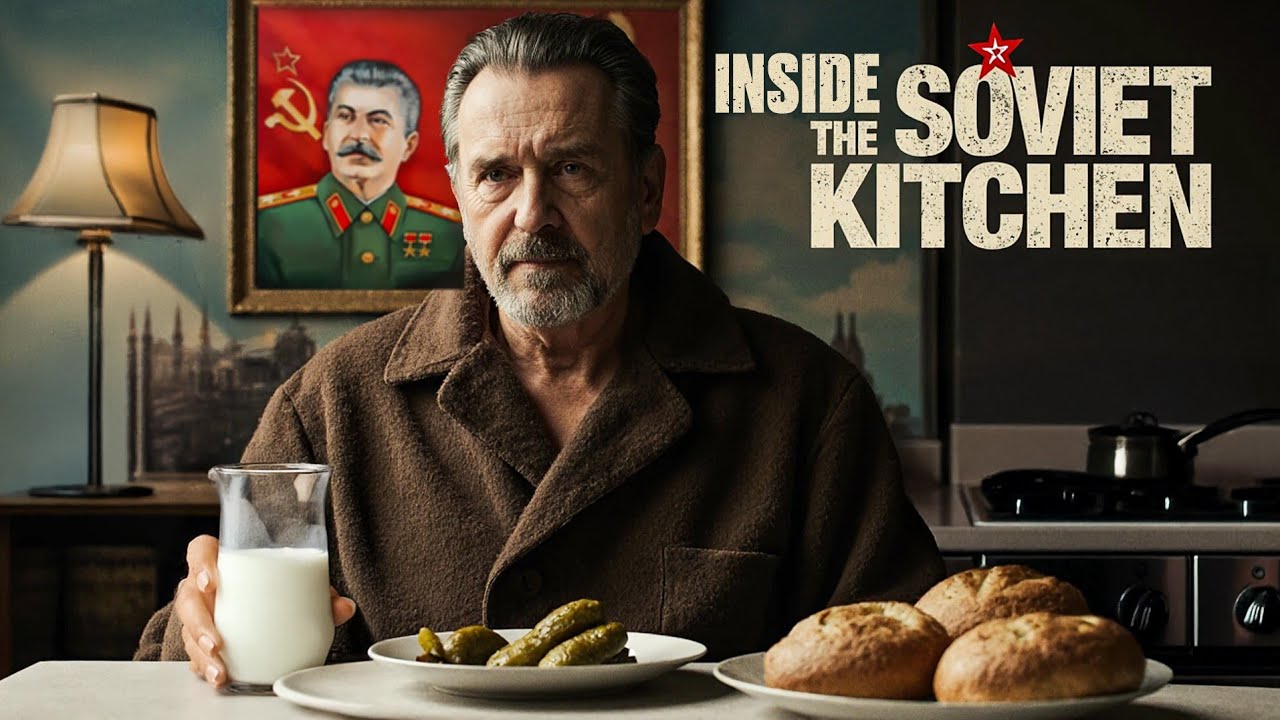
The «Healthy» Soviet Diet That Slowly Poisoned a Nation | USSR Food History | Soviet Union Diet
Keywords
Summary
103 words
Critical Evaluation
Value of the Information & Strength of the Argument
The video provides valuable historical insights into Soviet food production, using specific examples and archival documents (GOST 23679 of 1979) to support its claims. The argumentation is coherent and persuasive, though it relies heavily on anecdotal evidence and personal memories. The narrator effectively deconstructs common myths about Soviet food quality, but the presentation is one-sided and lacks counterarguments, which weakens the overall objectivity.
Scientific Rigor, Source Quality, Title Accuracy
The video references specific GOST standards and statistical data, but does not provide direct links to these sources in the description. The title accurately reflects the content, and the video is well-structured. However, the lack of verifiable sources and the polemical tone reduce its scientific rigor. The description includes no external references, and the video does not engage with academic literature on the topic.
142 words
Title / Content Match
The title accurately reflects the content, which focuses on the health and quality issues of Soviet food products.
Quality & Reliability
6/10
The video presents a critical historical analysis of Soviet food quality, using archival documents (GOST standards) and statistical data. However, it lacks citations to primary sources in the description and relies on anecdotal evidence and personal memories. The tone is polemical, which may affect objectivity.
Key Moments
Markers derived by PSI from the transcript: the creator did not define chapters.
- Introduction to the myth of Soviet food quality and the role of GOST standards.
- Discussion of coffee substitutes: ingredients like barley, acorns, and lack of caffeine.
- Historical context: coffee imports in Tsarist Russia vs. Soviet era.
- Analysis of 'doctor's sausage' and the flexibility of GOST standards.
- Revelation of additives like starch, bone plasma, and cardboard in sausage.
- Introduction of palm oil imports and its use in various products, including infant formula.
- Discussion of pesticide contamination in Soviet agriculture and food.
- Conclusion: nostalgia as 'duckling syndrome' and final photos.
Cited Sources
- GOST 23679 of 1979 — Regulates the production of cooked sausages, mentioned in the video as evidence of allowed additives.
Concurring Sources
- Soviet cuisine — Provides general information on Soviet food, supporting the video's claims about shortages and substitutes.
Dissenting Sources
- Nostalgia for Soviet products — Some viewers may argue that Soviet food quality was better, but the video challenges this view with evidence of additives and contamination.
Contribution & Novelties
The video offers a critical perspective on Soviet food history, using specific archival documents and statistics to debunk common myths. It highlights the gap between propaganda and reality, providing a nuanced view of everyday life in the USSR.
Pour aller plus loin :
- Soviet cuisine — Overview of Soviet food culture and its historical context.
- GOST — Explanation of the Soviet quality standards system.
- DDT — Information on the pesticide and its environmental impact.
74 words
Radar Profile
The radar profile shows moderate scores across all dimensions, with a slight peak in quantity of information and a dip in technical level. This indicates a documentary that provides a substantial amount of historical data but lacks deep technical analysis.
💬 Sur les 0 commentaires analysés, aucune tendance n'est disponible.