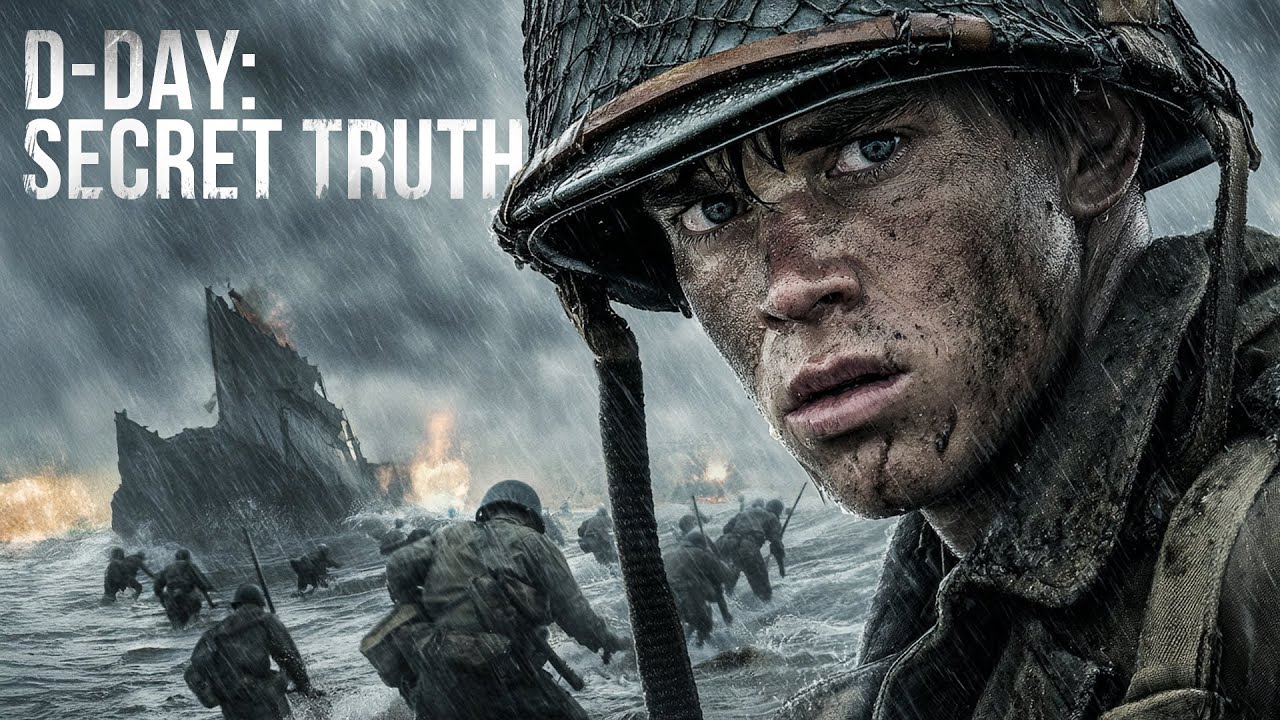
D-Day: How One Weather Forecast Changed World War II | D-Day Veterans | Operation Overlord
Keywords
Summary
132 words
Critical Evaluation
Value of the Information & Strength of the Argument
The documentary provides valuable insights into the personal experiences of soldiers on both sides, using primary sources like diaries and interviews. The argumentation is compelling, emphasizing the human cost and the importance of weather in military planning. However, it lacks a critical analysis of broader strategic decisions and relies on narrative storytelling rather than rigorous historical debate.
Scientific Rigor, Source Quality, Title Accuracy
The documentary uses a mix of archival footage, expert commentary, and personal accounts, but does not always clearly distinguish between fact and dramatization. The title accurately reflects the focus on the weather forecast’s impact, but the content is more comprehensive. The sources are not systematically cited, and the reliance on anecdotal evidence may limit its scientific rigor.
129 words
Title / Content Match
The title emphasizes the weather forecast's role, which is covered, but the content is broader, focusing on soldiers' experiences.
Quality & Reliability
7/10
The documentary relies on historical accounts, diaries, and expert interviews, but lacks rigorous source citation and includes dramatized elements.
Key Moments
Markers derived by PSI from the transcript: the creator did not define chapters.
- Introduction to the documentary and the topic of D-Day.
- Giles Milton introduces the Atlantic Wall replica and the training of troops.
- Discussion of the French resistance and Guillaume Mercader's espionage.
- Overview of the five landing beaches and the Allied plan.
- Details on Rommel's defenses and the 'Rommel's asparagus'.
- Cliff Morris's diary and the training of commandos.
- The capture of Pegasus Bridge and the role of glider troops.
- The weather forecast and Eisenhower's decision to launch D-Day.
- Franz Gockel's perspective and the German defenses.
- Conclusion and reflection on the human cost of D-Day.
Cited Sources
- Cliff Morris's diary — Primary source used to illustrate the experiences of a British commando.
- Franz Gockel's letters — Primary source used to illustrate the experiences of a German conscript.
- Interview with Mark Worthington — Expert commentary on the British 6th Airborne Division and Pegasus Bridge.
Concurring Sources
- The National WWII Museum — Provides historical context and details on D-Day.
- Imperial War Museums — Offers factual information about the D-Day landings.
Dissenting Sources
- Some historians argue that the weather forecast was not the sole factor in the decision — The documentary emphasizes the weather forecast, but other strategic considerations also played a role.
Contribution & Novelties
The documentary offers a unique focus on the personal stories of soldiers, using diaries and letters to humanize the historical event. It also highlights the often-overlooked role of weather forecasting in military strategy.
Pour aller plus loin :
- Operation Overlord — Overview of the D-Day invasion.
- Atlantic Wall — Details on the German coastal defenses.
- James Stagg — The meteorologist who advised Eisenhower on the weather.
66 words
Radar Profile
The radar profile shows high scores in quantity of information and technical level, but lower in reliability, reflecting the documentary's rich detail but reliance on anecdotal sources.
💬 No comments were provided for analysis.