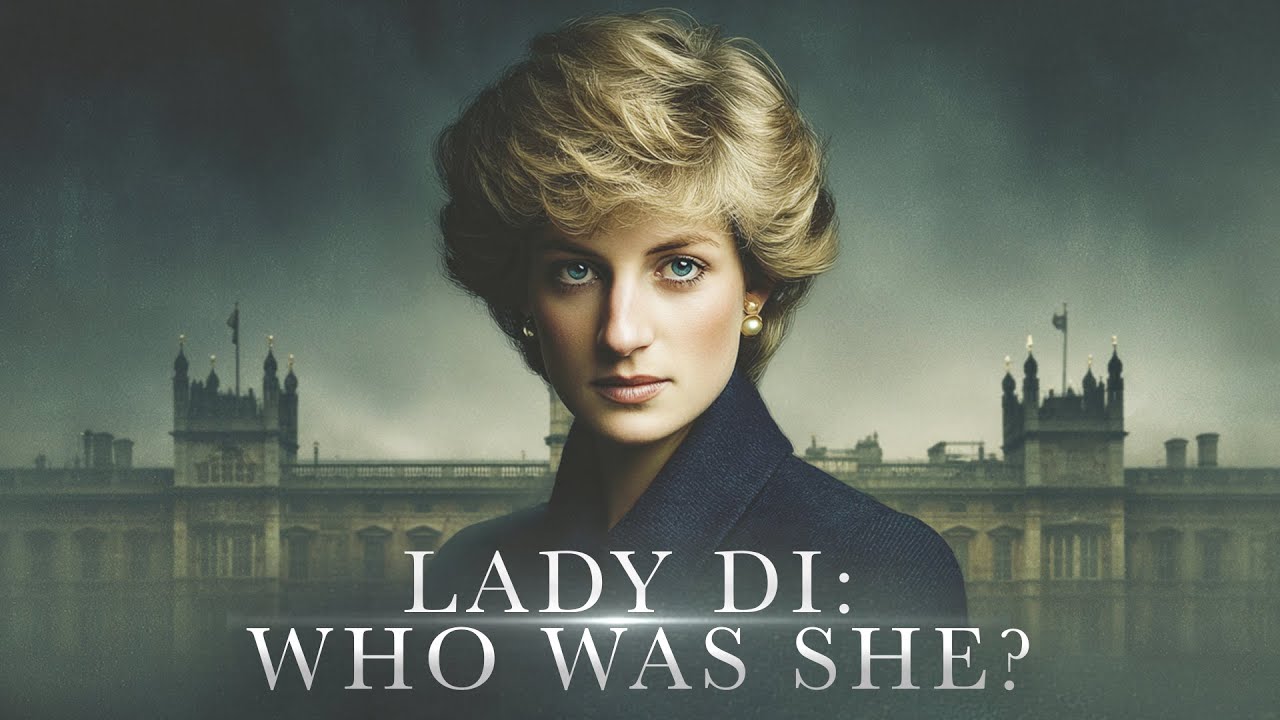
Princess Diana: The Truth the Palace Never Wanted You to Know | Lady Di | Royal Family Documentary
Keywords
Summary
142 words
Critical Evaluation
Value of the Information & Strength of the Argument
The documentary provides a rich historical context for understanding Diana’s life, drawing connections between her ancestors and her own experiences. It argues that Diana’s character was shaped by a legacy of strong women and the pressures of aristocratic expectations. The argumentation is coherent and supported by expert interviews, though it occasionally veers into speculation, particularly when drawing parallels between Diana and her ancestors. The value lies in its focus on lesser-known aspects of Diana’s family history, offering a fresh perspective beyond the typical tabloid narrative.
Scientific Rigor, Source Quality, Title Accuracy
The documentary does not cite specific sources or provide references, relying instead on general historical knowledge and expert commentary. While the experts appear credible, the lack of direct citations weakens the scientific rigor. The title’s promise of ’the truth the palace never wanted you to know’ is somewhat overstated, as the content is largely based on publicly known historical facts. The title is attention-grabbing but not misleading, as it does delve into aspects of Diana’s life that are less commonly discussed.
181 words
Title / Content Match
The title is somewhat sensationalist ('The Truth the Palace Never Wanted You to Know') but the content does focus on lesser-known aspects of Diana's family history and personal background, so it is broadly appropriate.
Quality & Reliability
6/10
The documentary relies on historical narrative and expert commentary, but lacks direct citations or references to primary sources. It presents a mix of well-known historical facts and interpretive analysis, with some speculative elements. The production quality is decent, but the lack of verifiable sources and the sensationalist framing reduce its overall reliability.
Key Moments
Markers derived by PSI from the transcript: the creator did not define chapters.
- Introduction to Diana's death and the question of her origins.
- Birth of Diana and the disappointment of not being a boy.
- The story of John Churchill, Duke of Marlborough, and the Battle of Blenheim.
- The inheritance of Blenheim Palace and the Spencer connection.
- Diana's parents' divorce and custody battle.
- The story of Georgiana, Duchess of Devonshire, and her scandals.
- Diana's move to Althorp and the weight of family history.
- The Spencer family's rise through the wool trade and the English Civil War.
- Diana's first meeting with Prince Charles and the beginning of their relationship.
Contribution & Novelties
The documentary offers a unique angle by focusing on Diana’s family history, particularly the Spencer lineage, to explain her character and fate. It draws parallels between Diana and her ancestor Georgiana, Duchess of Devonshire, highlighting recurring themes of marital unhappiness, public scrutiny, and personal struggle. This historical perspective adds depth to the conventional narrative of Diana as a tragic figure.
Pour aller plus loin :
- Spencer family — Overview of the Spencer family history and notable members.
- Georgiana Cavendish, Duchess of Devonshire — Detailed biography of Diana’s ancestor, known for her social influence and personal scandals.
- John Churchill, 1st Duke of Marlborough — Information on the military leader whose victories led to the Spencer family’s rise.
116 words
Radar Profile
The radar profile shows moderate scores across all dimensions, with a slight peak in quantity of information and a dip in technical level. This indicates a documentary that provides substantial historical content but lacks deep technical or scientific analysis, making it accessible to a general audience.