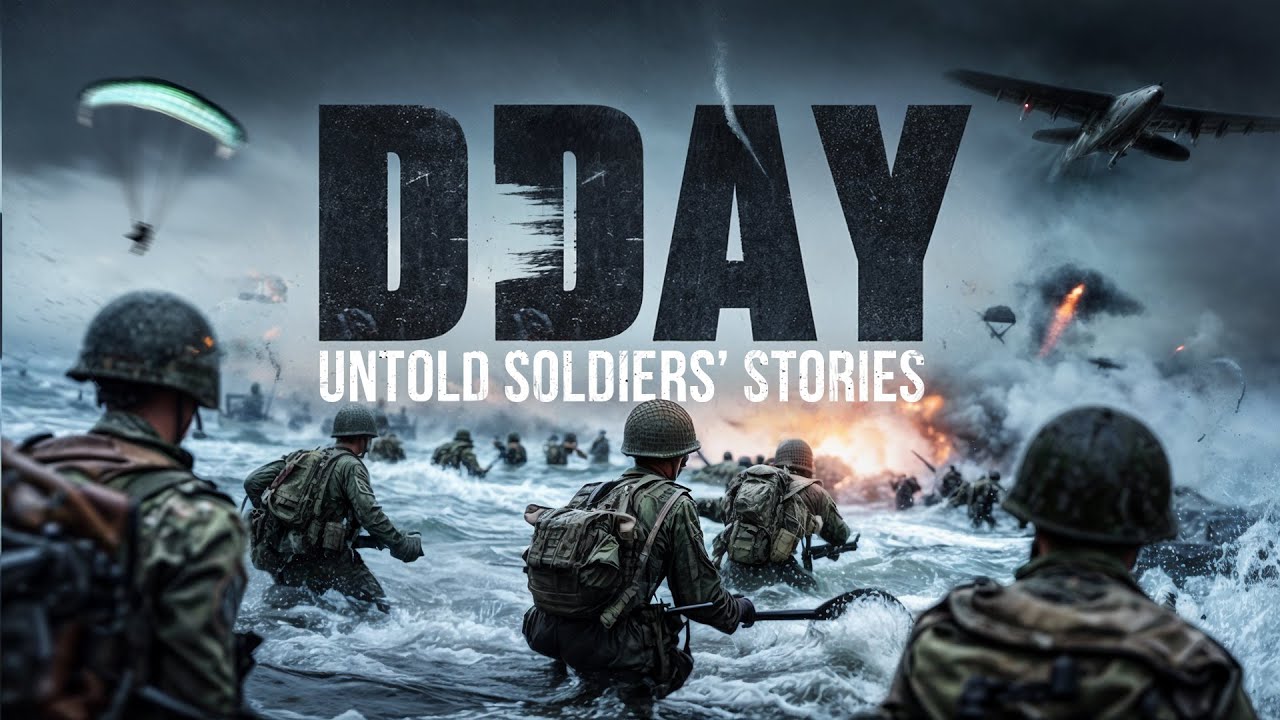
D-Day: 24 Hours That Changed the World Forever | Battle of Normandy | D-Day Documentary
Keywords
Summary
117 words
Critical Evaluation
Value of the Information & Strength of the Argument
The documentary offers valuable insights into the human dimension of D-Day, using personal accounts and letters to convey the emotional and physical challenges faced by soldiers. The argumentation is primarily narrative, focusing on individual experiences rather than strategic analysis. While it effectively illustrates the chaos and courage, it lacks a critical examination of the broader military decisions and their consequences. The use of expert commentary, such as from museum curators, adds credibility, but the overall argumentation is more evocative than analytical.
Scientific Rigor, Source Quality, Title Accuracy
The documentary does not explicitly cite sources, but it references personal diaries, letters, and interviews with veterans, which are generally reliable for personal accounts. However, the lack of academic citations or references to historical archives weakens its scientific rigor. The title accurately reflects the content, and the documentary stays focused on the events of D-Day. The production quality is high, with dramatic reenactments and archival footage, but the absence of a clear source list limits its use as a scholarly reference.
177 words
Title / Content Match
The title accurately reflects the content, focusing on the 24 hours of D-Day and its historical significance.
Quality & Reliability
7/10
The documentary relies on personal accounts, letters, and historical reconstructions, but lacks explicit citations to primary sources or academic references. It presents a compelling narrative but does not engage with historiographical debates or provide verifiable source lists.
Key Moments
Markers derived by PSI from the transcript: the creator did not define chapters.
- Introduction to the Allied preparations and the German anticipation of invasion.
- Airborne operations: paratroopers landing in Normandy, including the capture of Sainte-Mère-Église.
- Discussion of the Atlantic Wall and the development of specialized tanks like the DD tank.
- Omaha Beach landings: the suicide wave and the heavy casualties.
- British and Canadian landings at Sword and Juno Beaches, including the story of Lord Lovat and his bagpiper.
- The assault on Pointe du Hoc by US Rangers.
- The capture of Pegasus Bridge and the link-up with airborne troops.
- The progress on all five beaches and the establishment of Allied footholds.
- Reflections on the significance of D-Day and the cost of liberation.
Cited Sources
- No explicit sources cited in video — The documentary does not provide a list of sources or references.
Concurring Sources
- The National WWII Museum - D-Day — Provides historical context and details on the D-Day invasion, consistent with the documentary's narrative.
Dissenting Sources
- Some historians argue about the effectiveness of the airborne drops — The documentary presents the airborne operations as both a triumph and a disaster, but some historians debate the overall impact on the success of the landings.
Contribution & Novelties
The documentary’s original contribution lies in its compilation of personal stories and letters, offering a human perspective on D-Day that is often overshadowed by strategic narratives. It brings together accounts from various nationalities, including American, British, Canadian, and German soldiers, as well as French civilians, providing a multifaceted view of the event.
Pour aller plus loin :
- Operation Overlord - Wikipedia — Provides a comprehensive overview of the planning and execution of D-Day.
- Normandy landings - Wikipedia — Detailed information on the five landing beaches and the forces involved.
- Omaha Beach - Wikipedia — Focuses on the specific challenges and casualties at Omaha Beach.
- Pointe du Hoc - Wikipedia — Details the US Ranger assault on the cliffs.
- Pegasus Bridge - Wikipedia — Information on the capture of the bridge by British airborne forces.
134 words
Radar Profile
The radar profile shows high scores in quantity of information and reliability, but lower in technical level, reflecting the documentary's focus on narrative and human stories rather than technical military analysis.
💬 No comments were provided for analysis.