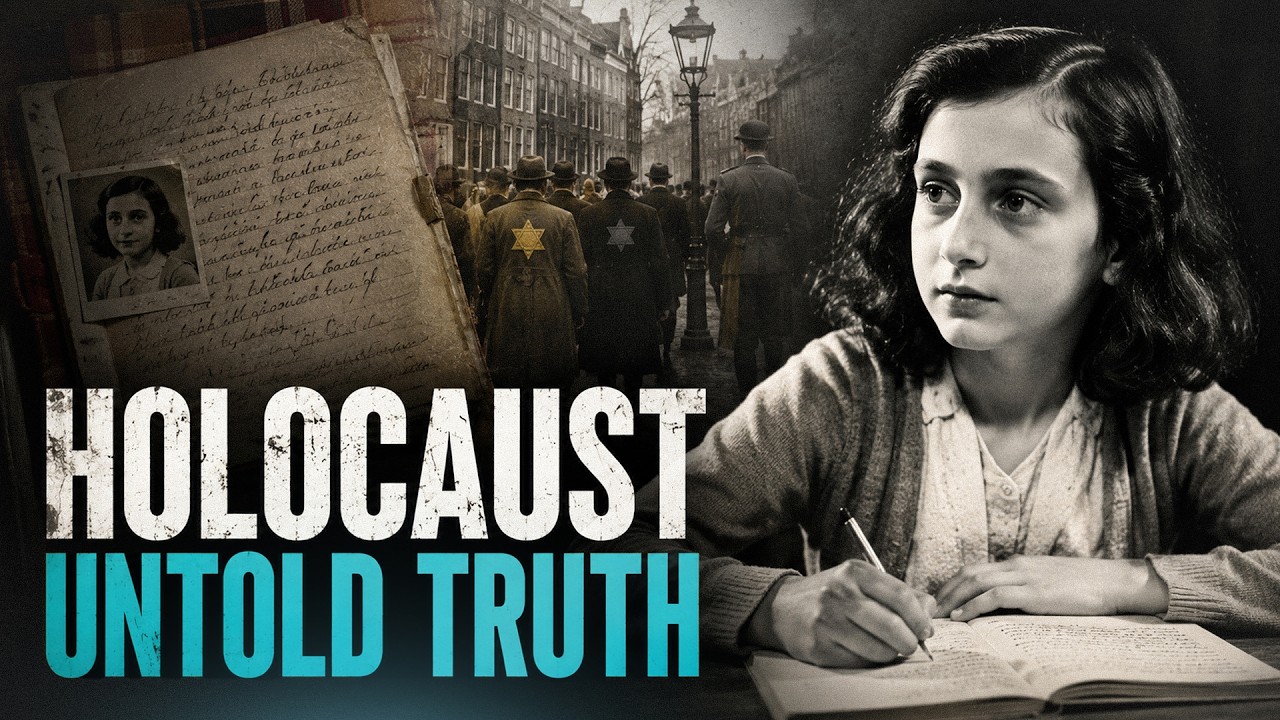
TWO SISTERS’ WAR: How Fascism and Communism Tore One Family Apart | British History | Documentary
Keywords
Summary
134 words
Critical Evaluation
Value of the Information & Strength of the Argument
The documentary provides a valuable overview of Anne Frank’s story, combining historical narrative with personal testimonies, particularly from Ava Schloss. The argumentation is largely narrative and emotional, focusing on the human impact rather than analytical depth. It effectively conveys the tragedy and the significance of the diary, but lacks critical examination of historical debates or alternative perspectives. The use of survivor testimony adds authenticity, but the absence of scholarly analysis limits the overall value.
Scientific Rigor, Source Quality, Title Accuracy
The documentary does not cite specific sources, but relies on well-known historical facts and personal accounts. The quality of sources is moderate; the testimonies are credible but not independently verified within the video. The title is significantly misleading, as it suggests a focus on a sibling conflict within a political context, which is not the content. This discrepancy affects the documentary’s coherence and trustworthiness.
153 words
Title / Content Match
The title is misleading; the video focuses on Anne Frank's life and legacy, not on a 'war between two sisters' or the broader fascism/communism conflict.
Quality & Reliability
6/10
The documentary relies on historical accounts and survivor testimonies, but lacks explicit citations or references to primary sources. The narrative is coherent and aligns with established historical knowledge, but the absence of verifiable sources and the low view count limit its reliability.
Key Moments
Markers derived by PSI from the transcript: the creator did not define chapters.
- Introduction to Anne Frank and her diary's significance.
- Anne's early life in Frankfurt and the rise of Nazism.
- The Frank family's move to Amsterdam and initial adaptation.
- German invasion of the Netherlands and increasing restrictions on Jews.
- The call-up notices and the decision to go into hiding.
- Life in the Secret Annex and Anne's writing.
- The arrest and deportation of the annex residents.
- Anne's death in Bergen-Belsen and Otto's survival.
- Publication of the diary and its growing popularity.
- The legacy of Anne Frank and the Anne Frank House.
Cited Sources
- Anne Frank's Diary — The primary source of the documentary, quoted and referenced throughout.
- Ava Schloss testimony — Personal account of a childhood friend of Anne Frank.
Concurring Sources
- Anne Frank House — Official museum and research center, provides historical details consistent with the documentary.
- United States Holocaust Memorial Museum — Authoritative source on Holocaust history, corroborates the events described.
Contribution & Novelties
The documentary offers a personal perspective through Ava Schloss’s testimony, which adds a human element to the well-known story. However, it does not present new research or unique insights. The narrative is a synthesis of existing knowledge.
Pour aller plus loin :
- Anne Frank House — Official site with extensive historical resources.
- United States Holocaust Memorial Museum — Comprehensive information on the Holocaust.
- Yad Vashem — The World Holocaust Remembrance Center.
71 words
Radar Profile
The radar profile shows moderate scores across all dimensions, indicating a balanced but not exceptional documentary. The highest score is in information quantity, while technical level is lowest, reflecting its accessible, non-academic approach.