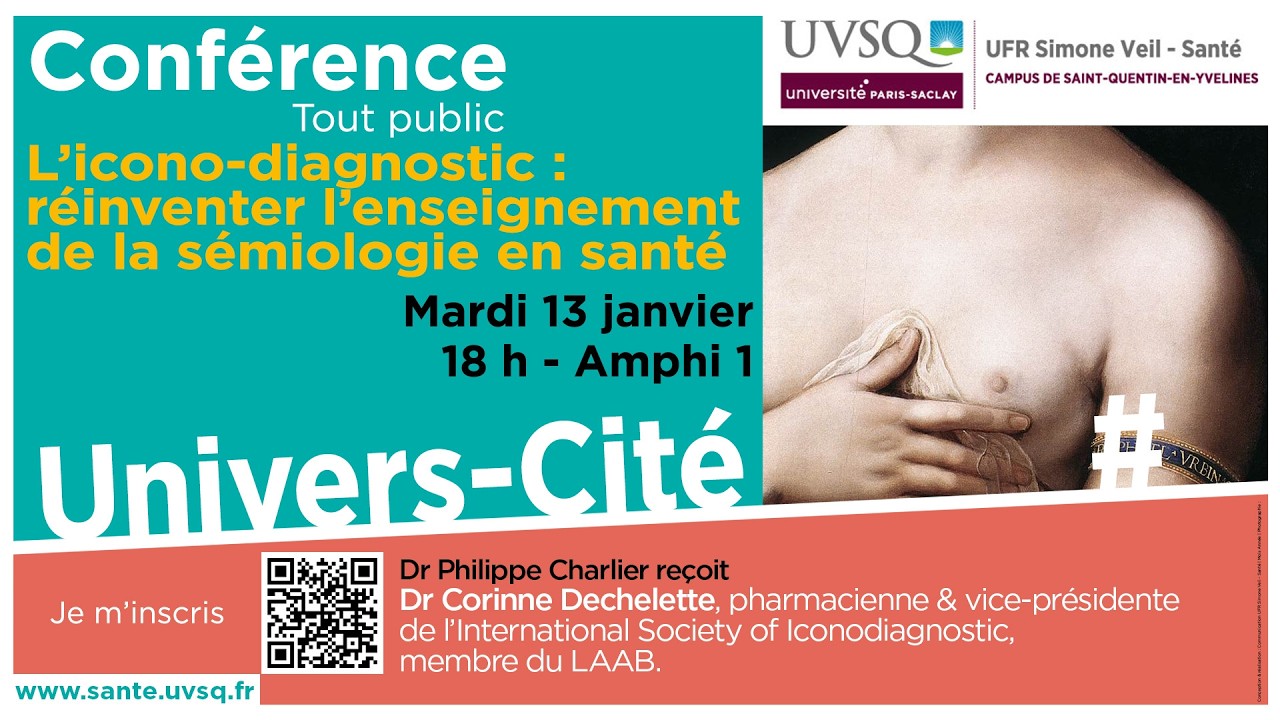
L'icono-diagnostic : réinventer l'enseignement de la sémiologie en santé- Université #11
Keywords
Summary
187 words
Critical Evaluation
Value of the Information & Strength of the Argument
The presentation provides valuable insights into an innovative educational approach, demonstrating how art can enhance diagnostic skills. The argumentation is coherent, building from historical foundations to practical applications, and is supported by numerous examples of artworks with identifiable dermatological conditions. The speaker effectively argues that iconodiagnostic fosters a more attentive and analytical gaze, which is transferable to clinical practice. However, the argumentation relies heavily on anecdotal evidence and lacks rigorous scientific validation, such as controlled studies or systematic reviews. The value lies in its potential to inspire and complement traditional teaching methods, but the scientific evidence base is not thoroughly explored.
Scientific Rigor, Source Quality, Title Accuracy
The scientific rigor is moderate. The speaker references historical figures and specific artworks, but does not provide explicit citations to peer-reviewed literature during the talk. The sources mentioned in the description are institutional links (UVSQ website and LinkedIn), which are not directly related to the content. The title accurately reflects the content, focusing on the innovative use of iconodiagnostic in health education. The talk is well-structured and informative, but the lack of explicit references and the reliance on personal expertise limit its scientific robustness. No comments were provided for analysis.
206 words
Title / Content Match
The title accurately reflects the content, which focuses on the use of iconodiagnostic as a novel approach to teaching semiology in health education.
Quality & Reliability
7/10
The conference is presented by a pharmacist specialized in dermatology and vice-president of the International Society of Iconodiagnostic, with a solid academic background. The content is based on established medical knowledge and historical cases, but lacks systematic citation of peer-reviewed sources during the talk. The presentation is informative and well-structured, but the scientific rigor is moderate due to the absence of explicit references and the reliance on anecdotal evidence.
Key Moments
Markers derived by PSI from the transcript: the creator did not define chapters.
- Introduction by the host, welcoming attendees and introducing the topic.
- Dr. Dechelette presents her background and the mission of the International Society of Iconodiagnostic.
- Definition of semiology and its two levels: general and specialized.
- Historical link between art and medicine, citing early dermatology treatises.
- Introduction to iconodiagnostic, its origins in 1983, and its definition as a reading of artworks.
- Examples of dermatological conditions in artworks, including plague, smallpox, and leprosy.
- Discussion of specific cases like the rhinophyma in Ghirlandaio's painting and the Marat's dermatosis.
- Interactive segment: audience is invited to participate in a mock consultation.
- Conclusion and invitation to join the International Society of Iconodiagnostic.
Cited Sources
- UFR Simone Veil - Santé — Official website of the faculty hosting the conference.
- UFR Simone Veil - Santé LinkedIn — LinkedIn page of the faculty, providing updates on conferences and events.
Concurring Sources
- Iconodiagnosis — General reference on the discipline, supporting the concept presented.
Contribution & Novelties
The conference presents iconodiagnostic as a novel pedagogical tool, emphasizing its potential to enhance observational skills in medical students. It bridges the gap between art and medicine, offering a unique perspective on semiology education. The speaker’s expertise in dermatology and her passion for art provide a compelling case for integrating this approach into curricula.
Pour aller plus loin :
- Iconodiagnosis — Wikipedia article providing an overview of the discipline.
- Visual literacy in medical education — A study on the use of visual arts to improve diagnostic skills.
- The role of art in medical education — AAMC article discussing the integration of arts into medical training.
105 words
Radar Profile
The radar profile shows high scores in quantity of information and fiabilité, reflecting the extensive content and the speaker's expertise. The niveau technique is moderate, indicating that the content is accessible to a broad audience. The quality of information is good, but the lack of explicit citations slightly lowers the overall score.