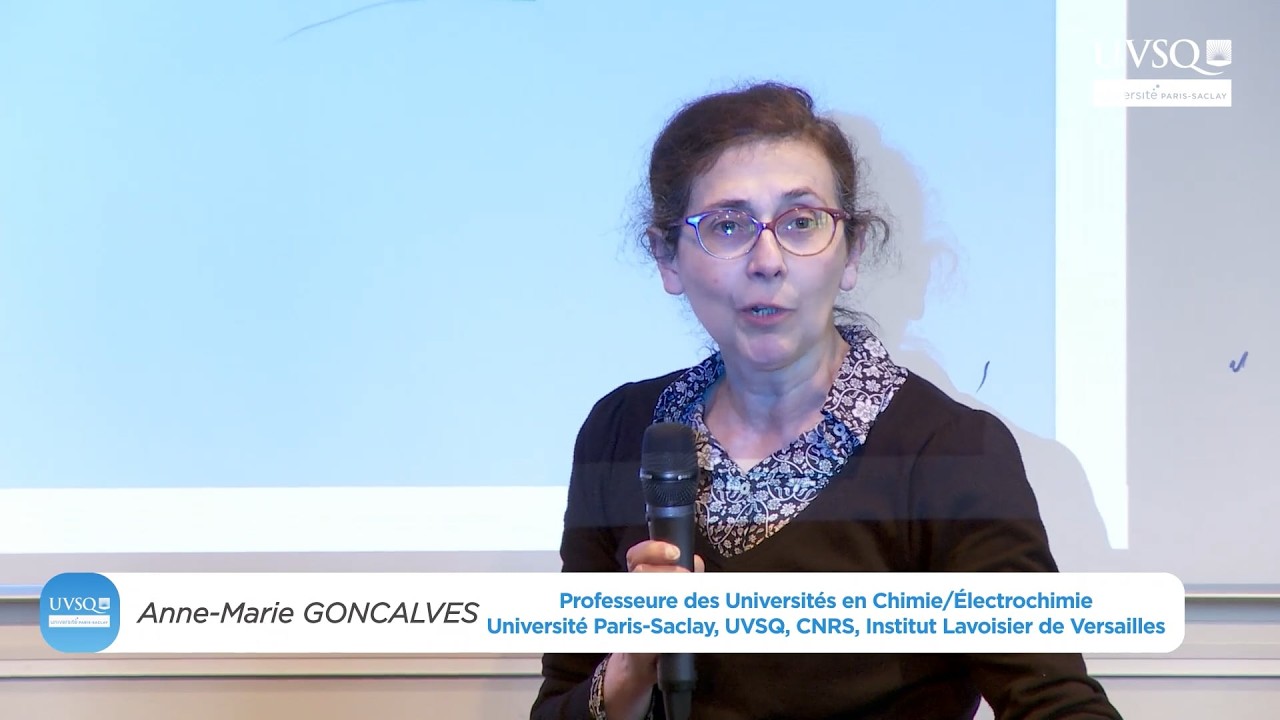
Comprendre et stabiliser les interfaces semiconducteur/électrolyte : l’apport de l’ammoniac liquide
Keywords
Summary
168 words
Critical Evaluation
Value of the Information & Strength of the Argument
The presentation provides valuable insights into a niche area of electrochemistry, showcasing original research on the use of liquid ammonia for semiconductor surface modification. The argumentation is structured logically, starting with the properties of ammonia, moving to the experimental setup, and then presenting the results. The speaker effectively explains complex concepts, such as band diagrams and photocurrent behavior, making them accessible. The evidence for the formation of a polyphosphazene film is supported by XPS data, and the claim of solvent oxidation is backed by endoscopic camera observations of gas evolution. However, the talk lacks detailed quantitative data and references to peer-reviewed publications, which would strengthen the scientific rigor. The argumentation is persuasive but relies heavily on the speaker’s authority and the team’s expertise.
Scientific Rigor, Source Quality, Title Accuracy
The scientific rigor is moderate; the talk is based on original research but lacks explicit citations to literature. The speaker mentions that the photocurrent linearity in water is established in literature, but no specific references are given. The quality of sources is not verifiable from the video alone. The title accurately reflects the content, focusing on the interface and the role of liquid ammonia. The talk is a conference presentation, so it is not a peer-reviewed publication, but it presents credible experimental results. The adequacy between title and content is high, as the talk indeed addresses the understanding and stabilization of semiconductor/electrolyte interfaces using liquid ammonia.
244 words
Title / Content Match
The title accurately reflects the content, focusing on semiconductor/electrolyte interfaces and the role of liquid ammonia in their stabilization.
Quality & Reliability
7/10
The speaker is a professor and director deputy at the Institut Lavoisier, with a long-standing expertise in electrochemistry in liquid ammonia. The talk presents original research results, including the formation of a polyphosphazene film and the first photoanode in this solvent, supported by XPS and ICP analyses. However, the presentation is a conference talk without detailed methodological descriptions or peer-reviewed references, limiting full verification.
Key Moments
Markers derived by PSI from the transcript: the creator did not define chapters.
- Introduction to ammonia production and applications
- Explanation of solvated electrons in liquid ammonia
- Description of experimental setup for liquid ammonia electrochemistry
- Introduction to indium phosphide (InP) and its use in optoelectronics
- Explanation of semiconductor/electrolyte junction and photocurrent behavior
- Comparison of photocurrent in water vs liquid ammonia
- XPS analysis revealing polyphosphazene film formation
- Demonstration of solvent oxidation and first photoanode in liquid ammonia
- Acknowledgments and conclusion
Contribution & Novelties
The talk presents novel findings on the use of liquid ammonia for semiconductor surface passivation, specifically the formation of a polyphosphazene film on InP, which is a new approach to stabilizing semiconductor/electrolyte interfaces. The demonstration of the first photoanode in liquid ammonia, where the solvent is oxidized, is a significant contribution to photoelectrochemistry. This work opens avenues for improving the stability and performance of optoelectronic devices and photovoltaics.
Pour aller plus loin :
- Liquid ammonia — General properties and uses.
- Photoelectrochemistry — Overview of the field.
- Indium phosphide — Material properties and applications.
- X-ray photoelectron spectroscopy — Technique used for surface analysis.
102 words
Radar Profile
The radar profile shows high scores in quality and quantity of information, with moderate technical level and reliability. This indicates a well-structured presentation with substantial content, but with room for more rigorous sourcing and technical depth.