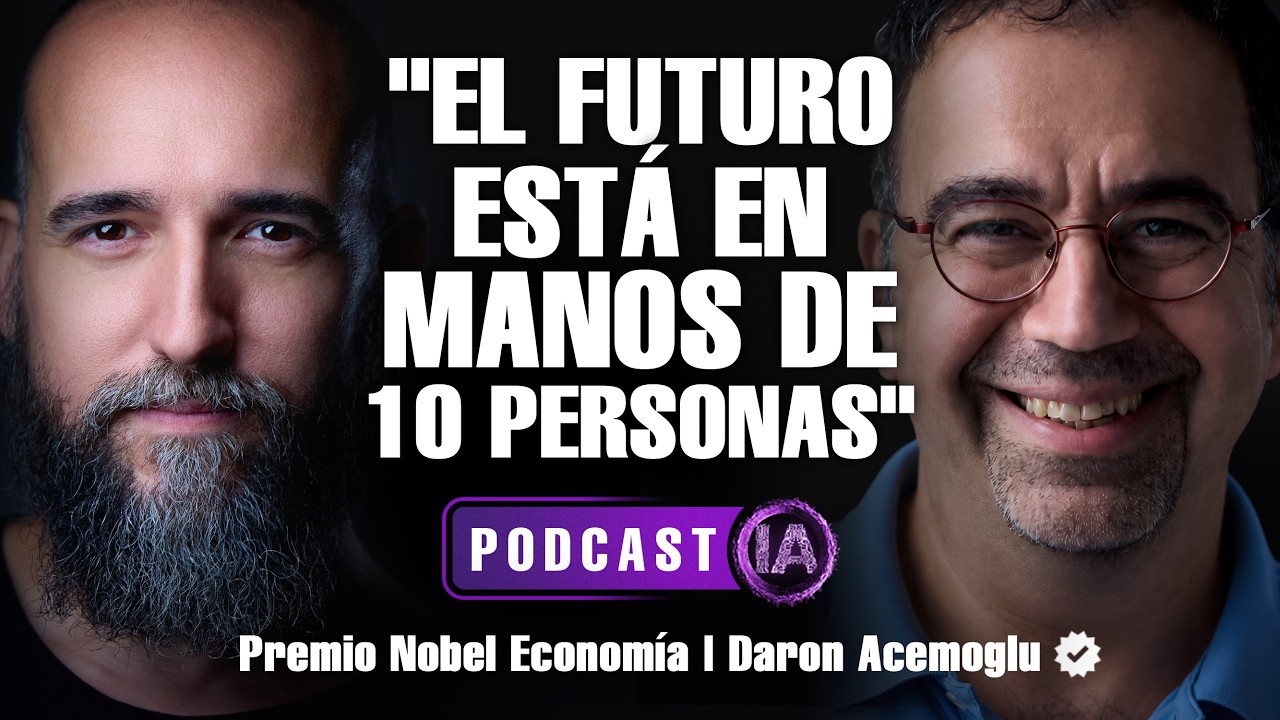
El futuro de la humanidad y la economía lo controlan unos pocos
Keywords
Summary
154 words
Critical Evaluation
The interview provides a rigorous and balanced perspective on AI’s economic impact, featuring Daron Acemoglu, a leading economist. Acemoglu’s arguments are well-grounded in economic theory and empirical observations, such as the slow diffusion of technology and the distinction between automation and augmentation. He effectively challenges the hype surrounding AI, pointing out that despite impressive technological advances, macroeconomic productivity gains have been modest. His critique of the ‘AI washing’ phenomenon and the unrealistic revenue projections for companies like OpenAI and Anthropic is particularly insightful. The discussion on the productivity paradox is nuanced, explaining why individual productivity gains may not translate into GDP growth. Acemoglu’s emphasis on ‘pro-worker AI’ offers a constructive alternative to the dominant automation narrative. However, some of his claims, such as the limited potential of AI to transform finance, are debatable and may underestimate the pace of future developments. The host’s questions are informed and facilitate a deep exploration of the topic. The title is somewhat sensationalist, but the content is substantive. Overall, the video is a valuable contribution to the discourse on AI and economics, offering a sober counterpoint to techno-optimism.
184 words
Title / Content Match
The title is somewhat sensationalist and broad, but the content does focus on how a few tech elites control AI's future and its economic implications, aligning with the core theme.
Quality & Reliability
8/10
The video features a Nobel laureate economist (Daron Acemoglu) providing expert analysis on AI's economic impact. The discussion is grounded in his published research and includes nuanced views on productivity, employment, and technological diffusion. The host's questions are informed, and the conversation avoids hype. However, the content is primarily opinion and interpretation rather than presenting new empirical data, and some claims are debated.
Chapters
- Tráiler Daron Acemoglu
- Dos años después: el economista revisa sus propias predicciones sobre la IA
- Más rápido de lo que predijo: la IA agéntica como punto de inflexión
- La IA no crece de forma constante: viene en explosiones impredecibles
- ¿Hemos llegado ya a la AGI?
- Paradoja de la productividad: todos ganan tiempo, pero la economía se queda igual
- IA pro-trabajador: la alternativa a la automatización que nadie está construyendo
- AI washing: cuando la IA justifica despidos
- ¿Es la IA como la Revolución Industrial, pero 10 veces más grande y más rápida?
- PrevIA: La forma más rápida de preparar una entrevista de trabajo
- De la Revolución Industrial a la IA: qué capacidades humanas perderán valor
- La burbuja dot-com y la burbuja de la IA: similitudes y diferencias clave
- OpenAI y Anthropic necesitan ingresos imposibles de alcanzar
- ¿Está NVIDIA sobrevalorada o su precio está justificado?
- Plaud: La forma más fácil de grabar y resumir reuniones
- El futuro de la IA está en manos de una élite tecnológica
- La regulación de la IA es reactiva cuando tiene que ser proactiva
- Acelerar la IA tiene consecuencias que aún no entendemos
- ¿Estamos enseñando a los jóvenes a depender de la IA?
- Impuestos a la IA, renta básica y el futuro del empleo
- ¿Todavía estamos a tiempo de cambiar el rumbo de la IA?
Cited Sources
- Daron Acemoglu - Google Scholar — Profile of Daron Acemoglu's academic publications, referenced as the guest's scholarly background.
- Club de la IA — Community group related to AI, mentioned in the description as a resource.
- IA Perfecta — Website listing AI tools, mentioned in the description.
- Guía para usar ChatGPT como un PRO — Free guide for using ChatGPT, linked in the description.
- Guía de NotebookLM — Guide for NotebookLM, linked in the description.
- Guía de VibeCoding — Guide for Vibe Coding, linked in the description.
- Guía de Generación de imágenes con ChatGPT y Nano Banana — Guide for image generation with ChatGPT, linked in the description.
- La hostIA que viene — Book by the host, linked in the description.
- Newsletter semanal de IA — Weekly AI newsletter, linked in the description.
- Canal de WhatsApp sobre IA — WhatsApp channel about AI, linked in the description.
Concurring Sources
- Daron Acemoglu - Google Scholar — Acemoglu's academic publications support his arguments on technology and economics.
Dissenting Sources
- Anthropic's research on AI capabilities — Acemoglu disagrees with Anthropic's claim that AI could perform 75% of tasks in finance, arguing that models lack context and reliability.
Contribution & Novelties
The interview offers a critical, expert perspective on AI’s economic impact, challenging mainstream hype. It introduces the concept of ‘pro-worker AI’ as an alternative to automation, and highlights the productivity paradox and the slow diffusion of technology. The discussion on AI washing and the sustainability of tech investments provides a sobering counterpoint.
Pour aller plus loin :
- Daron Acemoglu’s research on AI and productivity — Relevant to his academic work.
- The Productivity Paradox — Explains the phenomenon discussed.
- Artificial General Intelligence — Provides background on AGI definitions and debates.
89 words
Radar Profile
The radar profile shows high scores in information quantity, quality, and reliability, with a slightly lower technical level, indicating a well-informed and credible discussion that is accessible to a broad audience.
💬 Positif: The comments are overwhelmingly positive, praising the interview's quality and the guest's realistic perspective, with many expressing gratitude for the content.