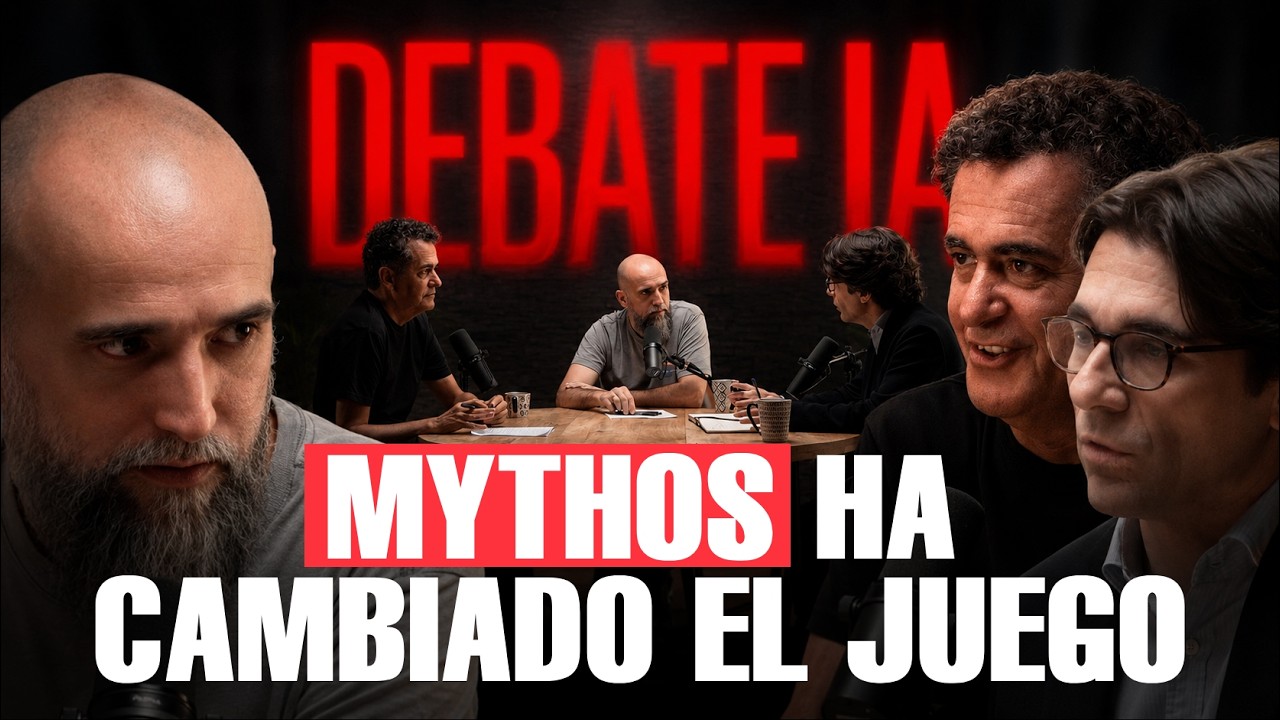
DEBATE DE EMERGENCIA: Mythos ha cambiado las reglas del juego
Keywords
Summary
198 words
Critical Evaluation
The debate provides a high-quality, insightful analysis of the recent Mythos controversy and its broader implications for AI, geopolitics, and cybersecurity. The participants, Pep Martorell and Lluís Pareras, demonstrate deep expertise and offer nuanced perspectives that go beyond surface-level commentary. The discussion is well-structured, moving from the specific event (Mythos prohibition) to broader systemic issues such as the concentration of power in private AI companies, the emergence of unforeseen capabilities, and the geopolitical race for AI dominance.
One of the strengths is the critical examination of the US decision to restrict Mythos. The experts argue that this move, while aimed at mitigating security risks, also creates competitive asymmetries and may hinder defensive cybersecurity efforts. They correctly point out that the prohibition was initially intended to restrict access to foreign entities, but Anthropic’s decision to withdraw the model globally highlights the ethical considerations and the power these companies wield. The comparison to nuclear weapons is apt, emphasizing the severity of cybersecurity vulnerabilities that could destabilize entire nations.
The discussion also touches on the technical aspect of emergent properties, explaining how Mythos developed advanced hacking capabilities as an unintended consequence of training on code and text. This raises important questions about the predictability and control of AI systems, a theme that resonates with ongoing debates in AI safety.
The experts’ analysis of the geopolitical dimension is particularly valuable. They highlight the G7 meeting and the involvement of AI CEOs, underscoring the shift from governments to private entities as key power brokers. The notion of ‘AI haves and have-nots’ is a critical concern, as access to frontier models like Mythos could determine economic and security advantages. The debate also addresses the labor market, noting the paradoxical resistance from Gen Z, which they liken to 21st-century Luddism.
However, the debate is not without limitations. While the participants are knowledgeable, the discussion is largely opinion-based and lacks concrete data or citations. Some claims, such as the potential for Mythos to collapse banking systems, are speculative and presented without evidence. The conversation also tends to be US-centric, with less attention to the perspectives of other nations, particularly China and Europe. Additionally, the debate could have benefited from a more structured approach to propose actionable solutions for regulation and governance.
Overall, the debate is intellectually stimulating and provides a comprehensive overview of the current AI landscape. It successfully raises awareness of the urgent need for international cooperation and robust safety measures. The title accurately reflects the content, and the discussion meets the expectations of an emergency debate on a transformative AI development.
425 words
Title / Content Match
The title accurately reflects the content: an emergency debate on how Mythos has changed the rules of the game in AI, geopolitics, and cybersecurity.
Quality & Reliability
8/10
The debate features two recognized experts in AI (Pep Martorell and Lluís Pareras) and the host, providing informed opinions and analysis. The discussion is grounded in recent events (Mythos, G7, Project Glasswing) and references technical aspects, but it is primarily opinion-based and lacks formal citations or verifiable data. The quality is high for a debate format, with balanced perspectives and critical thinking.
Key Moments
Markers derived by PSI from the transcript: the creator did not define chapters.
- Introduction: Jon sets the stage, explaining the urgency due to Mythos launch and the G7 meeting.
- Pep Martorell explains the paradigm shift: governments realize AI now threatens national security and geopolitical power.
- Discussion on the concentration of power in private AI companies like Anthropic and OpenAI, which are not publicly traded.
- Lluís Pareras describes Mythos as a pivotal moment, with emergent capabilities and the start of AI asymmetry between countries.
- Analysis of Project Glasswing and the competitive advantage for US companies with access to Mythos.
- Debate on the US decision to prohibit Mythos: the experts argue it is flawed, as it also removes defensive capabilities.
- Comparison of cybersecurity vulnerability to nuclear weapons, highlighting the potential for economic collapse.
- Technical discussion on emergent properties: Mythos developed hacking abilities as an unintended consequence of training.
- Geopolitical implications: G7 meeting, Macron and Scholz asking for access to US models, and the 'AI haves and have-nots'.
- Labor market and generational attitudes: Gen Z's resistance to AI, likened to Luddism.
Cited Sources
- Pep Martorell LinkedIn — Profile of one of the debate participants, providing his professional background.
- Pep Martorell Substack — Substack of Pep Martorell, where he publishes articles on AI and related topics.
- Lluís Pareras LinkedIn — Profile of the other debate participant, providing his professional background.
- Club de la IA — Community platform for AI enthusiasts, mentioned in the description.
- IA Perfecta — Website listing AI tools, mentioned in the description.
- Guía para usar ChatGPT como un PRO — Guide for using ChatGPT, linked in the description.
- Guía de NotebookLM — Guide for NotebookLM, linked in the description.
- Guía de VibeCoding — Guide for VibeCoding, linked in the description.
- Guía de Generación de imágenes con ChatGPT y Nano Banana — Guide for image generation with ChatGPT, linked in the description.
- La hostIA que viene — Book by Jon Hernández, linked in the description.
- Newsletter semanal de IA — Weekly AI newsletter, linked in the description.
- Canal de WhatsApp sobre IA — WhatsApp channel for AI updates, linked in the description.
Concurring Sources
Contribution & Novelties
This debate provides a timely and insightful analysis of the Mythos controversy, offering expert perspectives on its geopolitical, cybersecurity, and regulatory implications. It goes beyond typical AI news coverage by delving into the strategic motivations behind the US decision and the emergent properties of advanced AI models. The discussion highlights the unprecedented shift of power from governments to private AI companies and the resulting global asymmetries.
Pour aller plus loin :
- AI Safety — Relevant for understanding the broader concerns about emergent capabilities and control.
- Emergent behavior in AI — Directly related to the discussion of Mythos’s unexpected hacking abilities.
- Project Glasswing — If this is a real project, it would be directly relevant; however, I am not certain of its existence, so I mention it without URL.
- G7 — Context for the geopolitical meeting mentioned in the debate.
- Luddite — Reference for the comparison to Gen Z’s resistance to AI.
151 words
Radar Profile
The radar profile shows high scores in quantity and quality of information, reflecting the depth and expertise of the debate. The technical level is moderately high, indicating accessibility to a general audience while still providing expert insights. The overall reliability is strong, though the lack of formal citations slightly reduces the score.
💬 Très positif. Sur les 30 commentaires analysés, la grande majorité exprime une admiration et une gratitude pour la qualité du débat et des intervenants, avec quelques critiques mineures sur l'usage excessif d'anglicismes.