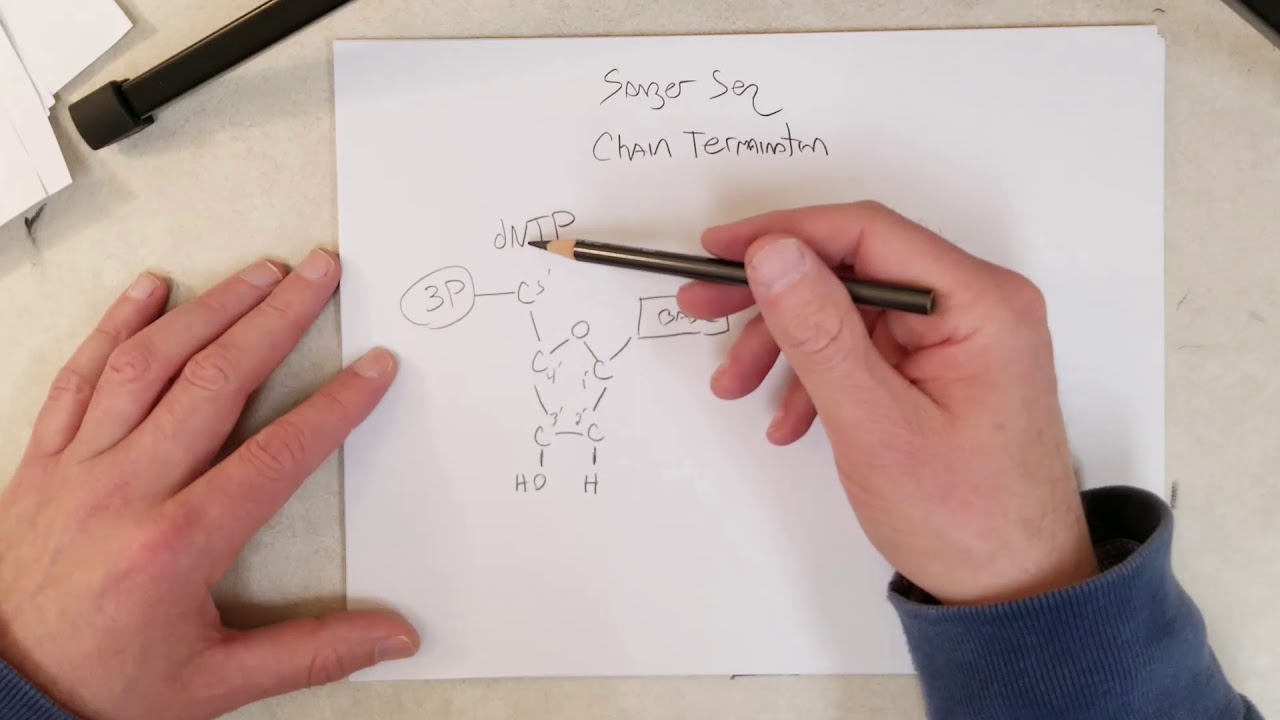
Genetics: L25-B, Sanger sequencing (Recommend 1.5x Speed)
Keywords
Summary
170 words
Critical Evaluation
Value of the Information & Strength of the Argument
The video provides a high educational value by breaking down a complex technique into understandable steps. The argumentation is solid, as the instructor logically explains the role of each component and the mechanism of chain termination. The use of a simplified example with a known sequence helps illustrate the process, and the step-by-step interpretation of the gel reinforces understanding. The video also connects the technique to PCR, which aids in comprehension. However, it does not discuss limitations or alternative methods in depth, which could be a minor weakness.
Scientific Rigor, Source Quality, Title Accuracy
The scientific rigor is high; the content is accurate and aligns with standard molecular biology textbooks. The instructor does not cite specific sources, but the information is foundational and well-established. The title accurately reflects the content, and the video is well-structured. No comments were provided for analysis.
150 words
Title / Content Match
The title accurately reflects the content, which is a lecture on Sanger sequencing.
Quality & Reliability
8/10
The video is a clear and accurate tutorial on Sanger sequencing, with a detailed explanation of the classical method and its components. The instructor demonstrates a thorough understanding of the technique, and the content aligns with standard molecular biology knowledge. The video is well-structured and pedagogically effective, though it lacks citations to primary literature.
Key Moments
Markers derived by PSI from the transcript: the creator did not define chapters.
- Introduction to Sanger sequencing and its applications.
- Components of a Sanger sequencing reaction.
- Explanation of dideoxynucleotides and chain termination.
- Detailed example of the sequencing reaction with ddATP.
- Explanation of gel electrophoresis and its role in separating fragments.
- Interpretation of the gel to determine the DNA sequence.
- Discussion of modern variations and fluorescent labeling.
- Summary and conclusion of the lecture.
Cited Sources
- No external sources cited in the video description. — The video description only contains the old title and no links.
Concurring Sources
- Sanger sequencing - Wikipedia — The video's explanation of the method aligns with the standard description on Wikipedia.
Contribution & Novelties
The video provides a clear and detailed explanation of the classical Sanger sequencing method, which is a fundamental technique in molecular biology. It effectively uses a simplified example to illustrate the process, making it accessible to students. The video also highlights the importance of gel electrophoresis in analyzing the results. While it does not introduce new scientific findings, it serves as an excellent educational resource.
Pour aller plus loin :
- Sanger sequencing - Wikipedia — Provides a comprehensive overview of the method and its history.
- DNA sequencing - National Human Genome Research Institute — Explains the broader context of DNA sequencing technologies.
- Dideoxynucleotide - Wikipedia — Details the structure and role of ddNTPs in chain termination.
116 words
Radar Profile
The radar profile shows high scores in information quantity, quality, and reliability, with a slightly lower technical level, indicating that the video is well-suited for an introductory audience. The balance between these dimensions suggests a solid educational resource.