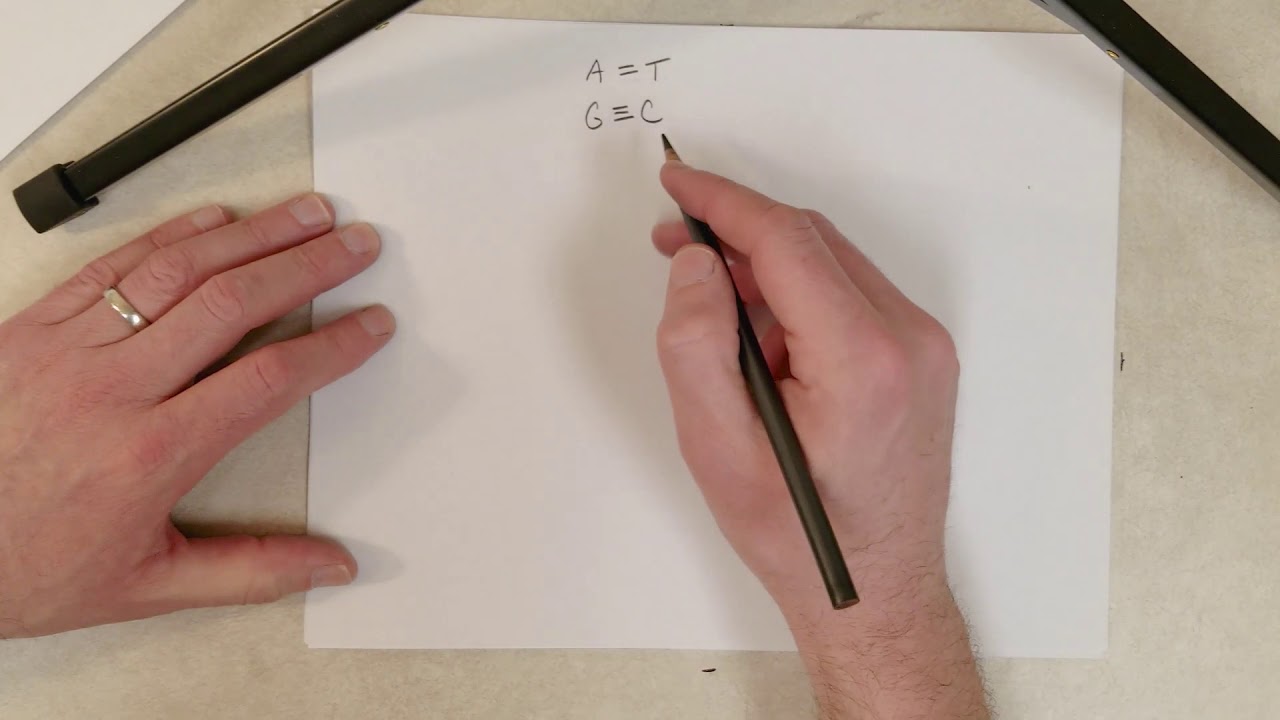
Genetics: L12-B, DNA Structure (Recommend 1.5x Speed)
Keywords
Summary
182 words
Critical Evaluation
Value of the Information & Strength of the Argument
The video provides solid foundational information on DNA structure, accurately explaining the components of nucleotides, base pairing rules, and the antiparallel arrangement. The argumentation is clear and logical, building from simple to complex concepts. The instructor uses diagrams and a step-by-step approach to illustrate the dinucleotide pairing, which effectively demonstrates the antiparallel nature. The content is well-structured and pedagogically sound, with mnemonics and practical tips. However, the video lacks depth in some areas, such as the chemical details of hydrogen bonding and the variations in DNA forms, but these are appropriately deferred to later lectures. Overall, the information is valuable for students learning genetics, and the reasoning is coherent and convincing.
Scientific Rigor, Source Quality, Title Accuracy
The video demonstrates scientific rigor by presenting established facts about DNA structure, consistent with standard textbooks. The instructor correctly states the dimensions (0.34 nm, 10.4 bp/turn) and the right-handed nature of B-DNA. However, no external sources are cited, which is typical for a lecture but limits verifiability. The title accurately reflects the content, and the recommendation for 1.5x speed is a practical note. The video is part of a structured course, indicating a systematic approach. The instructor’s response to a student question about supercoiling shows engagement and scientific curiosity, though it is not elaborated. Overall, the scientific accuracy is high, but the lack of citations and the introductory level prevent a perfect score.
239 words
Title / Content Match
The title accurately describes the content: a lecture on DNA structure, part of a series. The recommendation for 1.5x speed is a practical tip.
Quality & Reliability
8/10
The video is a clear, accurate tutorial on DNA structure, consistent with standard molecular biology. It correctly explains nucleotide components, base pairing, antiparallel strands, and key dimensions (0.34 nm, 10.4 bp/turn). Minor simplifications (e.g., not detailing base side groups) are appropriate for the level. The instructor acknowledges a student question about supercoiling, showing engagement. No sources are cited, but the content is foundational and well-established.
Key Moments
Markers derived by PSI from the transcript: the creator did not define chapters.
- Introduction to DNA structure, starting with a single nucleotide
- Explanation of phosphate group and five-carbon sugar (ribose vs deoxyribose)
- Definition of nucleoside vs nucleotide
- Overview of nitrogenous bases: pyrimidines and purines, with mnemonic 'pure as gold'
- Diagramming an AG dinucleotide and pairing with CT to show antiparallel strands
- Key structural parameters: 0.34 nm between base pairs, 10.4 bp per turn, right-handed helix
- Discussion of supercoiling and its potential effect on base pair spacing
- Mention of B-form DNA and other forms under different conditions
- Conclusion and preview of next video on hydrogen bonding
Concurring Sources
- DNA Structure - Wikipedia — Provides general information on DNA structure, including base pairing and dimensions, consistent with the video.
- Nucleic acid structure - Wikipedia — Details on nucleotide components and base pairing, supporting the video's explanations.
Contribution & Novelties
The video provides a clear and accessible introduction to DNA structure, emphasizing the antiparallel nature of strands through a diagramming exercise. It effectively uses mnemonics and practical tips to aid memorization. The instructor’s engagement with a student question about supercoiling adds a dynamic element, though it is not deeply explored. The content is standard for an introductory genetics course, but the teaching approach is effective.
Pour aller plus loin :
- DNA structure - Wikipedia — Comprehensive overview of DNA structure, including historical context and variations.
- Nucleic acid structure - Wikipedia — Detailed information on nucleotide and nucleic acid structure.
- Watson and Crick’s paper on DNA structure — Original 1953 paper describing the double helix.
- Supercoiling - Wikipedia — Explanation of supercoiling and its biological significance.
125 words
Radar Profile
The radar profile shows high scores in quality and reliability, moderate in quantity and technical level, indicating a solid introductory lecture with accurate content but limited depth and no external citations.