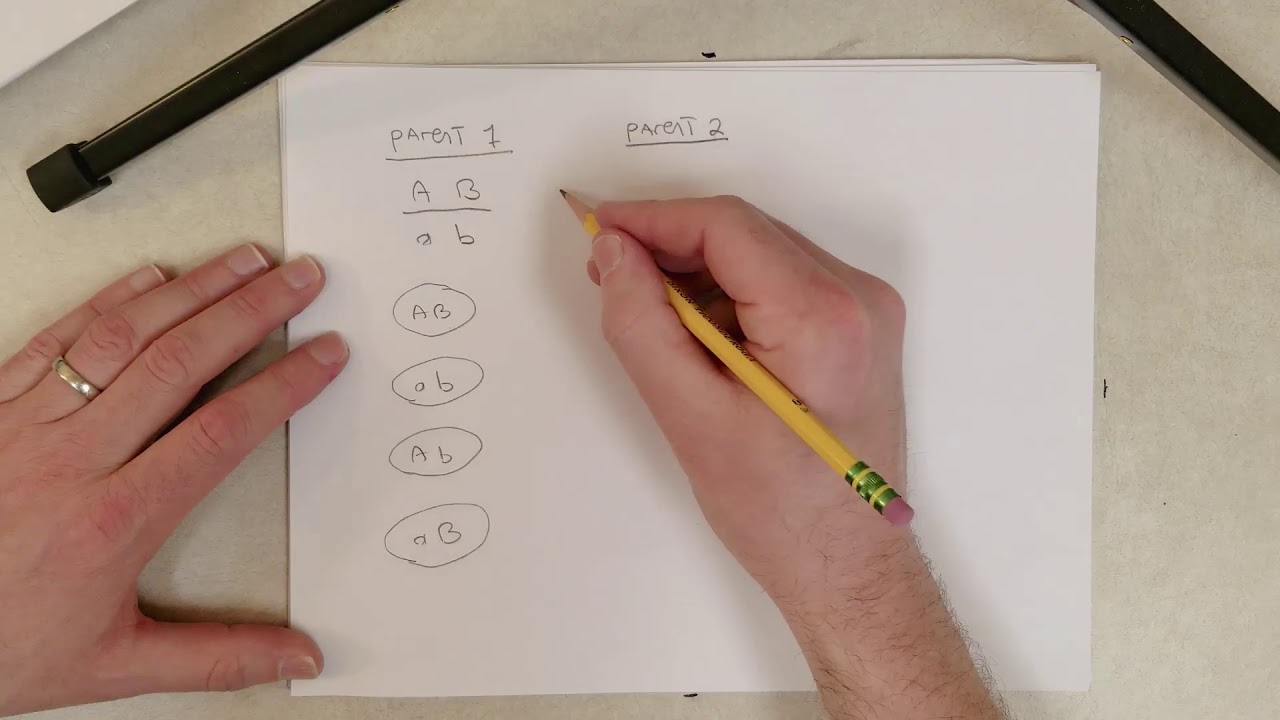
Genetics: L8-A, Calculating genetic distance from offspring phenotypes (Recommend 1.5x Speed)
Keywords
Summary
173 words
Critical Evaluation
Value of the Information & Strength of the Argument
The video provides a clear and structured explanation of a fundamental concept in genetics. It effectively uses a step-by-step approach, starting with gamete formation and progressing to the calculation of genetic distance. The argumentation is logical and builds on previous knowledge, making it accessible for students. The use of a concrete example with hypothetical numbers helps solidify understanding. However, the video does not discuss limitations or exceptions in depth, such as interference or multiple crossovers, which are important for a complete understanding.
91 words
Title / Content Match
The title accurately describes the content: calculating genetic distance from offspring phenotypes. The recommendation for 1.5x speed is a practical note.
Quality & Reliability
8/10
The video is an educational tutorial from a university genetics course, presenting standard concepts in linkage and genetic mapping. The content is accurate and aligns with established genetics principles. However, it lacks citations to primary literature and is based on a simplified model, which slightly reduces its scientific depth.
Key Moments
Markers derived by PSI from the transcript: the creator did not define chapters.
- Introduction to linked genes and genotype notation.
- Explanation of non-recombinant and recombinant gametes.
- Design of test cross with homozygous recessive parent.
- Diagram of crossover tetrad and origin of recombinant gametes.
- Calculation of recombination frequency from offspring counts.
- Definition of centimorgan and genetic distance.
- Comparison of genetic and physical distance.
Contribution & Novelties
The video provides a clear pedagogical explanation of calculating genetic distance, a core concept in genetics. It effectively bridges theoretical knowledge with practical calculation. For further exploration, consider the following:
- Genetic linkage — Overview of linkage and recombination.
- Centimorgan — Definition and usage in genetic mapping.
- Crossing over — Mechanism of recombination during meiosis.
54 words
Radar Profile
The radar profile shows high scores in information quantity, quality, and reliability, with a slightly lower technical level. This indicates a well-balanced educational video that is both informative and reliable, suitable for students learning genetics.