Problem 5.13
Keywords
Summary
181 words
Critical Evaluation
Value of the Information & Strength of the Argument
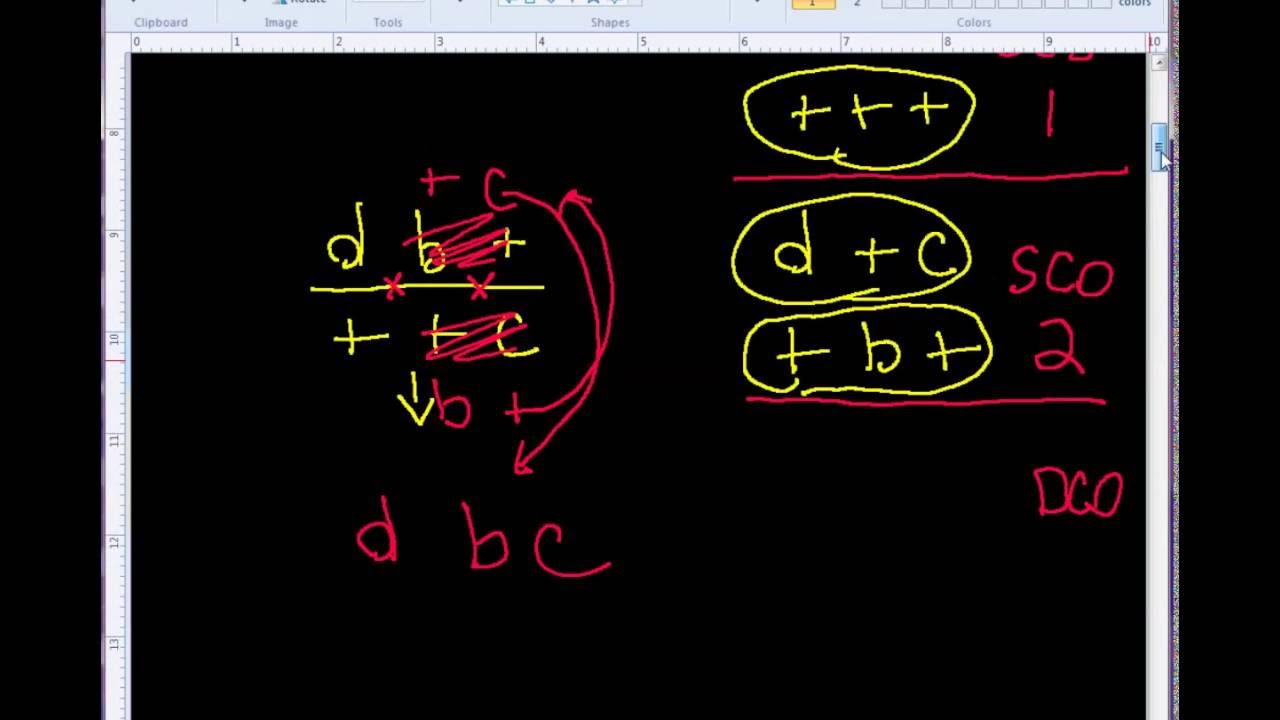
The video provides a clear and logical explanation of how to classify gametes resulting from crossing over in a three-point cross. The instructor uses a step-by-step approach, first identifying non-crossover gametes, then single crossovers, and finally double crossovers. He emphasizes the concept of reciprocal classes and explains the reasoning behind the relative frequencies of each class based on gene distances. The argumentation is sound and follows standard genetic principles. The value of the information is high for students seeking to understand this topic, as it breaks down a complex problem into manageable steps. However, the video does not provide any experimental data or citations, so its value is primarily pedagogical rather than as a source of new scientific findings.
Scientific Rigor, Source Quality, Title Accuracy
The video is scientifically rigorous in its explanation, adhering to established genetic principles. However, it does not cite any external sources, and the instructor’s authority is based on his role as a course instructor. The title ‘Problem 5.13’ is minimal but accurately reflects the content. The video is a tutorial, so the lack of citations is not a major flaw, but it limits the ability to verify the information independently. The instructor’s explanation is consistent with standard genetics textbooks, but without references, the viewer must trust the instructor’s expertise.
223 words
Title / Content Match
The title 'Problem 5.13' is minimal but accurately reflects the content, which is a walkthrough of a specific genetics problem.
Quality & Reliability
7/10
The video provides a clear, step-by-step explanation of genetic recombination and gamete classification in Drosophila, based on established genetic principles. The instructor demonstrates a solid understanding of the topic, but the video lacks citations to external sources and is a single instructor's explanation without peer review.
Key Moments
Markers derived by PSI from the transcript: the creator did not define chapters.
- Introduction to the problem: two female Drosophila heterozygous for three genes (black body, dachs tarsus, curved wings) with gene order D-B-C.
- Explanation of the female's genotype and the shorthand notation using plus signs for wild-type alleles.
- Identification of non-crossover gametes and the concept of reciprocal classes.
- Explanation of single crossover gametes resulting from crossing over between D and B.
- Explanation of single crossover gametes resulting from crossing over between B and C.
- Explanation of double crossover gametes and a shortcut method for identifying them.
- Discussion of the relative frequencies of gamete classes based on gene distances.
- Conclusion and note that the second female's problem is identical and can be solved similarly.
Contribution & Novelties
The video provides a clear pedagogical explanation of a classic genetics problem, but it does not present new scientific findings. Its value lies in its teaching approach, which breaks down the process of classifying gametes in a three-point cross. The instructor offers a useful shortcut for identifying double crossover gametes, which may help students avoid common mistakes.
Pour aller plus loin :
- Genetic recombination — Overview of recombination mechanisms.
- Three-point cross — Explanation of the three-point test cross used in gene mapping.
- Drosophila melanogaster — Background on the model organism used in the problem.
94 words
Radar Profile
The radar profile shows balanced scores across all dimensions, with slightly higher scores in quality of information and technical level, indicating a solid educational resource. The lower score in quantity of information reflects the video's focus on a single problem rather than a broad overview.