Problem 3.7
Keywords
Summary
173 words
Critical Evaluation
Value of the Information & Strength of the Argument
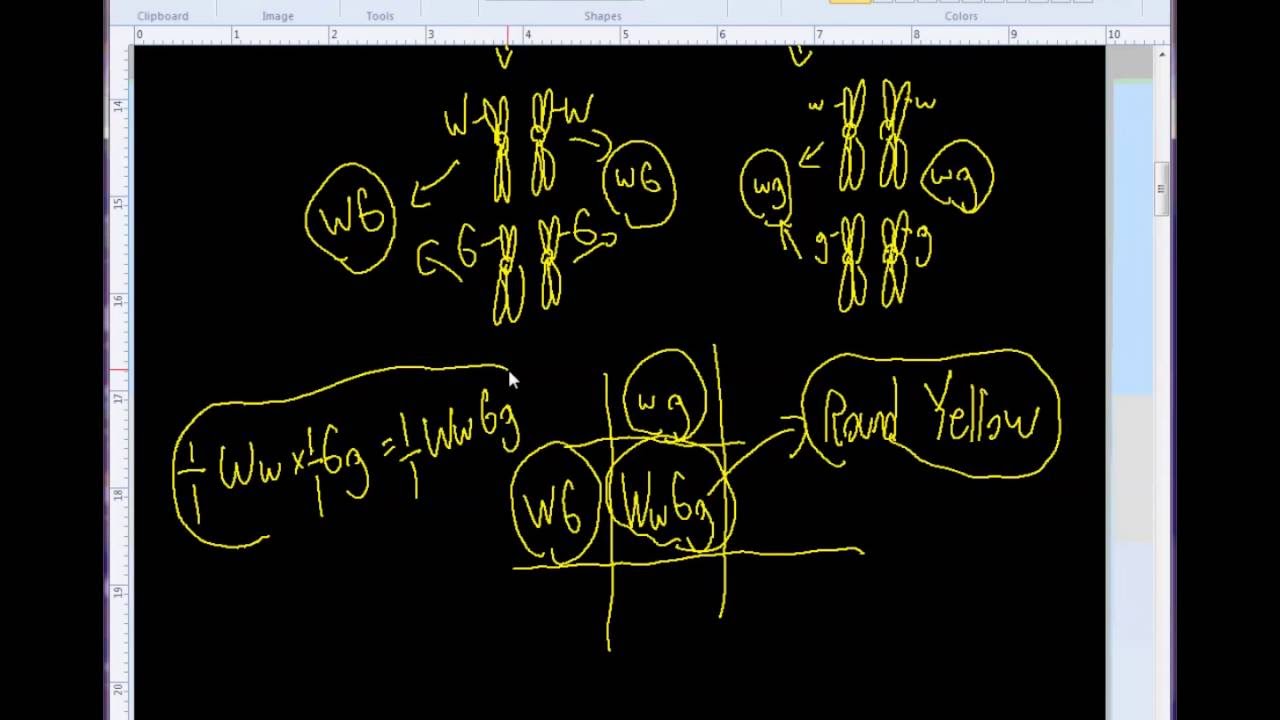
The video provides a thorough, step-by-step walkthrough of solving a dihybrid cross, which is valuable for students learning genetics. The instructor explains the reasoning behind each step, such as why the F1 generation is all round-yellow and how to derive gametes. The argumentation is solid, as it correctly applies Mendelian principles and clearly demonstrates both methods. The instructor also highlights common pitfalls, such as making mistakes in the Punnett square, and offers the forked line method as an alternative. The explanation is logical and builds on prior knowledge, making it accessible for learners.
Scientific Rigor, Source Quality, Title Accuracy
The video is scientifically rigorous in its content, accurately explaining Mendelian genetics. However, it does not cite any external sources, relying solely on the instructor’s expertise. The title ‘Problem 3.7’ is minimal but accurately describes the content. The video is part of a course series, so it likely aligns with the curriculum. The lack of citations is typical for educational tutorials, but it limits the ability to verify claims independently. Overall, the scientific accuracy is high, but the absence of sources reduces the overall rigor.
193 words
Title / Content Match
The title 'Problem 3.7' is minimal but accurately indicates the specific problem being solved.
Quality & Reliability
7/10
The video is a clear, step-by-step tutorial on solving a classic Mendelian dihybrid cross problem. The content is scientifically accurate and aligns with standard genetics principles. However, it lacks citations to external sources and is based solely on the instructor's explanation.
Key Moments
Markers derived by PSI from the transcript: the creator did not define chapters.
- Introduction to Problem 3.7 and review of Mendelian dihybrid cross.
- Explanation of true-breeding P generation and dominance of round and yellow traits.
- Derivation of F1 genotype (WwGg) and gamete formation.
- Setting up the Punnett square for F2 generation with four gametes from each parent.
- Filling in the Punnett square and identifying phenotypic ratios (9:3:3:1).
- Counting genotypic ratios from the Punnett square.
- Introduction to the forked line method, starting with monohybrid ratios for each gene.
- Combining ratios using the forked line method to obtain F2 phenotypic and genotypic ratios.
- Final verification of the 9:3:3:1 phenotypic ratio and conclusion.
Contribution & Novelties
The video provides a clear, pedagogical explanation of solving a dihybrid cross, which is a fundamental concept in genetics. It offers two methods (Punnett square and forked line) and emphasizes the underlying principle of independent assortment. This is particularly useful for students who struggle with the mechanics of such crosses. The video does not present new research but serves as an educational resource.
Pour aller plus loin :
- Mendelian inheritance — Overview of Mendel’s laws.
- Dihybrid cross — Detailed explanation of dihybrid crosses.
- Independent assortment — Principle of independent assortment.
90 words
Radar Profile
The radar profile shows high scores in quality of information and reliability, indicating accurate and trustworthy content. The quantity of information is moderate, as the video focuses on a single problem. The technical level is appropriate for an introductory genetics course, making it accessible to students.