Genetics: L14-D, Haploid Insufficiency and Genetic Anticipation (Recommend 1.5x Speed)
Keywords
Summary
174 words
Critical Evaluation
Value of the Information & Strength of the Argument
The video provides a clear and concise explanation of haploinsufficiency and genetic anticipation, using a real disease example. The argumentation is logical, starting with the basics of telomerase function and building up to the genetic concepts. The lecturer effectively uses a pedigree to illustrate the pattern of anticipation. However, the video lacks depth in discussing alternative hypotheses or potential criticisms of the study. The value lies in its pedagogical approach, making complex genetic concepts accessible to students.
Scientific Rigor, Source Quality, Title Accuracy
The video references a specific study (likely Vulliamy et al., 2004) but does not provide the full citation. The lecturer mentions the study in passing but does not critically evaluate its methodology or limitations. The title accurately reflects the content, and the video is part of a structured course. The lecturer suggests consulting the course notes for more detailed information, indicating that the video is a supplement to written materials. Overall, the scientific rigor is adequate for an introductory genetics course, but it does not delve into the nuances of the research.
184 words
Title / Content Match
The title accurately reflects the content, focusing on haploid insufficiency and genetic anticipation, with a recommendation for playback speed.
Quality & Reliability
7/10
The video is an educational lecture from a university genetics course, presenting concepts of haploinsufficiency and genetic anticipation based on a specific study. The content is scientifically accurate but presented in a simplified manner for students. The lecturer references a study but does not provide detailed methodology or critical evaluation.
Key Moments
Markers derived by PSI from the transcript: the creator did not define chapters.
- Introduction to the video and recap of previous lecture on telomerase.
- Introduction to dyskeratosis congenita (DC) and its symptoms.
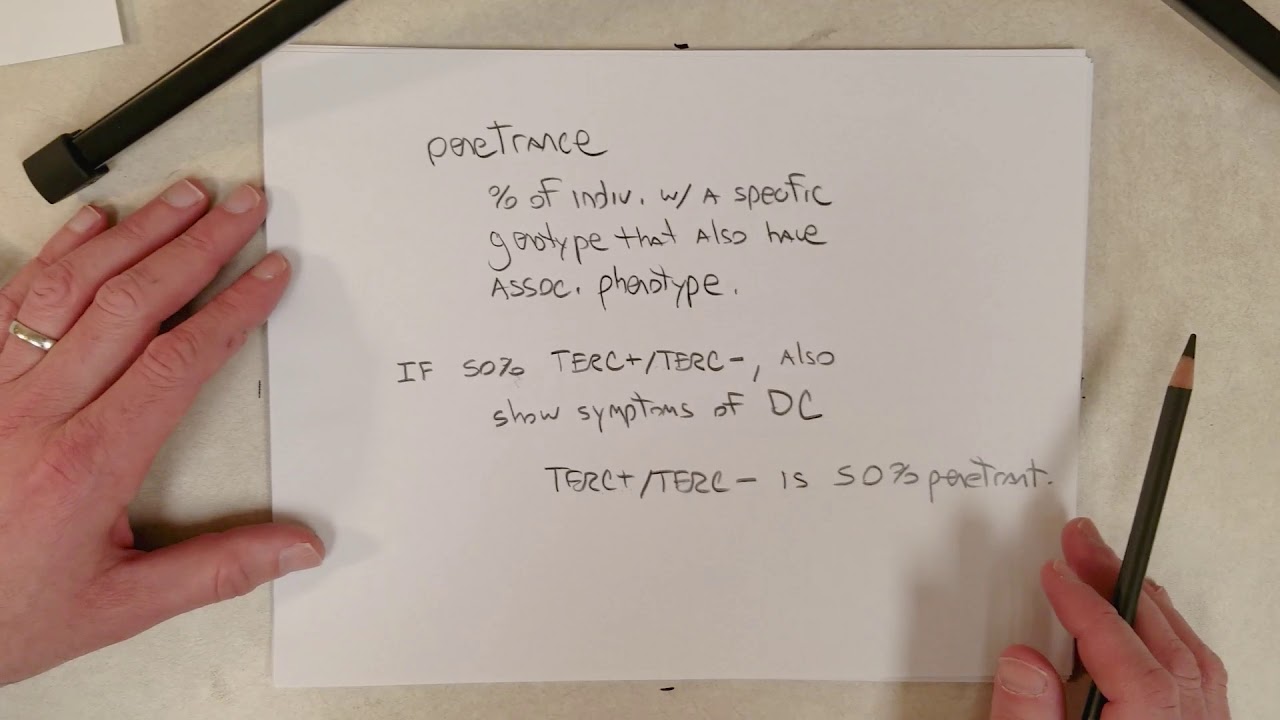
- Explanation of the genetic basis: heterozygous TERC+/- individuals.
- Introduction of the concept of penetrance.
- Discussion of haploinsufficiency and reduced telomerase activity.
- Presentation of pedigree data showing earlier onset in offspring.
- Explanation of genetic anticipation and its mechanism via short telomeres.
- Conclusion and reminder to consult course notes.
Cited Sources
- Disease anticipation in dyskeratosis congenita — Referenced in the video as the study on genetic anticipation in DC.
Concurring Sources
- Telomere shortening and genetic anticipation in dyskeratosis congenita — The study referenced in the video, likely Vulliamy et al., 2004, which supports the mechanism of anticipation via short telomeres.
Contribution & Novelties
The video provides a clear pedagogical explanation of haploinsufficiency and genetic anticipation, using dyskeratosis congenita as a case study. It effectively connects molecular mechanisms (telomerase function) to clinical observations (earlier onset in generations). The lecture emphasizes the concept of penetrance, which is often overlooked in introductory genetics. For further exploration, consider the following:
- Telomere — Background on telomere structure and function.
- Telomerase — Detailed information on the enzyme and its role in aging and cancer.
- Genetic anticipation — Overview of the phenomenon, including trinucleotide repeat disorders.
- Dyskeratosis congenita — Clinical features and genetic basis of the disorder.
- Haploinsufficiency — Explanation of the concept and examples.
105 words
Radar Profile
The radar profile shows balanced scores across information quantity, quality, technical level, and reliability, with a slight emphasis on quality and reliability. This indicates a well-structured educational video that provides accurate information but may lack depth in certain areas.