Problem 5.16
Keywords
Summary
144 words
Critical Evaluation
Value of the Information & Strength of the Argument
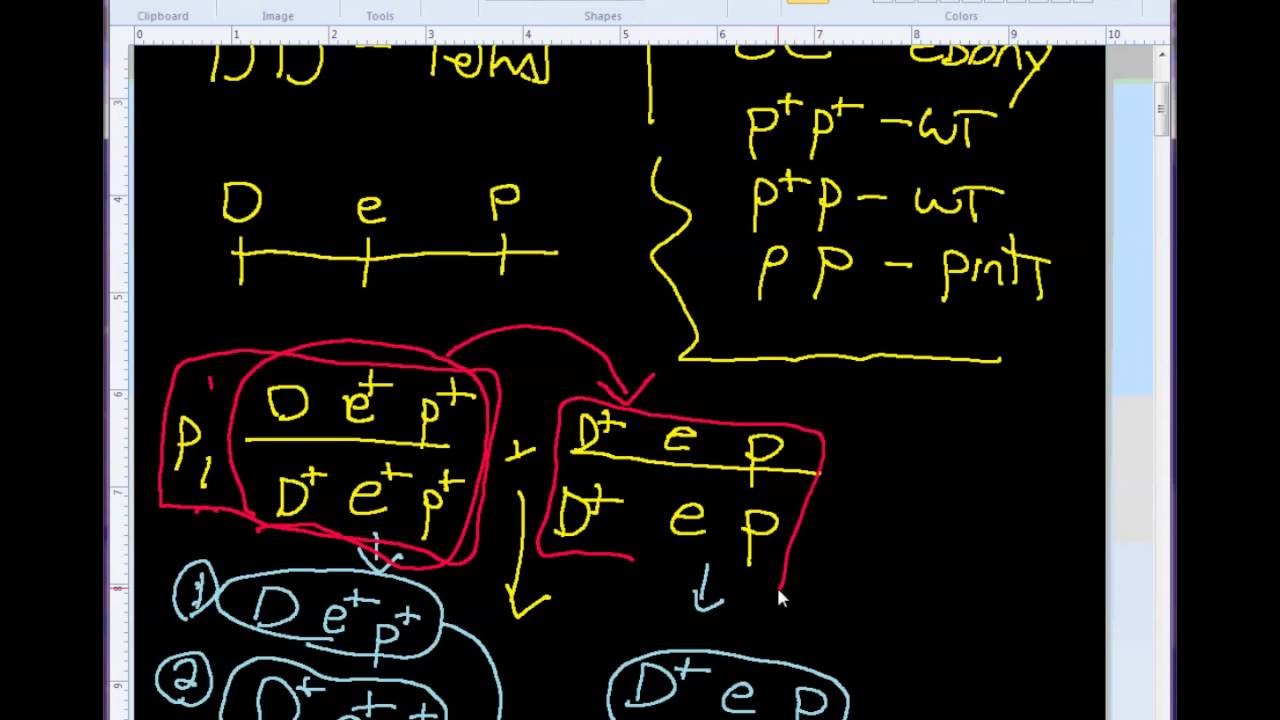
The video provides a thorough, step-by-step explanation of a classic genetics problem, which is valuable for students learning gene mapping. The instructor’s argumentation is logical and methodical: he formulates a hypothesis, tests it against the data, and revises it when necessary. He clearly explains the reasoning behind each step, such as why the double crossover class should be the smallest and how to calculate recombination frequencies. The use of a worked example enhances understanding, and the instructor’s verification of the answer adds credibility.
Scientific Rigor, Source Quality, Title Accuracy
The video is scientifically rigorous, following standard genetics methodology for three-point crosses. The instructor does not cite external sources, but the problem itself is from a textbook (likely ‘Introduction to Genetic Analysis’ by Griffiths et al.), and the solution aligns with established principles. The title ‘Problem 5.16’ is appropriate, as it directly indicates the content. No comments were provided, so no analysis of public reception is possible.
165 words
Title / Content Match
The title 'Problem 5.16' accurately reflects the content, as the video is a step-by-step solution to that specific problem.
Quality & Reliability
8/10
The video is a detailed walkthrough of a genetics problem, demonstrating a systematic approach to three-point mapping. The instructor explains each step clearly, from setting up crosses to interpreting data and calculating map distances. The content aligns with standard genetics principles, and the instructor verifies the final answer against the textbook.
Key Moments
Markers derived by PSI from the transcript: the creator did not define chapters.
Contribution & Novelties
The video provides a clear, pedagogical walkthrough of a three-point cross problem, which is a standard exercise in genetics. Its novelty lies in the explicit step-by-step reasoning, including the trial-and-error approach to gene order determination. It reinforces key concepts such as recombination frequency and map distance calculation.
Pour aller plus loin :
- Three-point cross — Wikipedia article explaining the method.
- Centimorgan — Definition and use in genetic mapping.
- Drosophila melanogaster — Model organism used in the problem.
77 words
Radar Profile
The radar profile shows high scores in information quantity, quality, technical level, and reliability, indicating a well-structured and informative tutorial. The balanced scores suggest a comprehensive coverage of the topic with solid scientific grounding.