Genetics: L8-C, recombinant gametes and limits (Recommend 1.5x speed)
Keywords
Summary
175 words
Critical Evaluation
Value of the Information & Strength of the Argument
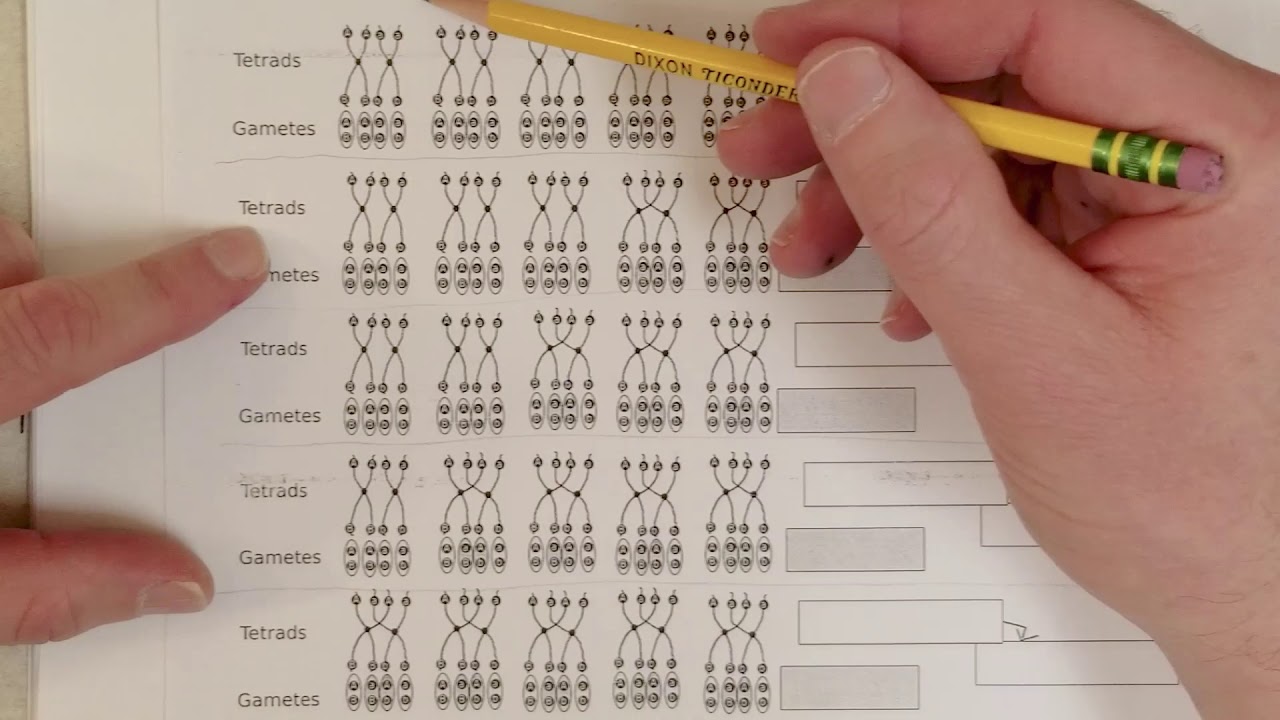
The video provides a clear and valuable explanation of a key concept in genetics: the 50% limit on recombinant gametes. The argumentation is solid, using a step-by-step worksheet that visually demonstrates why the limit exists. The instructor builds the argument logically, starting with a review of previous knowledge, then posing a question, and finally resolving it through examples. The use of concrete numbers and diagrams helps solidify understanding. The explanation of the formula relating crossover tetrads to recombinant gametes is particularly useful. The video effectively conveys the reasoning behind the theoretical limit, making it accessible to students.
Scientific Rigor, Source Quality, Title Accuracy
The scientific rigor is high for an educational tutorial. The content is accurate and aligns with standard genetics textbooks. However, the video does not cite any external sources, relying solely on the instructor’s explanation and the worksheet. The title accurately reflects the content, and the recommendation for 1.5x speed is appropriate for the lecture-style delivery. The video is well-structured and pedagogically sound, but the lack of citations is a minor weakness.
183 words
Title / Content Match
The title accurately reflects the content: it covers recombinant gametes and the 50% limit, and the recommendation for 1.5x speed is appropriate for the lecture-style delivery.
Quality & Reliability
8/10
The video is a clear, step-by-step tutorial on a fundamental genetics concept, using a worksheet to illustrate the theoretical limit of recombinant gametes. The explanation is accurate and aligns with established genetic principles. The instructor is knowledgeable, and the content is well-structured, though it lacks citations to external sources.
Key Moments
Markers derived by PSI from the transcript: the creator did not define chapters.
- Introduction: Review of recombinant gametes and genetic distance in centiMorgans.
- Posing the question: Can recombination frequency exceed 50%?
- Introduction of the formula: % recombinant gametes = % crossover tetrads / 2.
- Worksheet example: 20% crossover tetrads yield 10% recombinant gametes.
- Worksheet example: 40% crossover tetrads yield 20% recombinant gametes.
- Worksheet example: 60% crossover tetrads yield 30% recombinant gametes.
- Worksheet example: 80% crossover tetrads yield 40% recombinant gametes.
- Worksheet example: 100% crossover tetrads yield 50% recombinant gametes, demonstrating the limit.
- Explanation of why the limit is 50%: each crossover produces two recombinant and two non-recombinant gametes.
- Implication: Genetic distances greater than 50 cM cannot be measured accurately via recombination frequency.
Contribution & Novelties
The video provides a clear pedagogical explanation of the 50% limit on recombinant gametes, using a visual worksheet to illustrate the concept. It offers a step-by-step derivation of the relationship between crossover tetrads and recombinant gametes, which is often taken for granted in textbooks. This approach helps students understand the underlying mechanism.
Pour aller plus loin :
- Genetic recombination — Overview of recombination mechanisms.
- Crossing over — Detailed explanation of crossover events.
- Centimorgan — Definition and use of genetic distance units.
- Meiosis — The process of cell division that produces gametes.
91 words
Radar Profile
The radar profile shows a balanced performance with high scores in quality and reliability, moderate in quantity and technical level. This indicates a focused, accurate tutorial that may lack depth in terms of additional information but is solid in its core content.