Problem 5.22
Keywords
Summary
142 words
Critical Evaluation
Value of the Information & Strength of the Argument
The video provides a clear and logical walkthrough of a genetics problem, demonstrating the application of fundamental concepts such as independent assortment, linkage, and recombination. The argumentation is solid: the instructor systematically compares expected ratios under different assumptions with actual data, leading to a correct conclusion. The value lies in its pedagogical approach, showing how to deduce gene linkage and map distances from progeny counts. However, the presentation is somewhat informal and lacks references to external sources, which limits its scientific rigor.
Scientific Rigor, Source Quality, Title Accuracy
The video is a tutorial from a university genetics course, so it is based on standard genetic principles. However, it does not cite any external sources or references. The title ‘Problem 5.22’ is appropriate as it directly refers to the problem being solved. The content is accurate and aligns with established genetic theory, but the lack of citations and the informal style reduce its scientific rigor. No comments were provided for analysis.
169 words
Title / Content Match
The title 'Problem 5.22' accurately reflects the content, which is a walkthrough of a specific genetics problem from a course.
Quality & Reliability
7/10
The video is an instructional tutorial by a university genetics course, providing a step-by-step solution to a genetics problem. The reasoning is clear and follows standard genetic principles, but it lacks citations and references to external sources, and the presentation is informal with some improvisation.
Key Moments
Markers derived by PSI from the transcript: the creator did not define chapters.
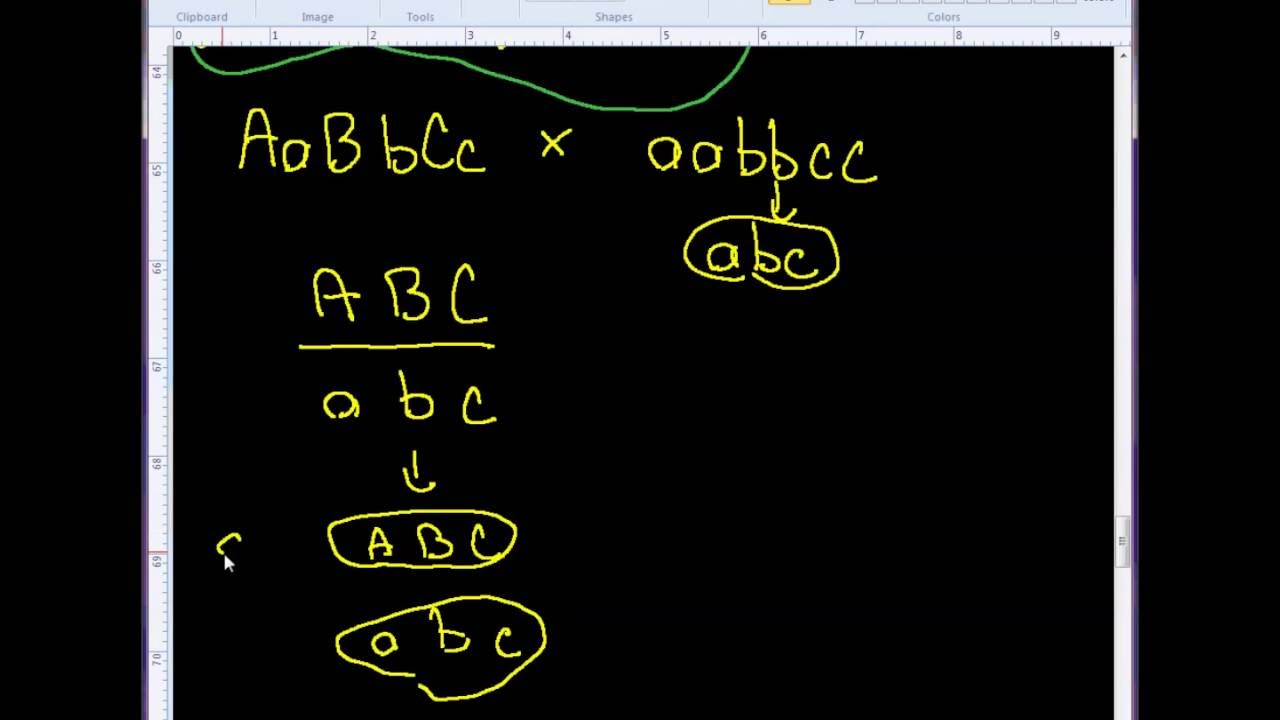
- Introduction to Problem 5.22 and setup of the test cross.
- Part A: Assuming independent assortment, calculating expected genotypic and phenotypic classes using the fork-line method.
- Comparison of expected ratios with actual data, concluding that not all genes assort independently.
- Part B: Assuming complete linkage, calculating expected progeny genotypes and comparing with data.
- Part C: Analyzing actual data to deduce linkage between A and B and independent assortment of C.
- Calculation of recombination frequency between A and B (20 centimorgans) and conclusion about gene arrangement.
- Final summary and offer to answer questions.
Contribution & Novelties
The video provides a clear pedagogical demonstration of how to solve a three-gene linkage problem using test cross data. It illustrates the process of hypothesis testing (independent assortment vs. complete linkage) and the interpretation of progeny ratios to deduce linkage and map distances. The novelty lies in its step-by-step approach, which is valuable for students learning genetics.
Pour aller plus loin :
- Genetic linkage — Overview of genetic linkage and recombination.
- Centimorgan — Definition and use of centimorgan as a unit of genetic distance.
- Test cross — Explanation of test crosses and their applications.
94 words
Radar Profile
The radar profile shows balanced scores across all dimensions, with slightly lower technical level and information quality compared to quantity and reliability. This indicates a solid but not highly advanced tutorial, suitable for introductory genetics students.