Genetics: L1-D, Chromatin and chromosome structure (Recommend 1.5 x speed)
Keywords
Summary
166 words
Critical Evaluation
Value of the Information & Strength of the Argument
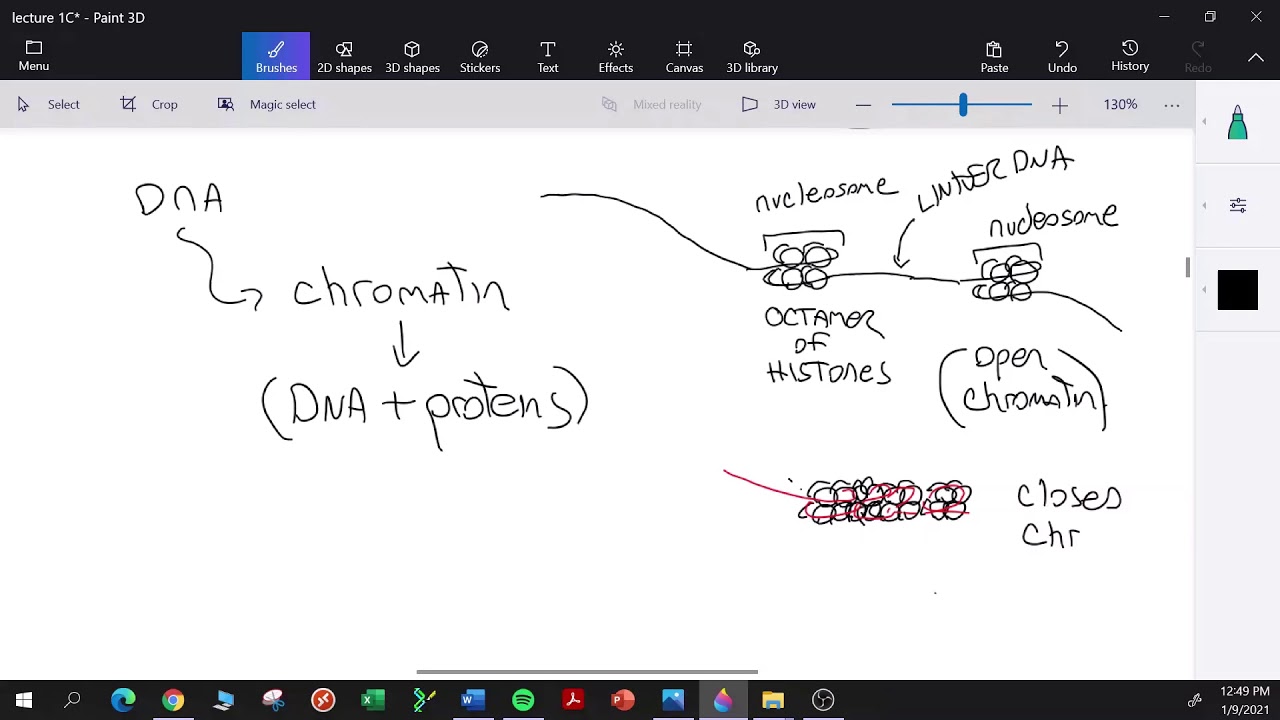
The video provides a clear and accurate introduction to essential concepts in genetics, suitable for beginners. The instructor effectively uses diagrams to illustrate complex structures, such as nucleosomes and chromosome morphology. The argumentation is logical and builds from basic DNA structure to higher-order organization. However, the lecture lacks depth in certain areas, such as the molecular details of histone modifications and their regulatory roles, which are crucial for a comprehensive understanding. The presentation is didactic and well-structured, but it does not engage with current research or controversies, limiting its value for advanced students.
Scientific Rigor, Source Quality, Title Accuracy
The scientific rigor is adequate for an introductory lecture; the content aligns with established textbook knowledge. No external sources are cited, which is typical for a lecture but limits verifiability. The title accurately reflects the content, and the lecture stays on topic. The instructor’s explanations are consistent and avoid misinformation. However, the lack of references and the absence of discussion on recent advances in chromatin research (e.g., 3D genome organization) reduce its scientific depth. The video is part of a university course, suggesting a reliable educational source.
195 words
Title / Content Match
The title accurately reflects the content, which covers chromatin and chromosome structure as part of a genetics lecture series.
Quality & Reliability
7/10
The video is an educational lecture from a university genetics course, presenting foundational concepts in molecular biology. The content is accurate and aligns with established scientific knowledge, though it lacks citations and depth for advanced learners.
Key Moments
Markers derived by PSI from the transcript: the creator did not define chapters.
- Introduction to DNA structure: nucleotides, base pairing, double helix.
- Explanation of nucleobases vs. nucleotides (adenine vs. adenosine).
- Definition of chromatin as DNA-protein complex, introduction of histones and nucleosomes.
- Discussion of open vs. closed chromatin (euchromatin vs. heterochromatin).
- Chromosome organization: linear vs. circular DNA, chromosome territories.
- Chromosome condensation during mitosis and role of centromeres and telomeres.
- Classification of chromosomes by centromere position: metacentric, acrocentric, telocentric.
- Explanation of p and q arms, and telocentric chromosomes in mice.
- Transition to next topic: cell cycle.
Contribution & Novelties
The video provides a solid foundation for understanding chromatin and chromosome structure, clarifying common terminological confusions. Its novelty lies in its pedagogical approach, using simple diagrams and analogies to explain complex concepts. However, it does not introduce new scientific findings. For further exploration, consider the following:
Pour aller plus loin :
- Nucleosome — Detailed structure and function of the nucleosome.
- Chromatin — Overview of chromatin types and regulation.
- Chromosome — Comprehensive information on chromosome structure and organization.
- Histone — Role of histones in DNA packaging.
- Epigenetics — How chromatin modifications affect gene expression.
93 words
Radar Profile
The radar profile shows a balanced performance across all dimensions, with slightly higher scores in information quality and reliability, reflecting the accurate but introductory nature of the content. The lower score in technical level indicates that the video is accessible to beginners, while the quantity of information is moderate, covering essential topics without excessive depth.